
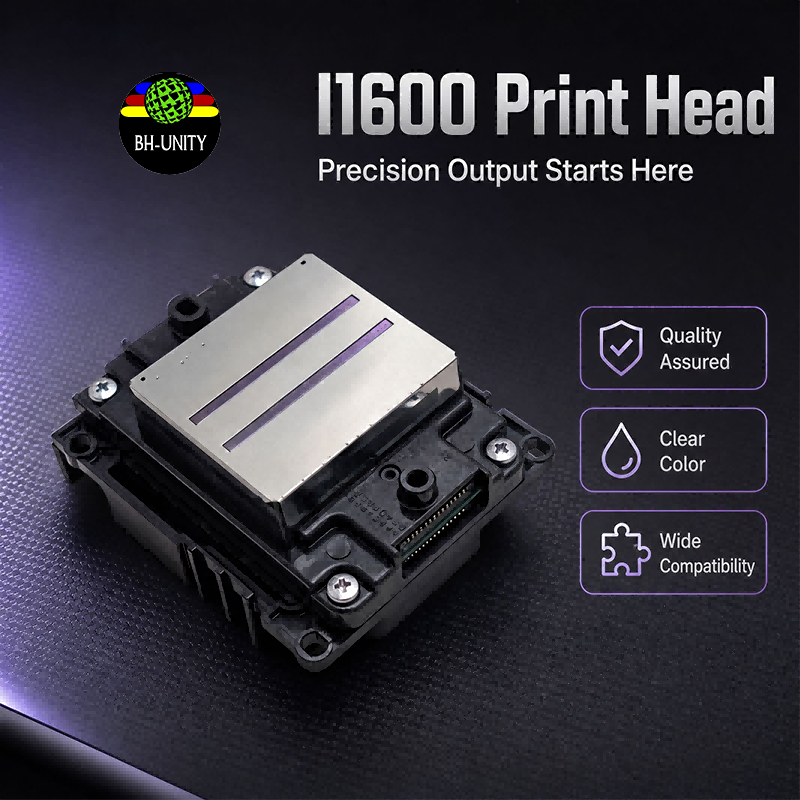
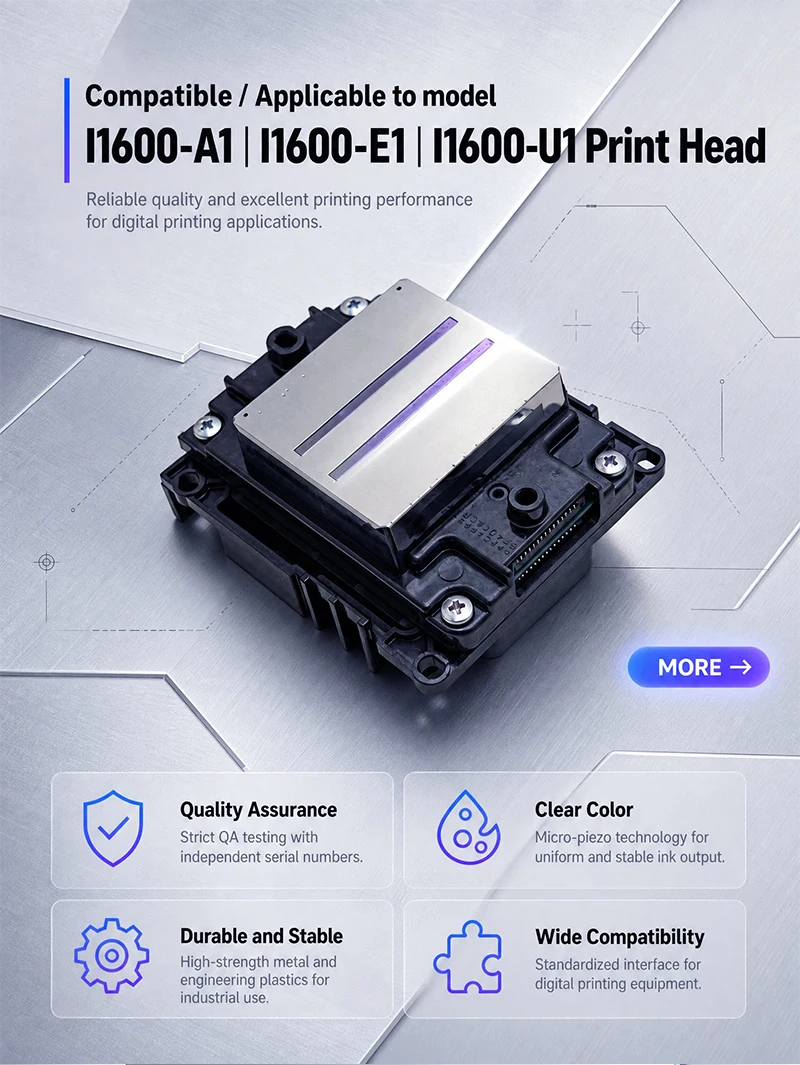
I1600 Print Head | Stainless Steel Nozzle Plate, PPS Housing, Industrial-Grade Durability
Brand XBH
Product origin CHINA
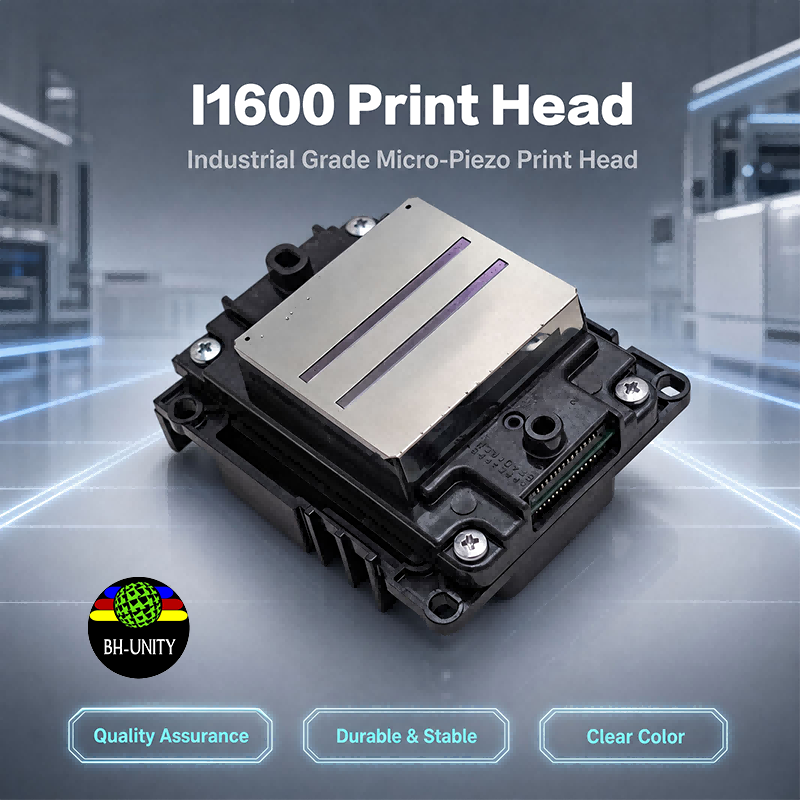
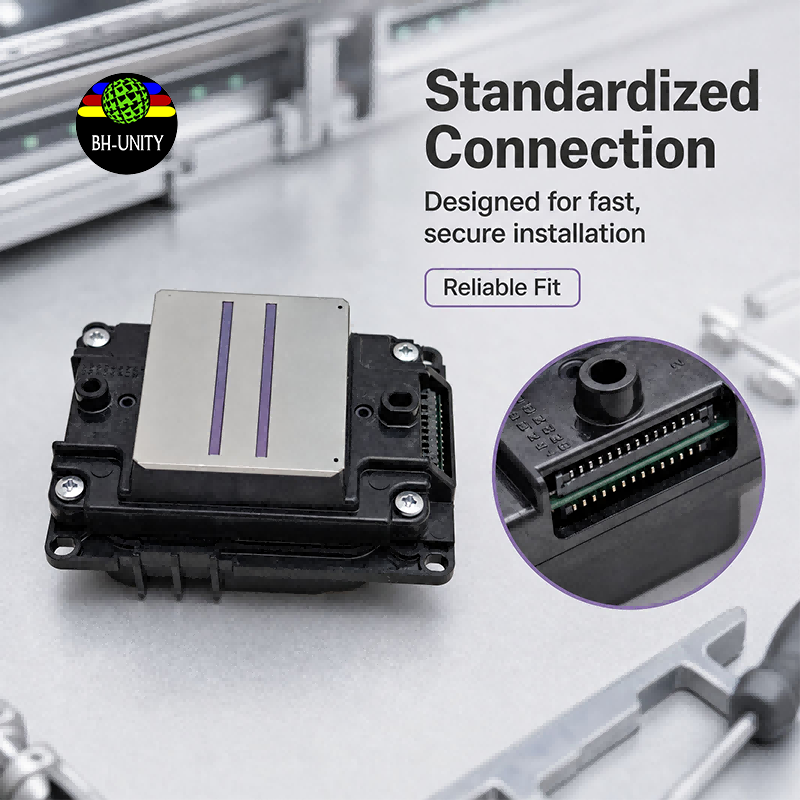
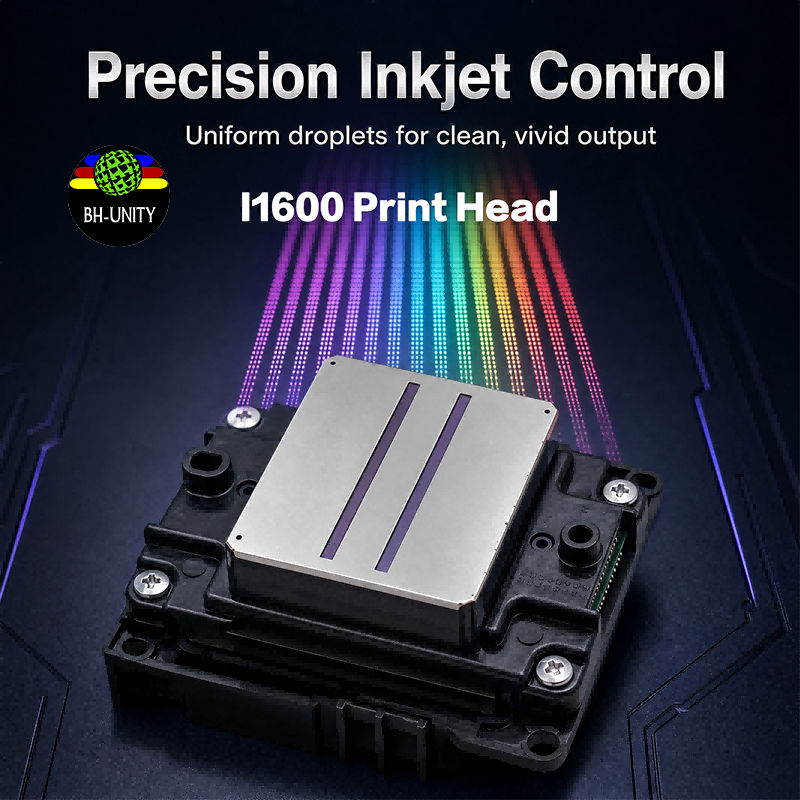
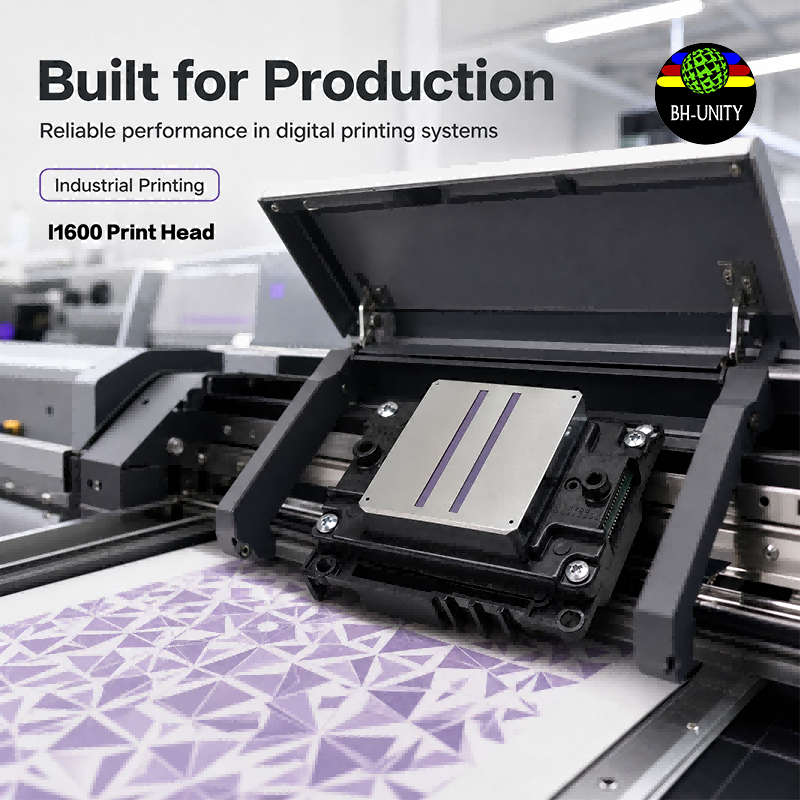
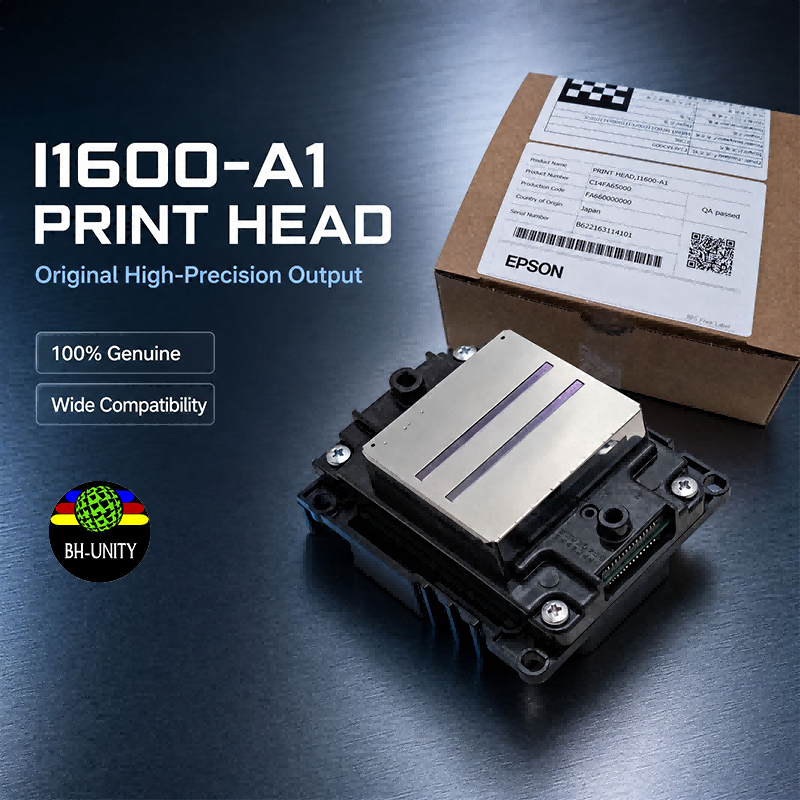
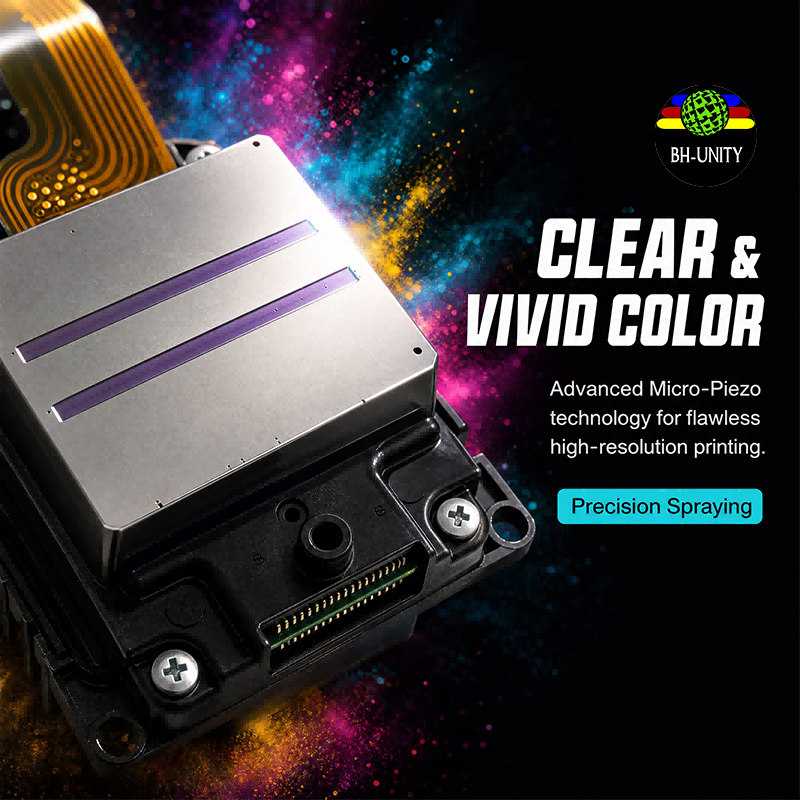
Built with a stainless steel nozzle plate and glass-fiber-reinforced PPS housing for industrial production environments. Precision-machined internal ink channels maintain consistent flow across all nozzles. Rigid frame resists vibration during high-frequency firing. Designed for daily continuous printing with long service life and reliable output.

Q: What material is the nozzle plate made of, and does it wear out? A: Stainless steel with a specialized surface coating. Normal wiper and capping contact gradually wears the coating over months of daily use, but this is slow. The primary failure mode is impact damage from carriage misalignment or hitting a raised media edge — a gouge through the coating disrupts droplet formation along that row permanently.
Q: Does the housing warp at high print-room temperatures? A: The body is glass-fiber-reinforced PPS engineering plastic, which retains dimensional rigidity up to around 120°C. Most print shops operate at 25-35°C, far below any deformation threshold. Summer heat in a non-airconditioned shop rarely exceeds 40°C, so housing warping is not a practical concern under normal operating conditions.
Q: Are the internal ink channels visible or sealed? A: Fully sealed within the head assembly. You cannot disassemble the head to manually clean internal passages — this is why preventive maintenance matters so much. The capping station and wiper blade keep the nozzle plate exterior clean, but sediment that has already entered the internal channels cannot be flushed out mechanically.
Q: How does the frame resist vibration during high-frequency firing? A: Rigid mounting points and balanced weight distribution dampen micro-vibration generated during rapid piezo cycling. The head maintains positional stability between passes, which is critical for dot alignment across wide-format output. Vibration would cause doubled or fuzzy edges, especially visible in fine text and thin line work.
Q: What happens if I accidentally scratch the nozzle plate with a tool? A: A deep scratch on the plate disrupts droplet formation along that entire row of nozzles. Minor surface marks from handling are usually fine, but a visible gouge causes consistent misfires and banding. Always inspect the plate under magnification before installing a new head — even a tiny manufacturing defect shows up as a persistent line.
Q: Is the head field-serviceable, or must it be returned if a component fails? A: It's a sealed, replaceable unit. Individual piezo elements or channels cannot be replaced in the field — there's no way to open the head without destroying it. If one channel dies persistently despite flushing, the whole head needs replacement.