

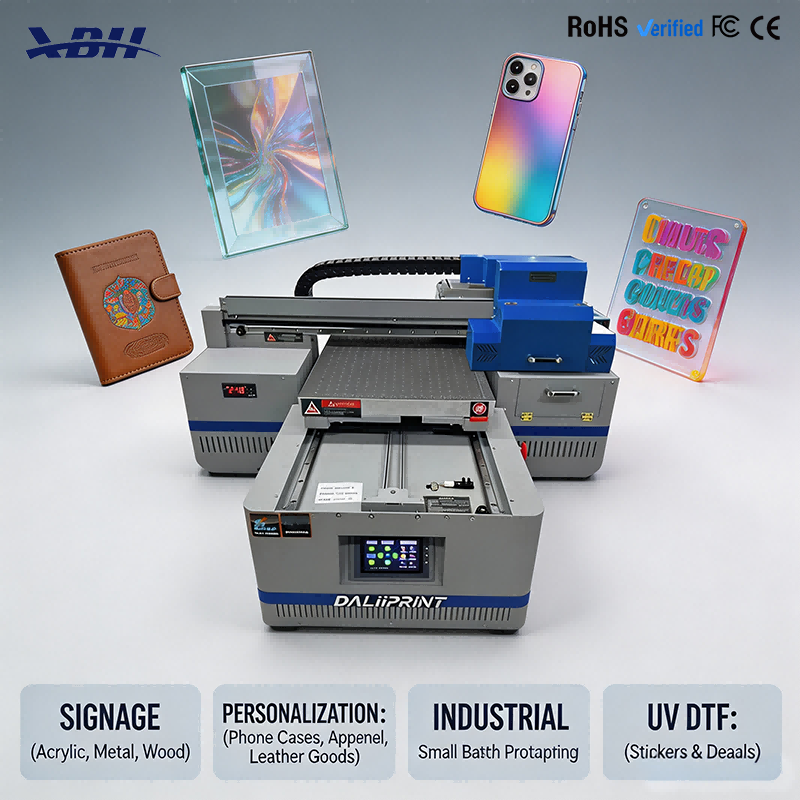
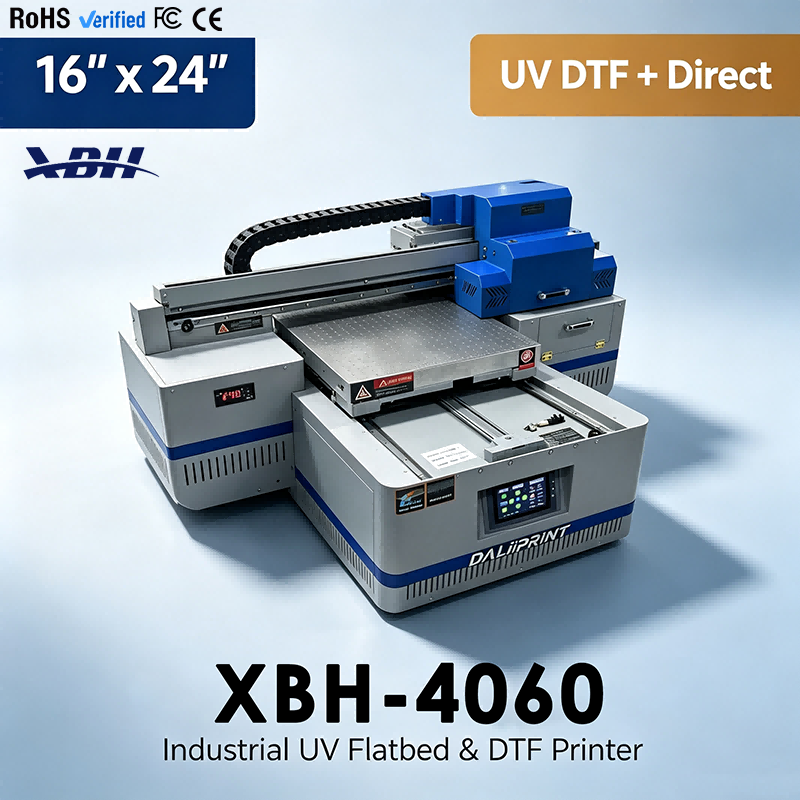
XBH-4060 UV Flatbed Printer - Vacuum Bed & White Ink Stirring System Stability
Brand XBH
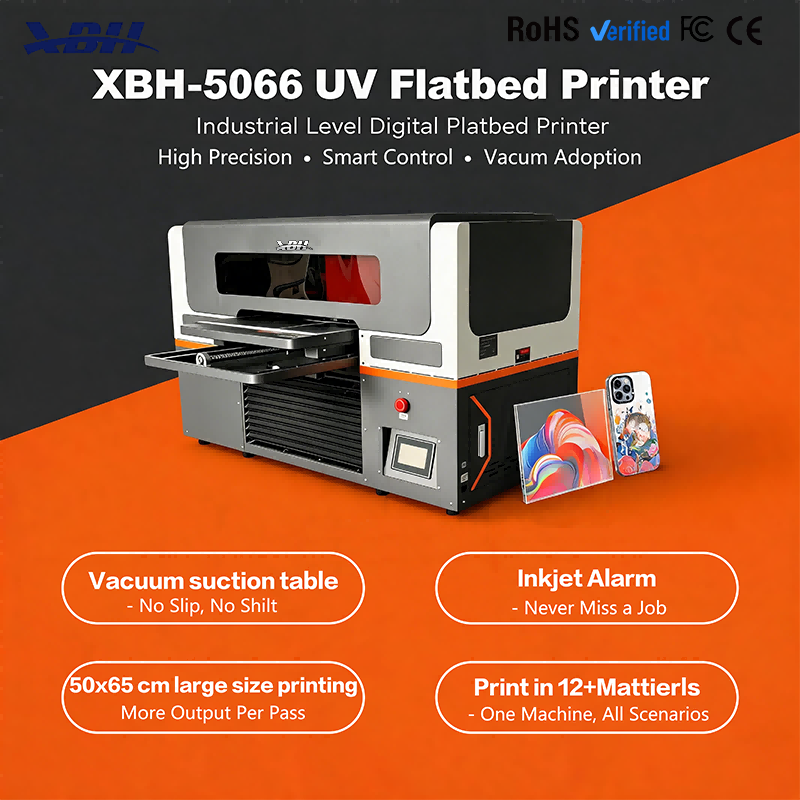
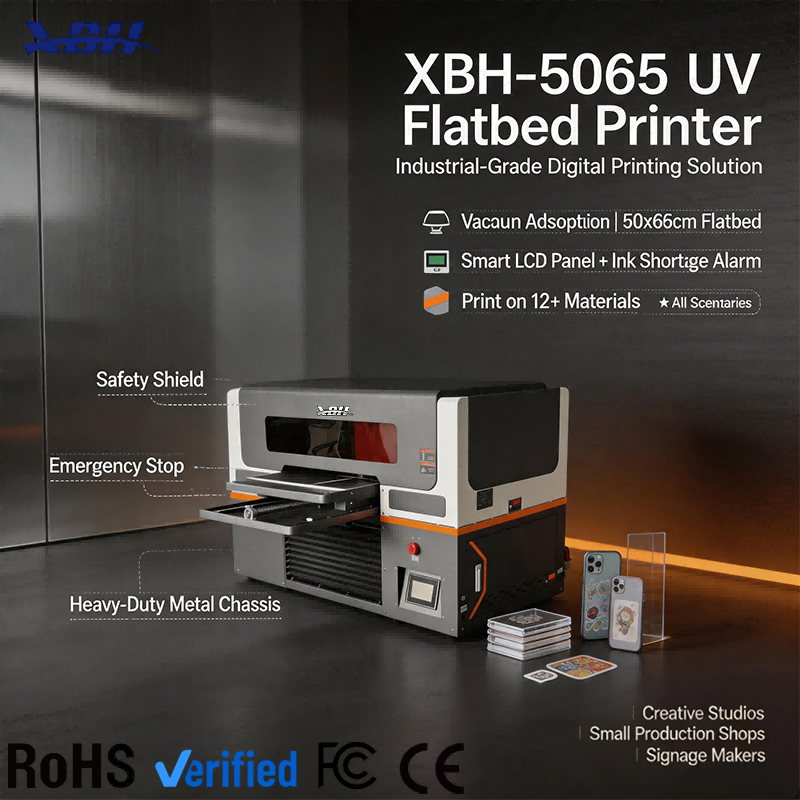
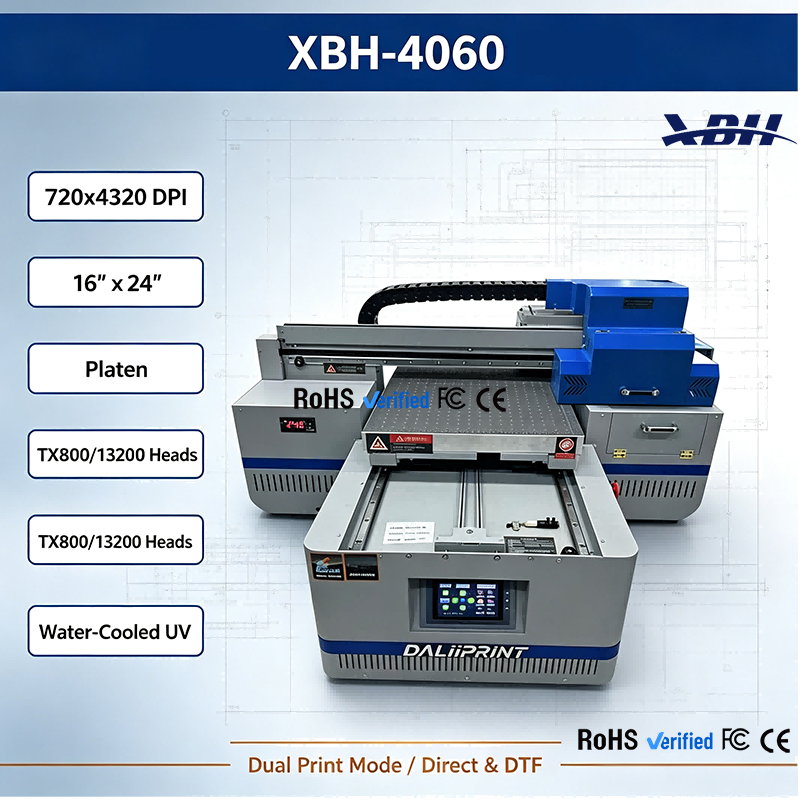
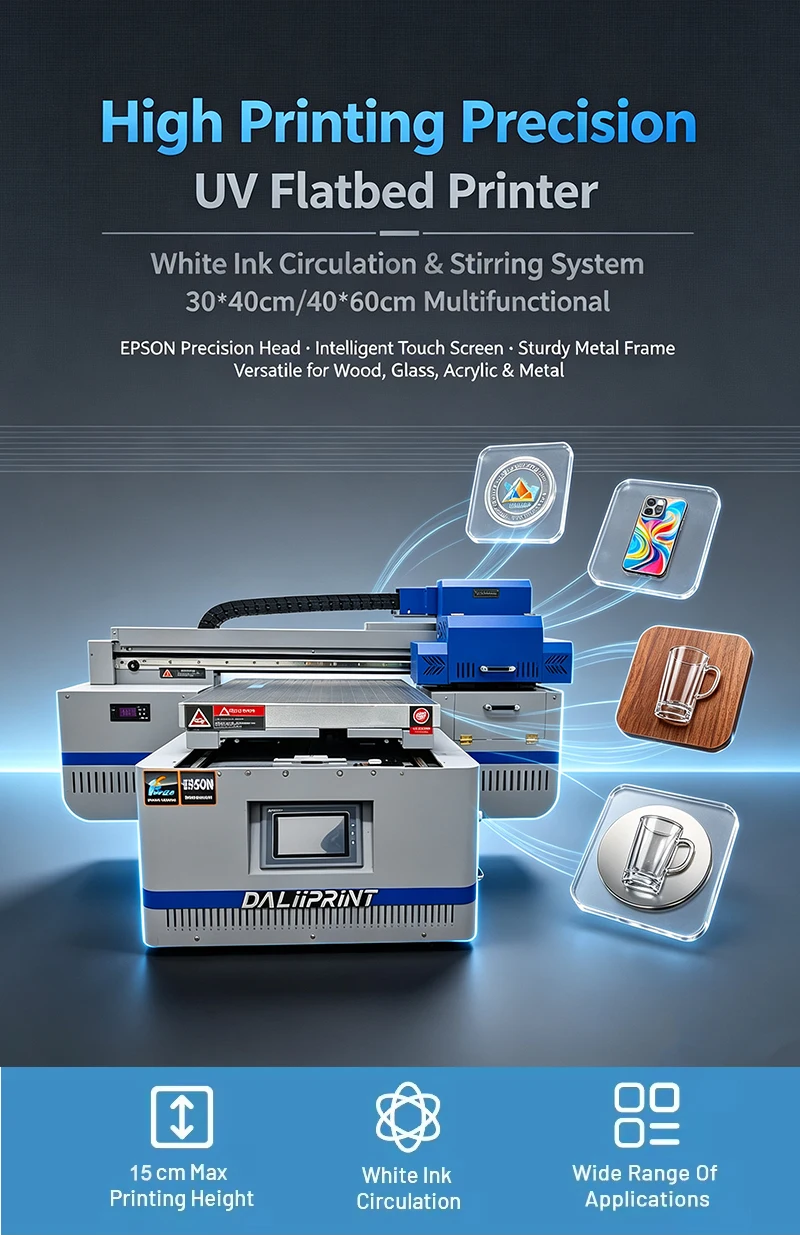
XBH-4060 features a vacuum adsorption platform that holds materials firmly for stable printing, plus an automatic white ink stirring system that prevents pigment settling and nozzle clogging. Ink shortage alarm alerts you when levels run low. Less maintenance, more consistent output.









Q: How does the vacuum adsorption platform work?
A: The printing bed has a grid of tiny suction holes connected to a vacuum pump. When you place a material on the bed and turn on the vacuum, the suction holds the material flat and firmly in place throughout the entire print job. This prevents the material from shifting, curling or lifting as the printhead moves over it — which is especially important for thin materials like paper, film or thin acrylic that might otherwise warp or move. The vacuum ensures consistent material positioning, so every print lands exactly where it should, with sharp, well-registered results.
Q: Why is material holding stability important for print quality?
A: If a material shifts even slightly during printing, the design will be misaligned — colors won't register properly, text will be blurry, and the overall print will look unprofessional. Thin materials can also curl upward at the edges, potentially touching the printhead and causing damage or print defects. The vacuum bed eliminates these problems by holding everything flat and secure. You get clean, sharp, well-registered prints every time, regardless of whether you're printing on a thick wooden plaque or a thin sheet of transfer film.
Q: What does the white ink stirring system do?
A: White UV ink contains heavy pigment particles that can settle to the bottom of the ink supply if the ink sits still for too long. Settled white ink leads to inconsistent opacity — some prints look bright white, others look thin and gray — and settled pigment can clog the printhead nozzles. The automatic white ink stirring system keeps the white ink circulating and mixed at all times, so the pigment stays evenly suspended. This means consistent white opacity on every print, fewer nozzle clogs, less maintenance, and longer printhead life. It's a small feature that makes a big difference in day-to-day reliability.
Q: What is the ink shortage alarm, and how does it help?
A: The machine monitors ink levels and triggers an alarm when ink runs low. This alerts you before the ink completely runs out, so you can refill or replace the ink supply before a print job is interrupted. Running out of ink mid-print can ruin a partially completed job — especially if you're printing on an expensive material — and can also cause air to enter the ink system, leading to nozzle issues. The shortage alarm gives you advance warning so you can plan ink changes between jobs rather than discovering you're out of ink in the middle of a production run. It's a simple but valuable feature that prevents wasted materials and downtime.