

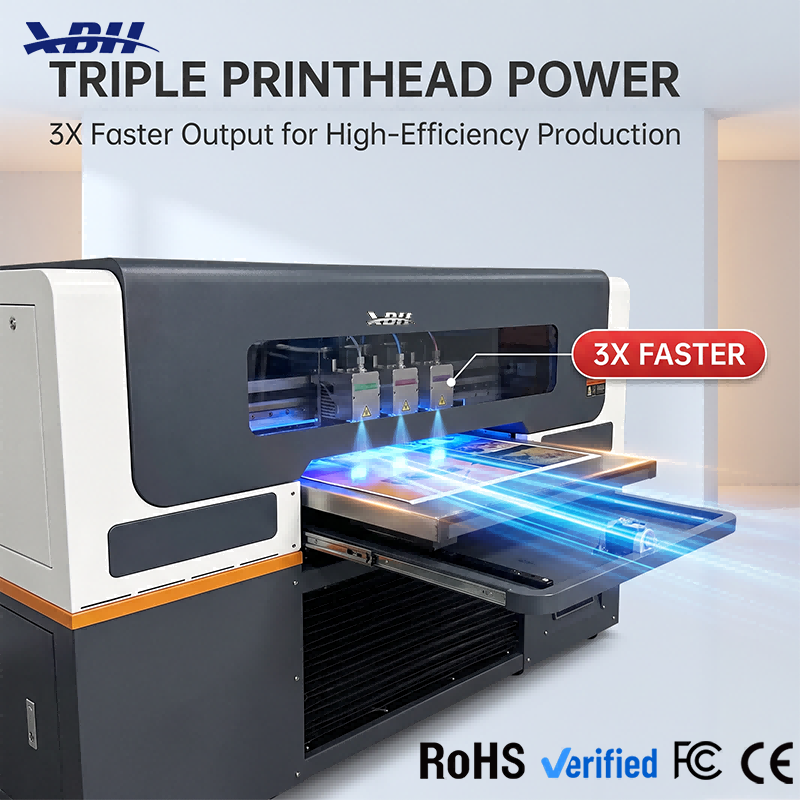
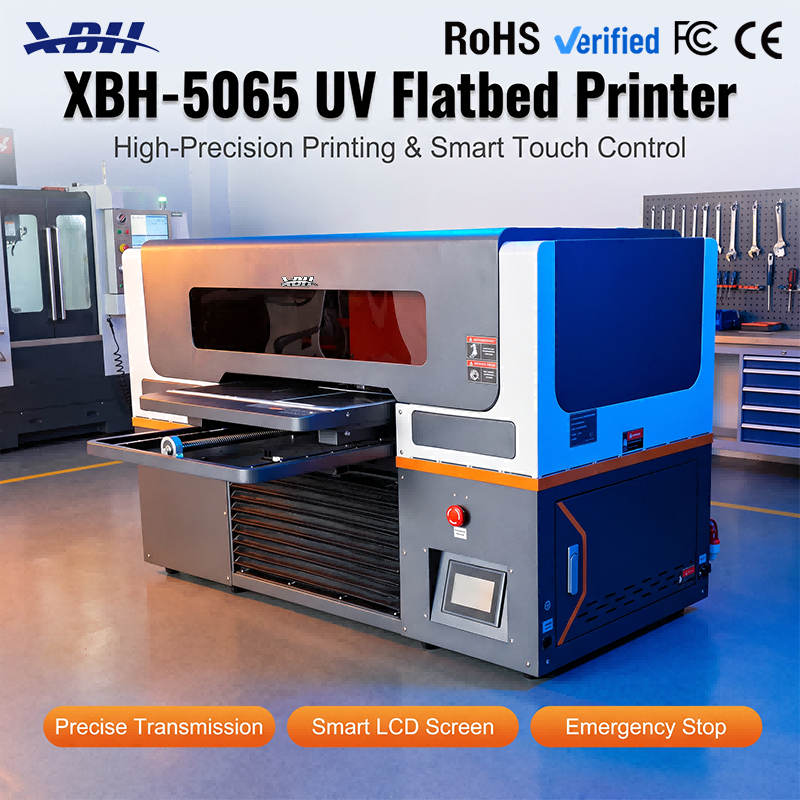


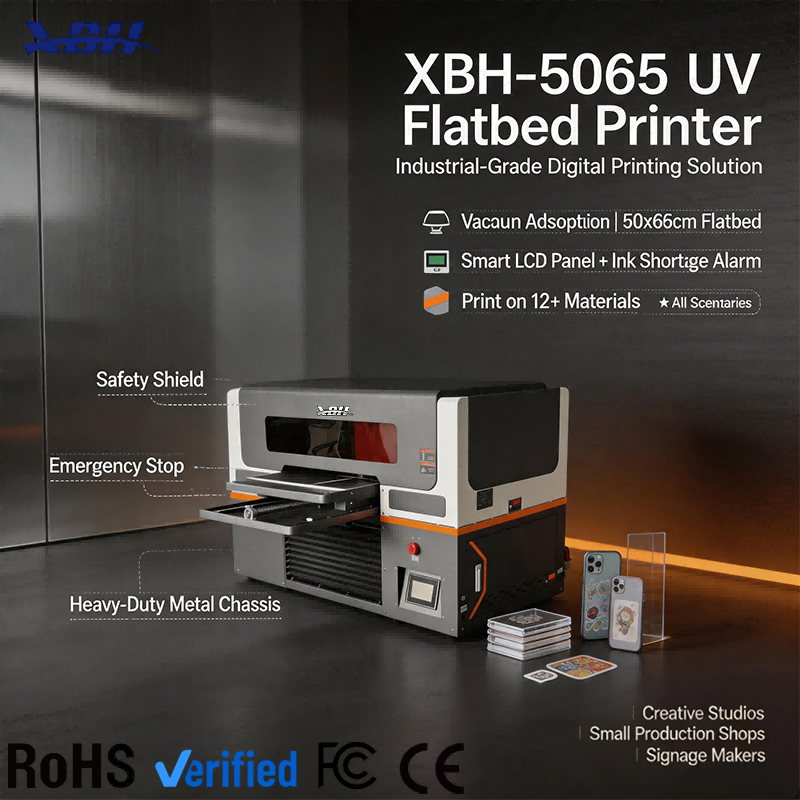
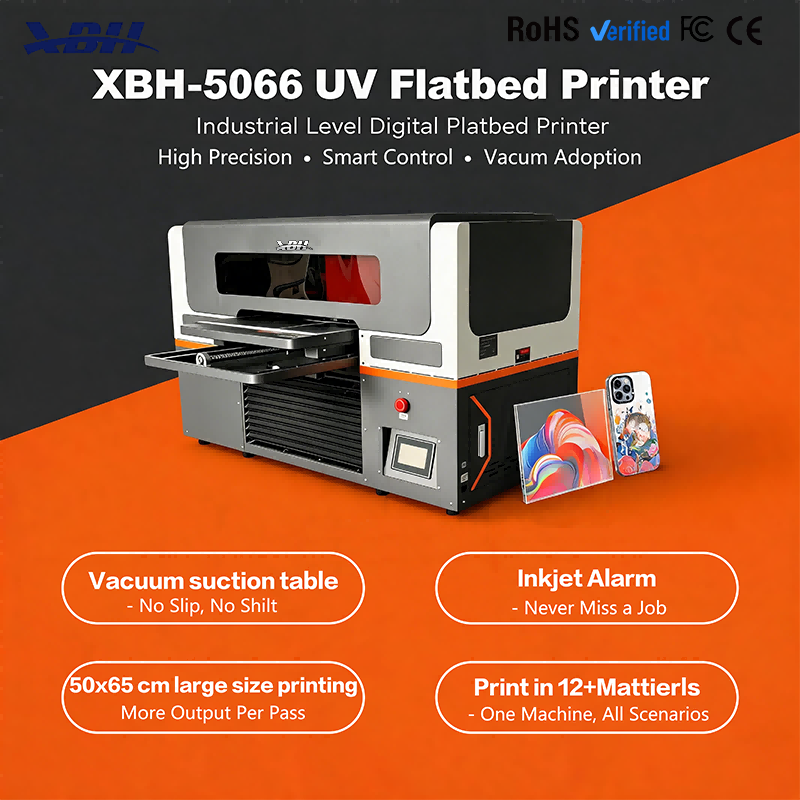
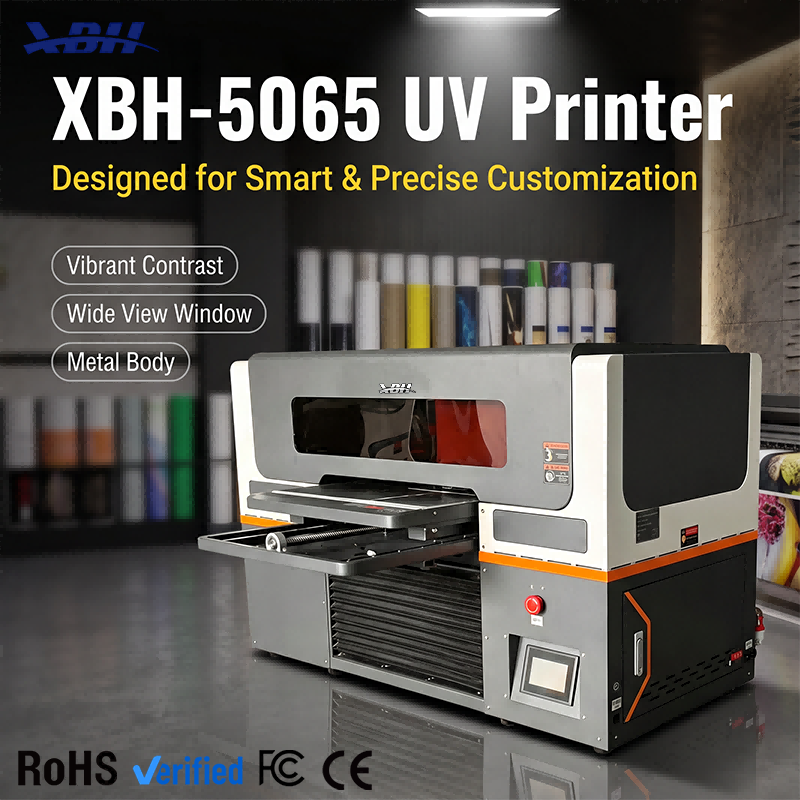

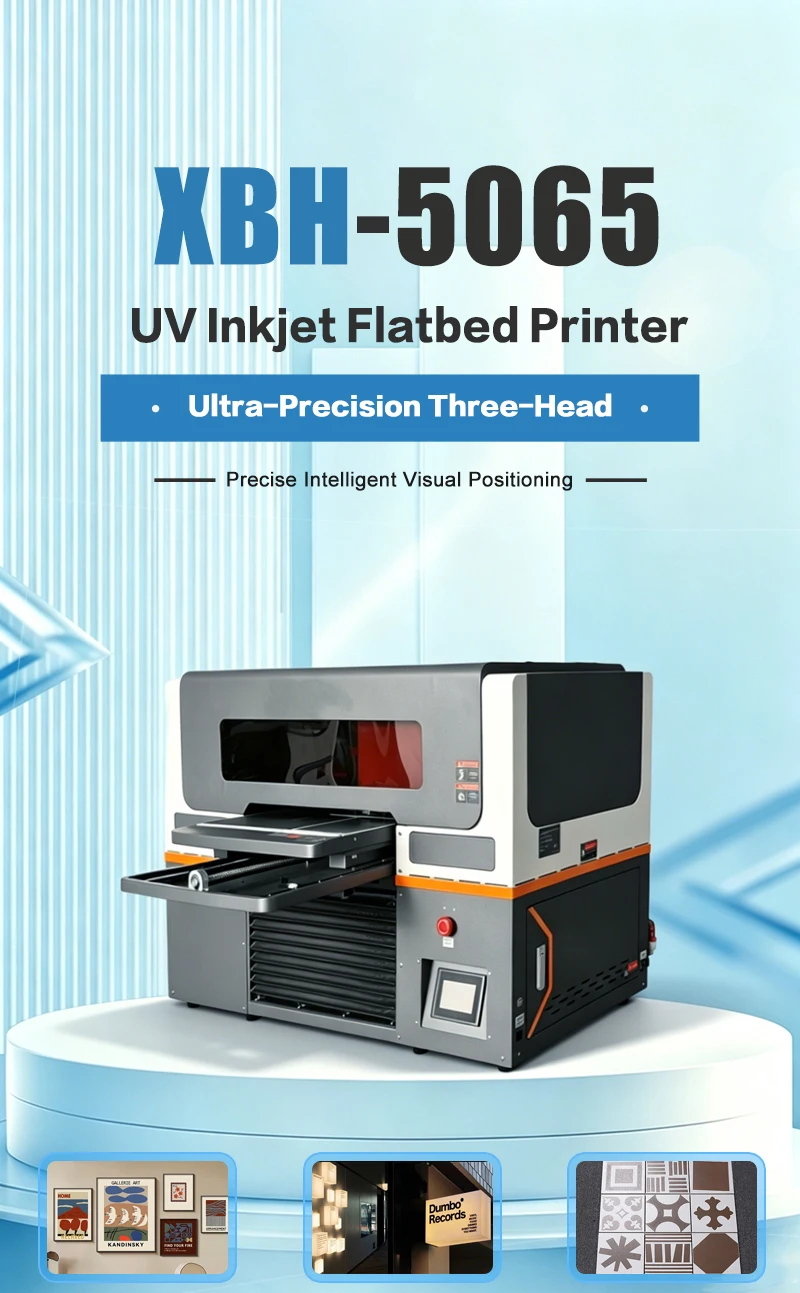
XBH-5065 UV Flatbed Printer - Triple Printhead 3X Faster High-Efficiency Output
Brand XBH
XBH-5065 equipped with triple printheads for 3X faster output. More heads working simultaneously means shorter print times per job, higher daily production volume, and faster turnaround for customers. Built for high-efficiency production without sacrificing print quality.






Q: How does the triple printhead configuration speed up production?
A: With three printheads working at the same time, the machine can lay down more ink in each pass over the material. Instead of one head doing all the work, three heads share the load — one can handle white ink while the others handle CMYK color, or they can split the color channels for faster coverage. This means fewer passes are needed to complete a print, and each pass covers more area. The result is significantly shorter print times per job — roughly three times faster than a single-head setup for comparable work. Over the course of a production day, that time savings adds up to a lot more finished pieces.
Q: Does faster printing mean lower quality?
A: No. The triple-head configuration achieves speed through parallel work, not by reducing resolution or ink density. Each head still delivers the same precise droplet placement and the same ink volume per area. The print resolution, color accuracy and detail quality remain at professional levels — you're just getting that quality in less time. The heads are calibrated to work together seamlessly, so there's no banding or misalignment between the sections printed by different heads. You get the same sharp text, smooth gradients and vibrant colors as a slower single-head machine, just delivered more quickly.
Q: How much more can I produce in a day with three heads?
A: It depends on what you're printing and what quality mode you're using, but the throughput increase is substantial. If a single-head machine prints, say, 20 phone cases per hour, a triple-head setup might handle 50 to 60 in the same time. For larger items like signs or panels, the speed gain is similarly significant. Over an 8-hour production day, this can mean the difference between finishing 100 pieces and finishing 300+. For businesses that have more orders than they can keep up with, the triple-head configuration directly translates to higher revenue capacity — you can take on more work and deliver it faster.
Q: Is the triple-head setup more difficult to maintain?
A: It's not significantly more complex. Each printhead has its own capping station and cleaning system, and the machine's maintenance routines handle all three heads together. When you run a nozzle check, it checks all three heads at once. When you run a cleaning cycle, it cleans all three. You don't have to maintain each head separately. The ink supply system feeds all three heads, and the ink shortage alarm monitors the whole system. The daily maintenance routine is essentially the same as a single-head machine — just a bit more ink flowing through the system. Most operators find the triple-head setup no harder to maintain than a simpler configuration.