
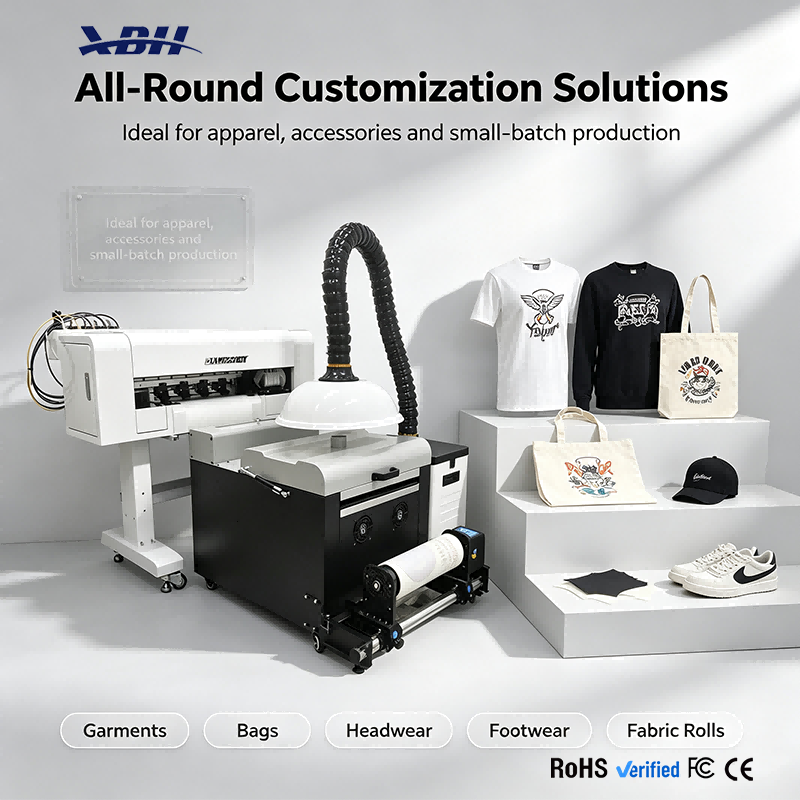
XBH-304 30cm DTF Printer - Direct-to-Film Transfer Process Step-by-Step Workflow
Brand XBH
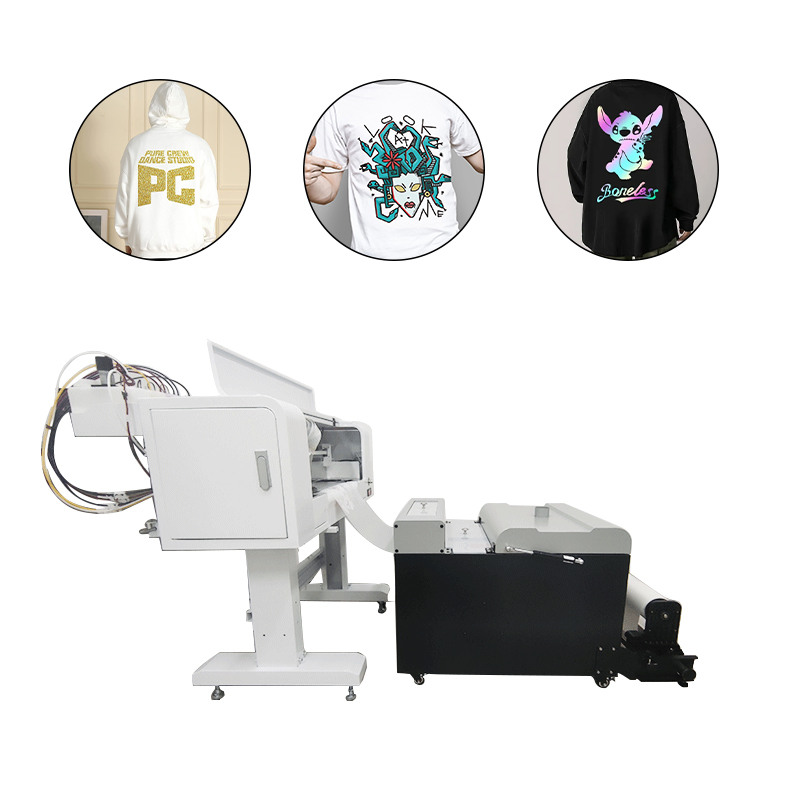
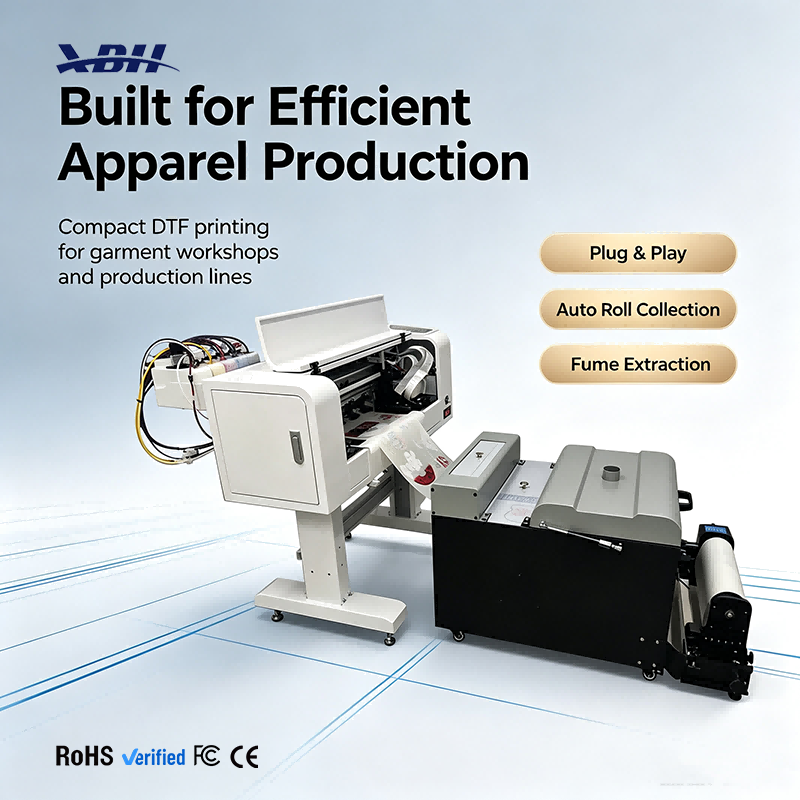
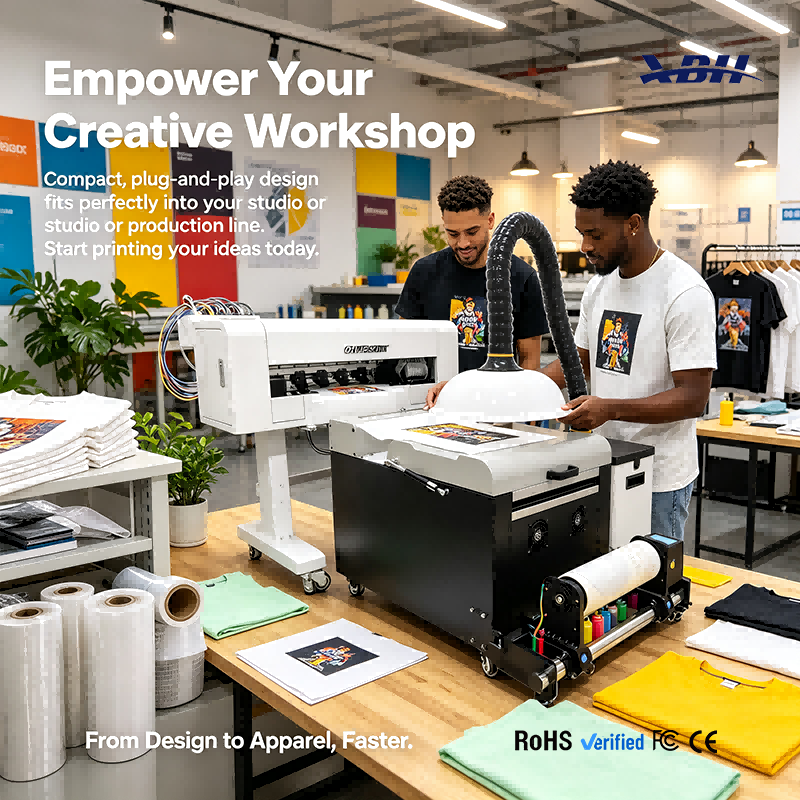
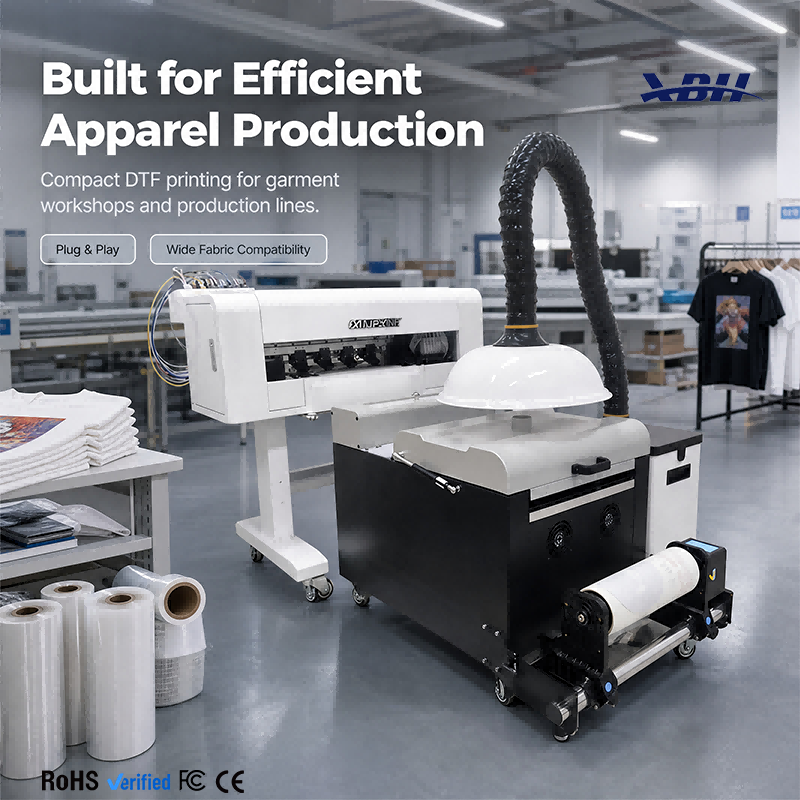
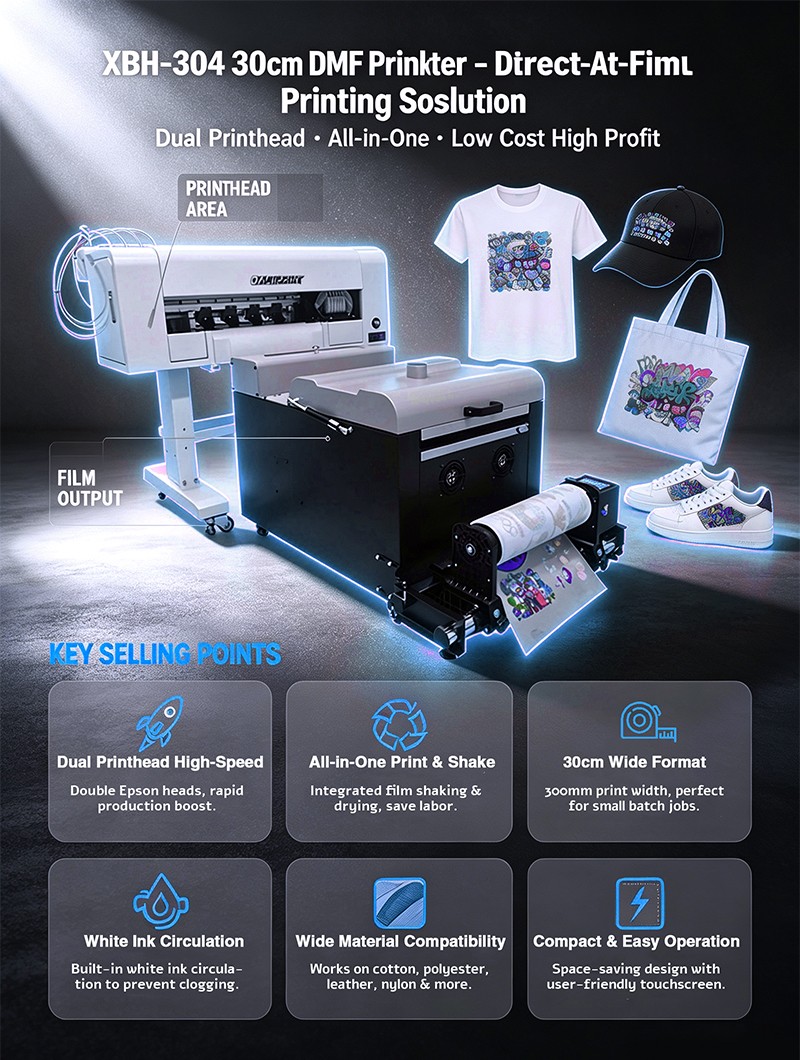
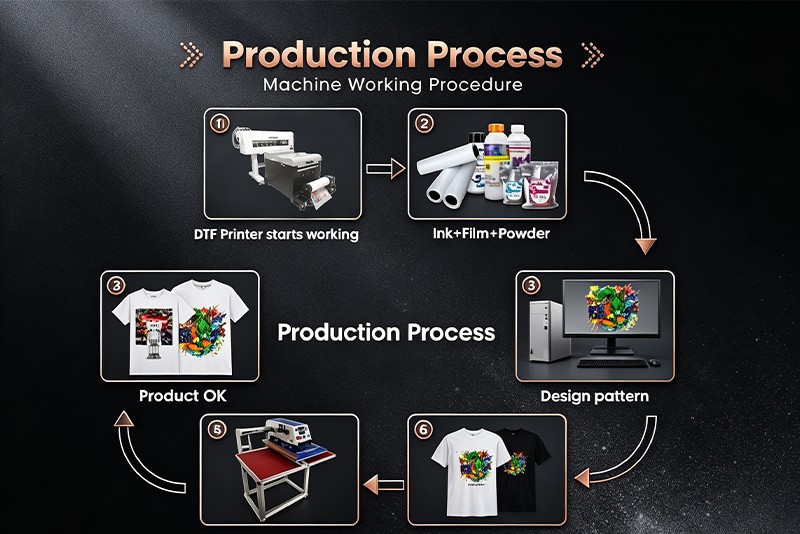
XBH-304 30cm DTF makes the direct-to-film transfer process simple: design on computer, print on PET film, automatic powder coating & drying, heat press onto garment, finished product. No weeding, no screens, no fabric pre-treatment. Clean, efficient workflow from digital file to finished custom apparel.
Q: What is the complete DTF transfer workflow from start to finish?
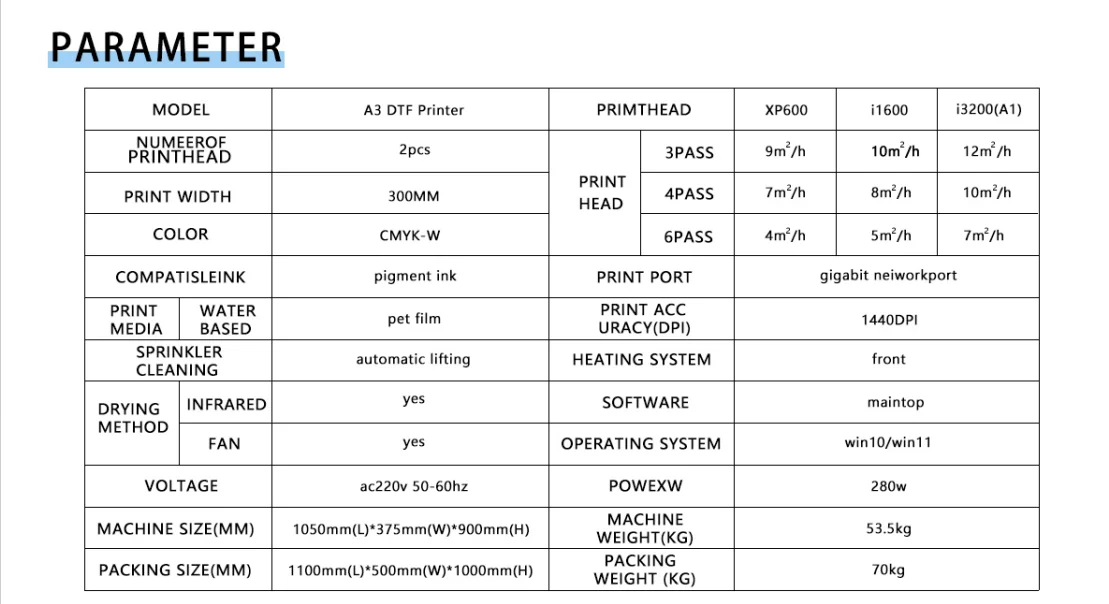
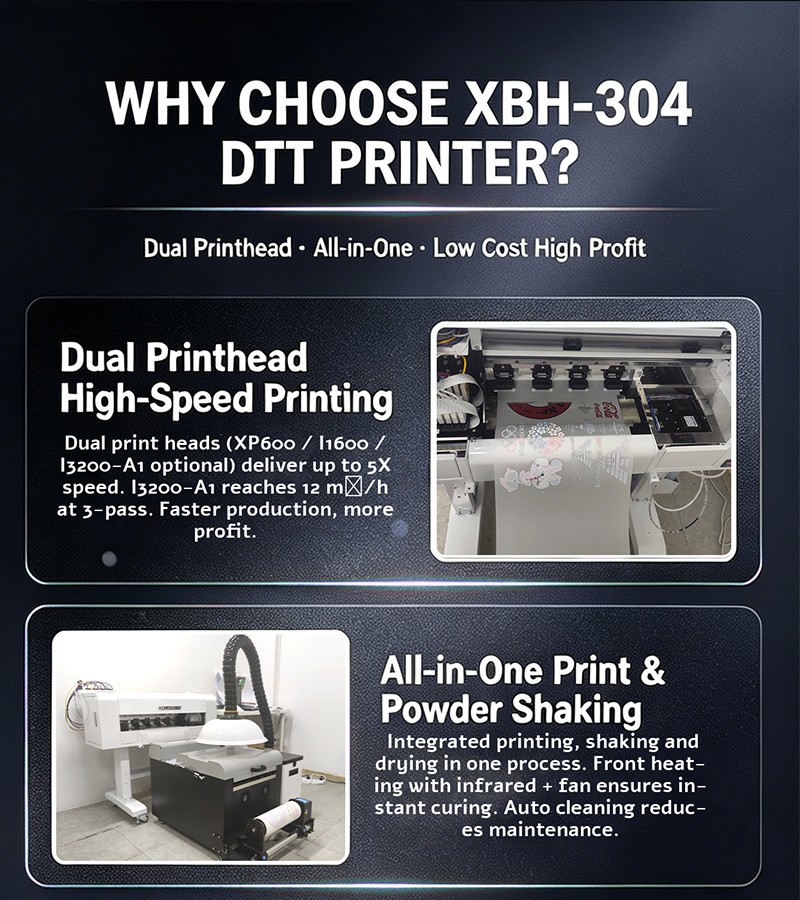
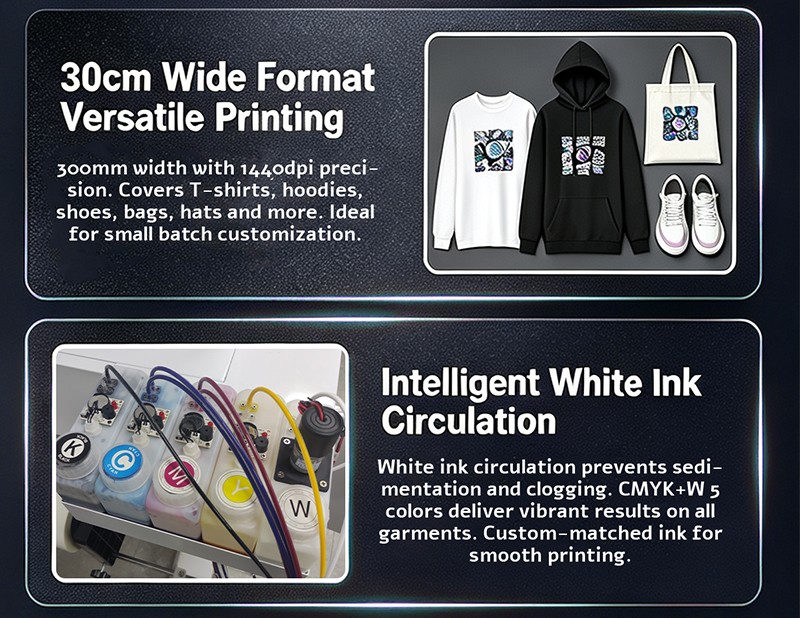
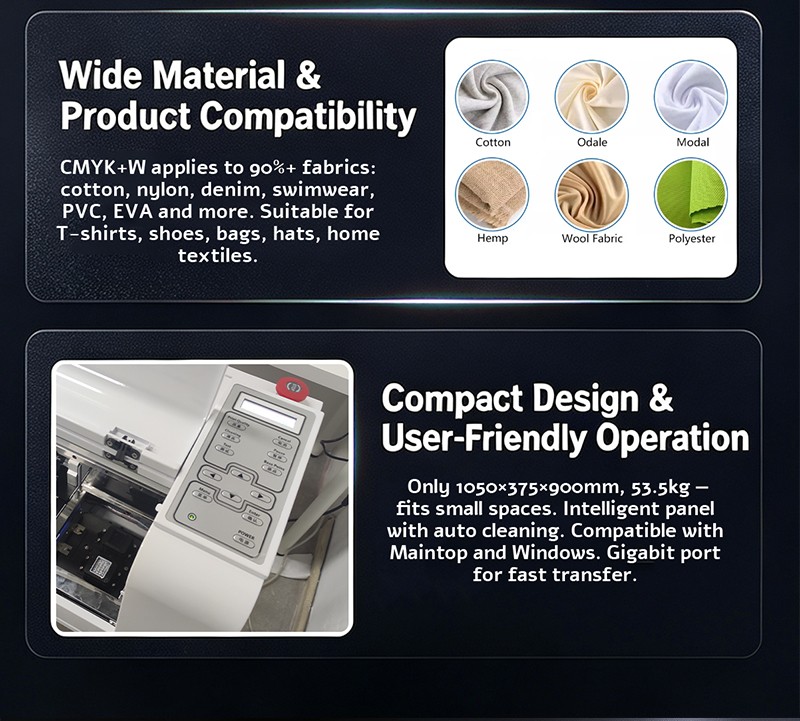
A: The process has several clear steps. Step 1: Design — create or prepare your artwork on the computer using graphic design software, then import it into the RIP software (Maintop) where you arrange the design on the virtual film layout, mirror it (required for DTF), and set print parameters. Step 2: Print — send the job to the XBH-304, which prints the design onto PET film using CMYK+W ink. The white ink is printed first as an underbase, then color on top. Step 3: Powder & Dry — the printed film automatically feeds through the integrated powder shaker, where hot melt adhesive powder is applied to the wet ink, then through the drying section where infrared heat cures the powder and ink. Step 4: Cut — cut the finished transfer film to size (or use pre-cut sheets). Step 5: Press — place the transfer film on the garment, ink side down, and heat press at the appropriate temperature and pressure. Step 6: Peel — remove the PET film (hot or cold peel depending on film type), leaving the design adhered to the garment. The finished garment is ready to wear.
Q: How is DTF different from other garment decoration methods?
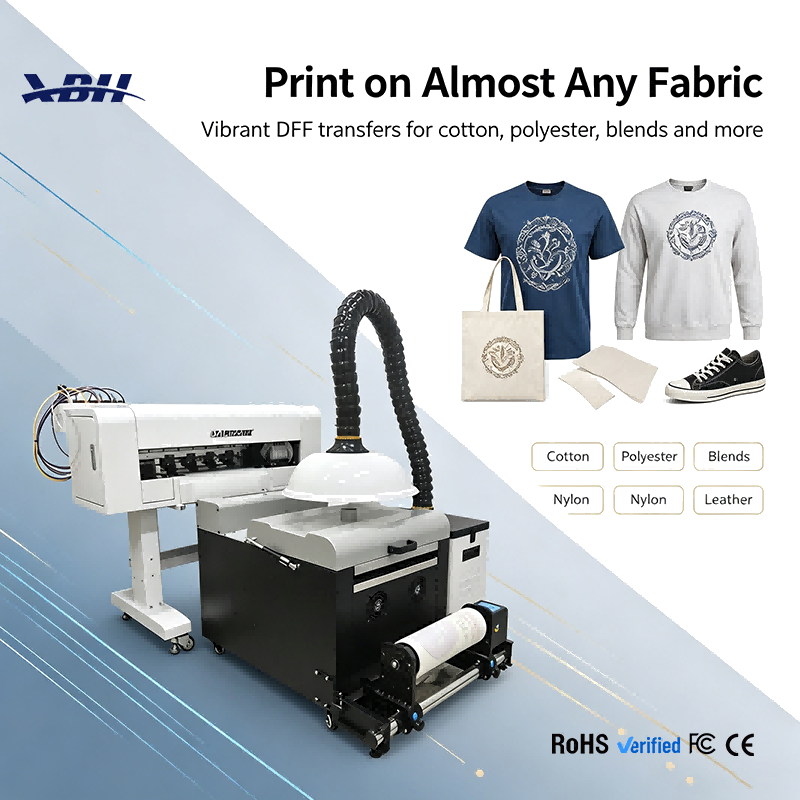
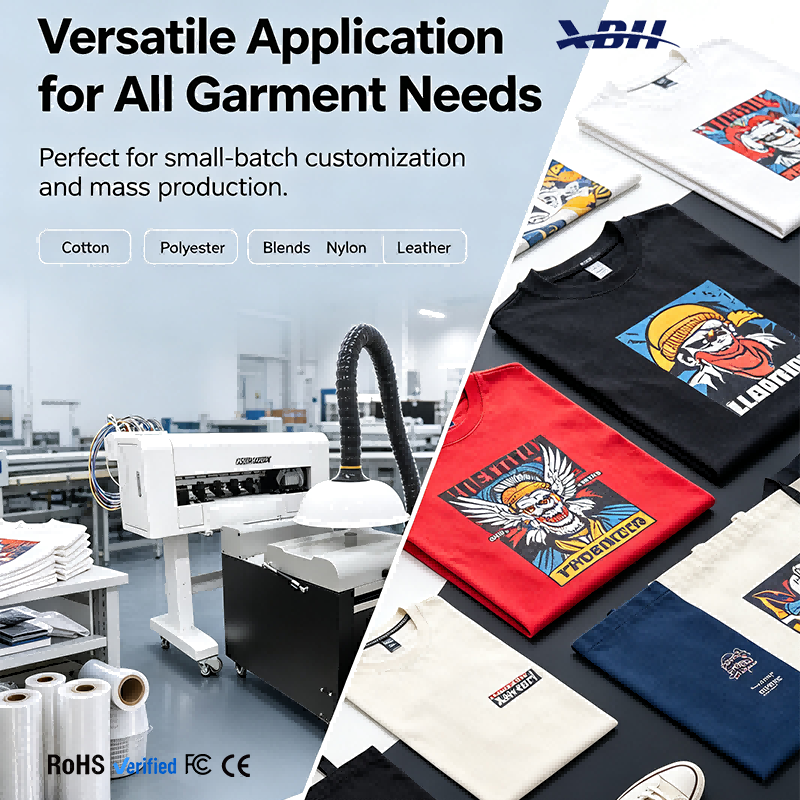
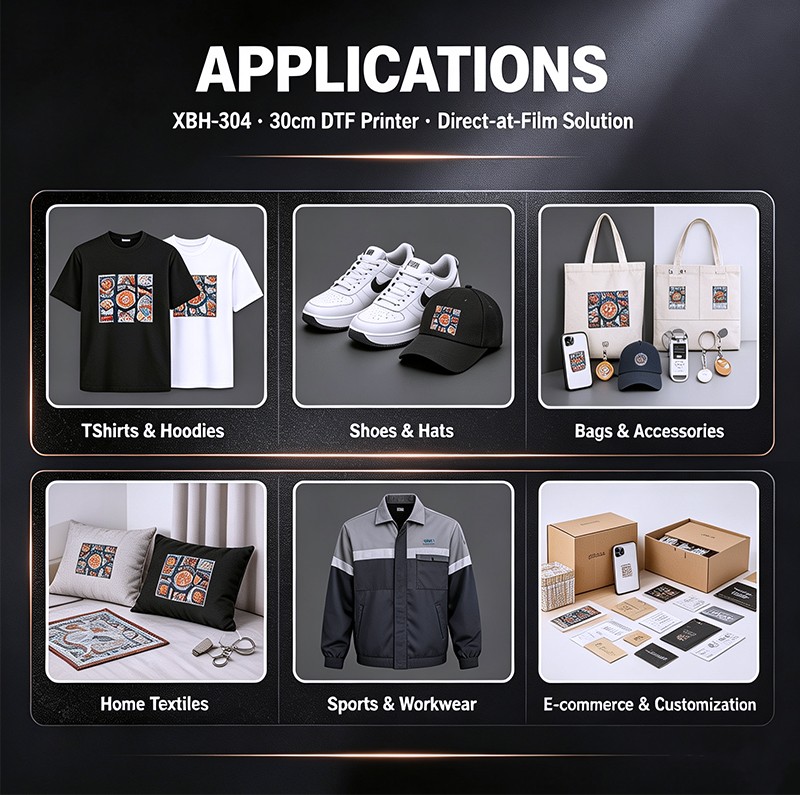
A: DTF has several unique advantages. Unlike screen printing, DTF requires no screens, no setup per color, and no minimum orders — you can print one design or a hundred with the same process. Unlike heat transfer vinyl (HTV), DTF requires no weeding (the tedious step of removing excess vinyl from the design), and it can print full-color photographic images with smooth gradients that HTV can't easily achieve. Unlike direct-to-garment (DTG) printing, DTF doesn't require pre-treating the garment with spray pretreatment before printing, and the transfer film can be pressed onto a much wider range of fabrics (90%+ including polyester, nylon, denim and more). DTF also allows you to print transfer films in advance and store them for later pressing, which gives you production flexibility. The overall workflow is clean, efficient and versatile, making it popular for custom apparel businesses of all sizes.
Q: Do I need to pre-treat garments before pressing DTF transfers?
A: No, that's one of the key advantages of DTF over DTG (direct-to-garment) printing. With DTG, you typically need to spray a liquid pretreatment onto dark garments before printing, then heat press it dry, which adds time, mess and cost to the process. With DTF, the adhesive powder on the transfer film does the bonding work — when heated, the powder melts and adheres to the garment fibers without any pre-treatment needed. You just place the transfer on the garment and press. This makes the DTF process cleaner and faster at the pressing stage, and it means you don't need to invest in pretreatment equipment or deal with pretreatment chemicals. For businesses that value a clean, simple workflow, this is a significant benefit.
Q: What equipment do I need beyond the DTF printer?
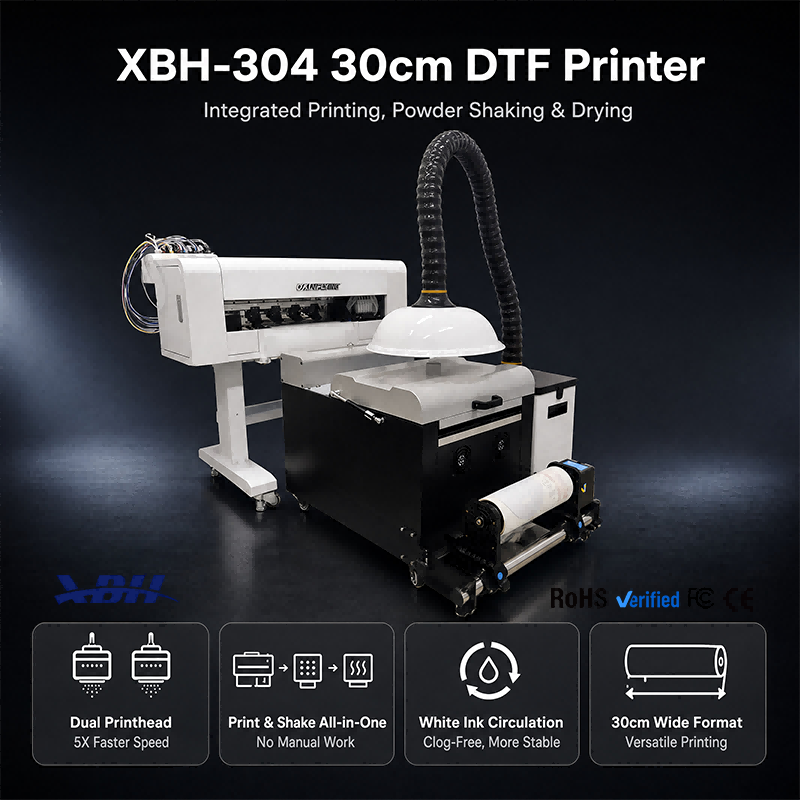
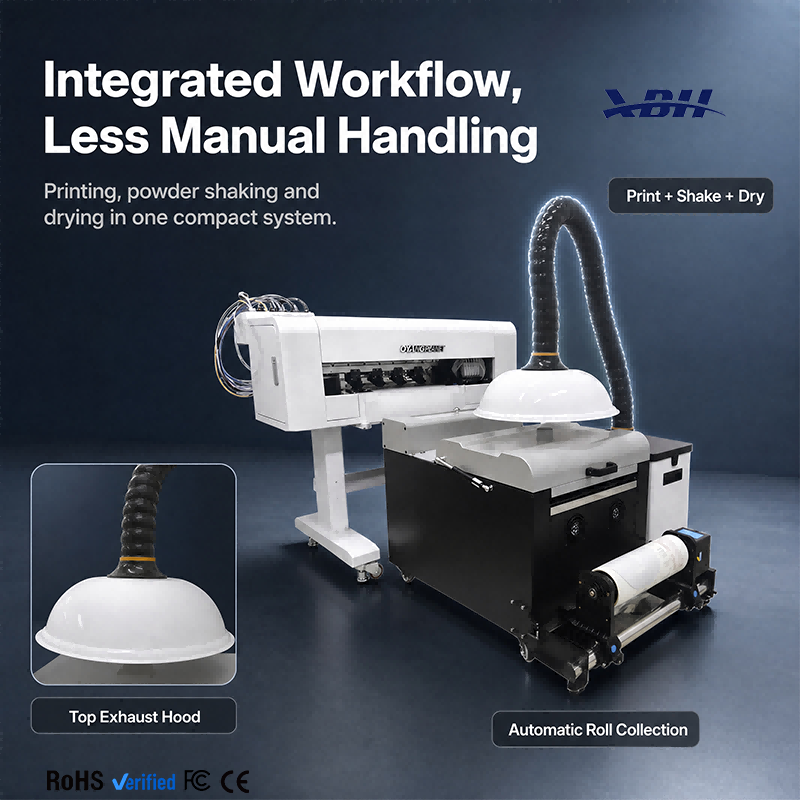
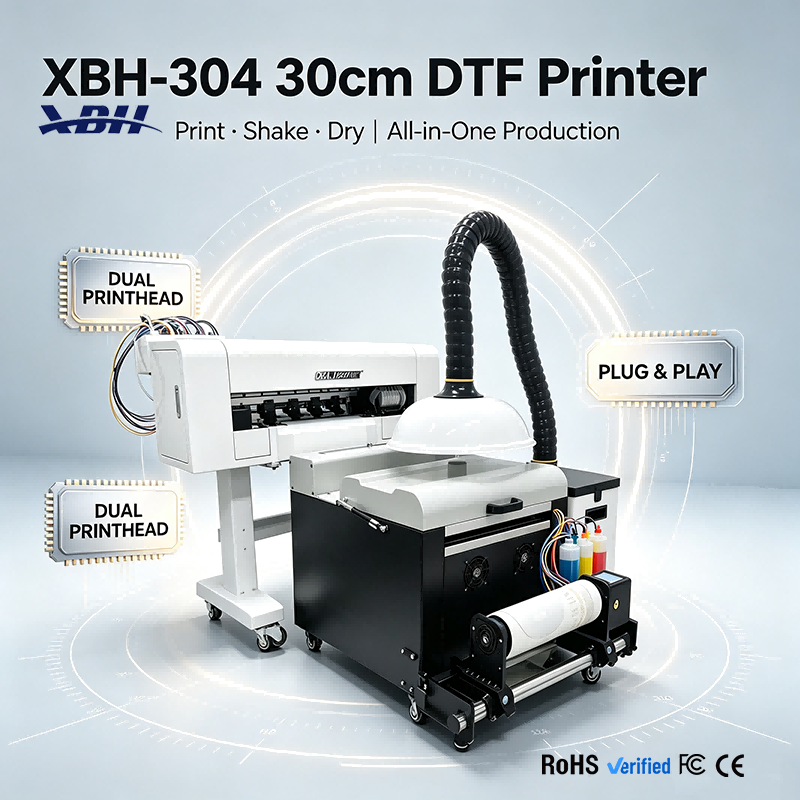
A: Beyond the XBH-304 printer (which includes integrated printing, powder shaking and drying), the main additional equipment you need is a heat press for transferring the film onto garments. A standard flat heat press (typically 40×50cm or larger) works for most t-shirts, hoodies and flat garments. If you plan to press hats, you'll need a hat press attachment or dedicated hat press. For shoes and other irregular items, you may need specialized presses or jigs. You'll also need a computer (Windows PC) running the Maintop RIP software for preparing and sending print jobs, and basic supplies: PET DTF film rolls or sheets, DTF ink (CMYK+W), and hot melt adhesive powder (though the machine's integrated shaker uses bulk powder). You may also want a cutter or scissors for trimming transfer films, and a workspace for heat pressing and folding finished garments. The total additional investment beyond the printer is relatively modest compared with other decoration methods, which makes DTF accessible for small businesses and startups.