
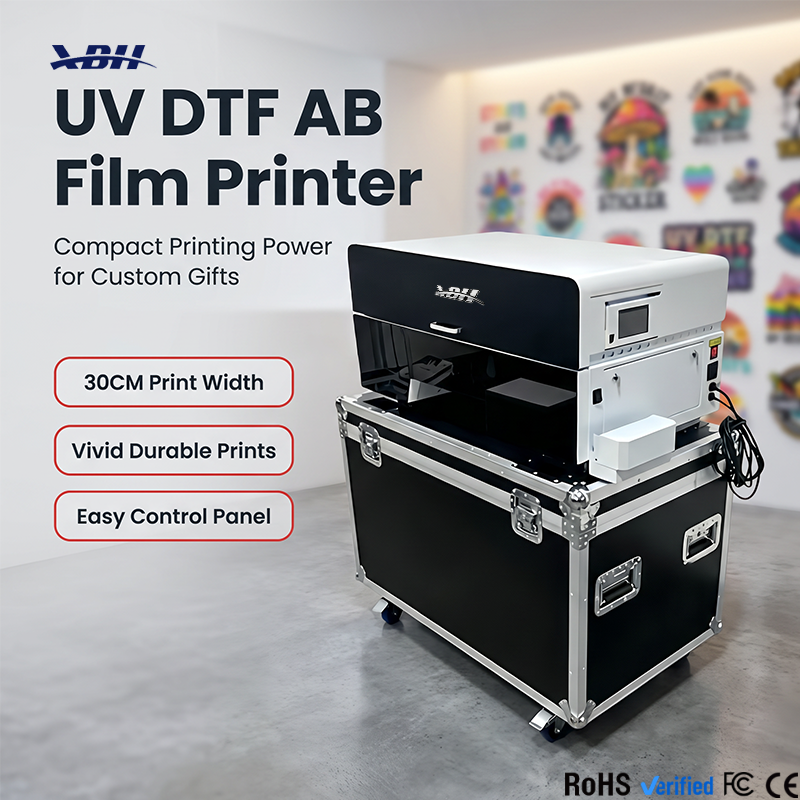
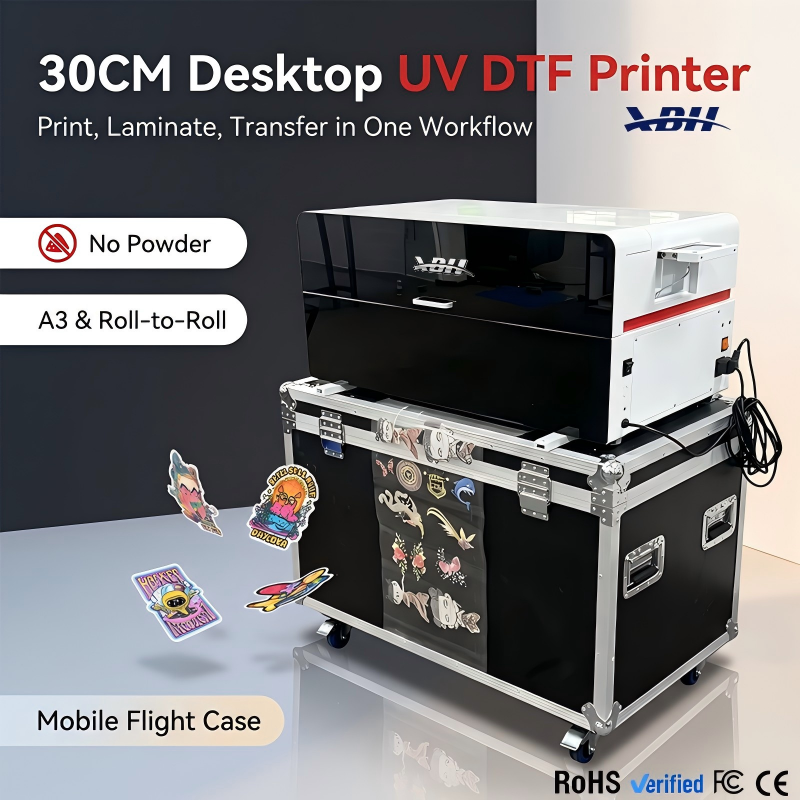
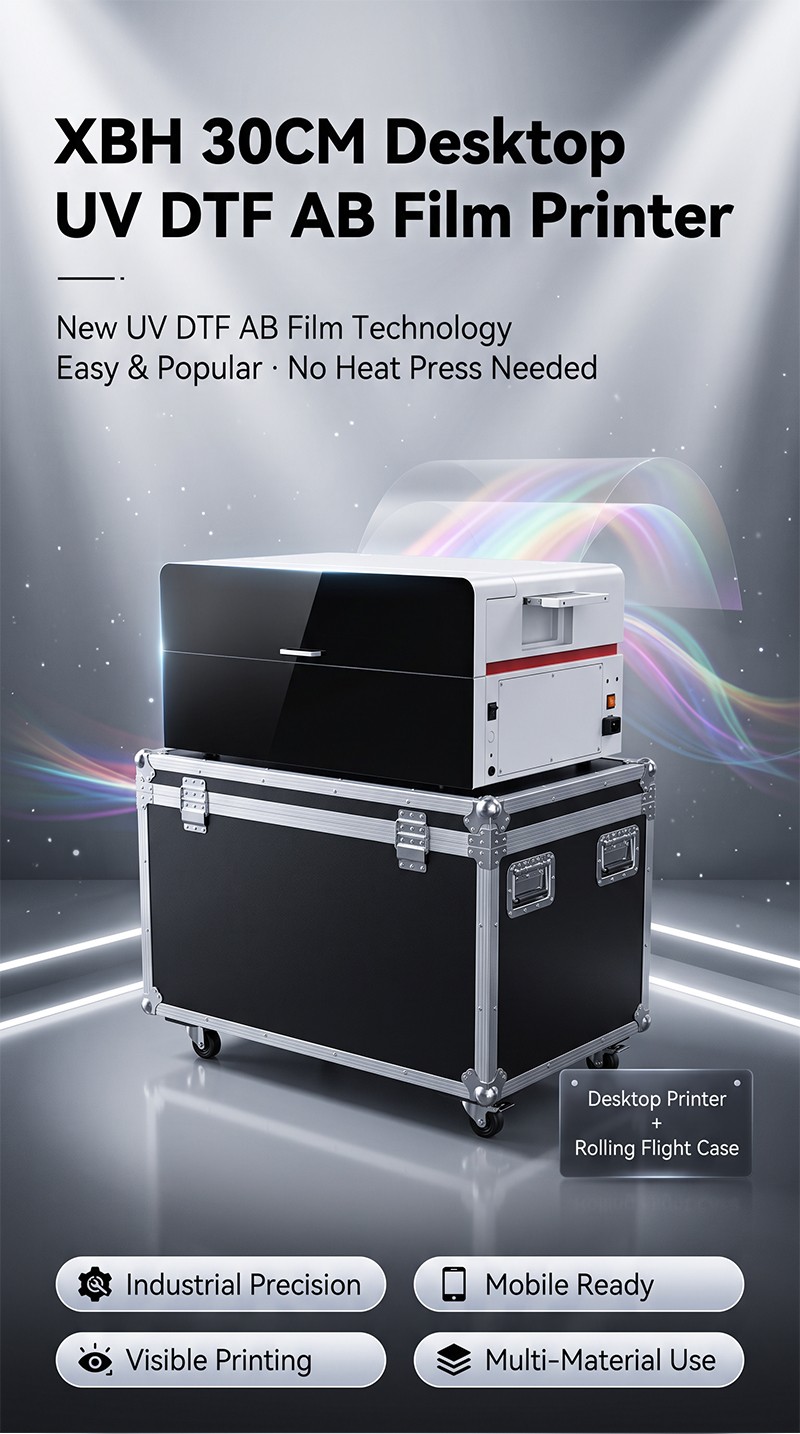
UV DTF AB Film Printer - No Powder No Heat Press Direct Transfer Sticker Machine
Brand XBH
Product origin guangdong
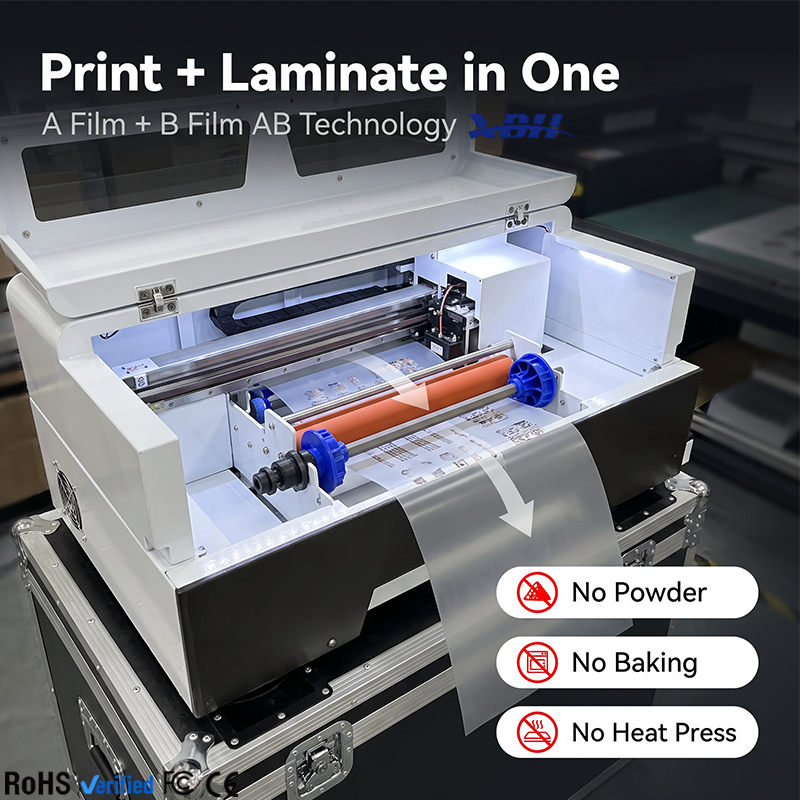
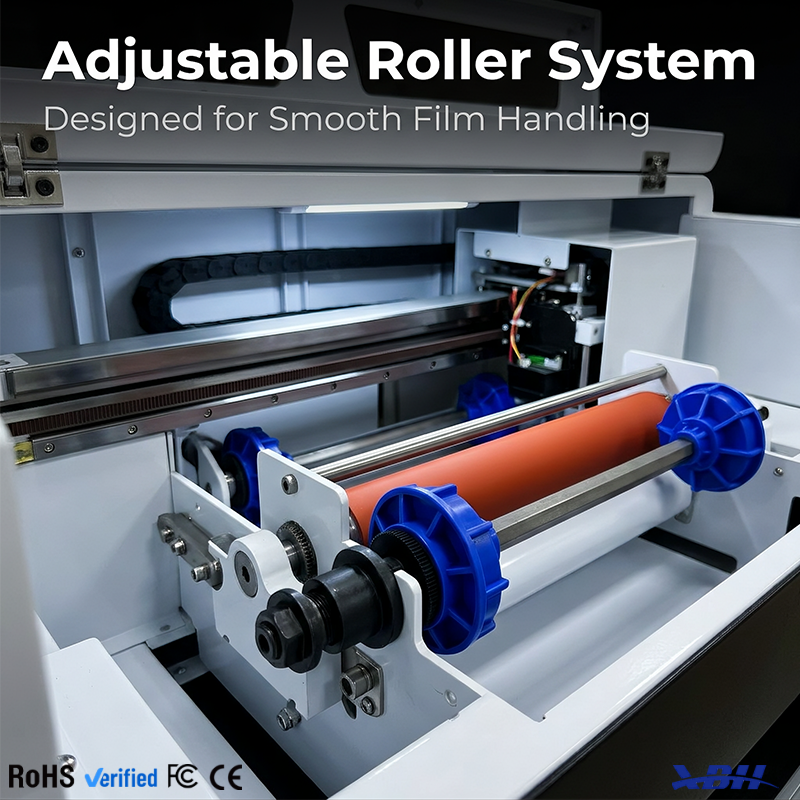
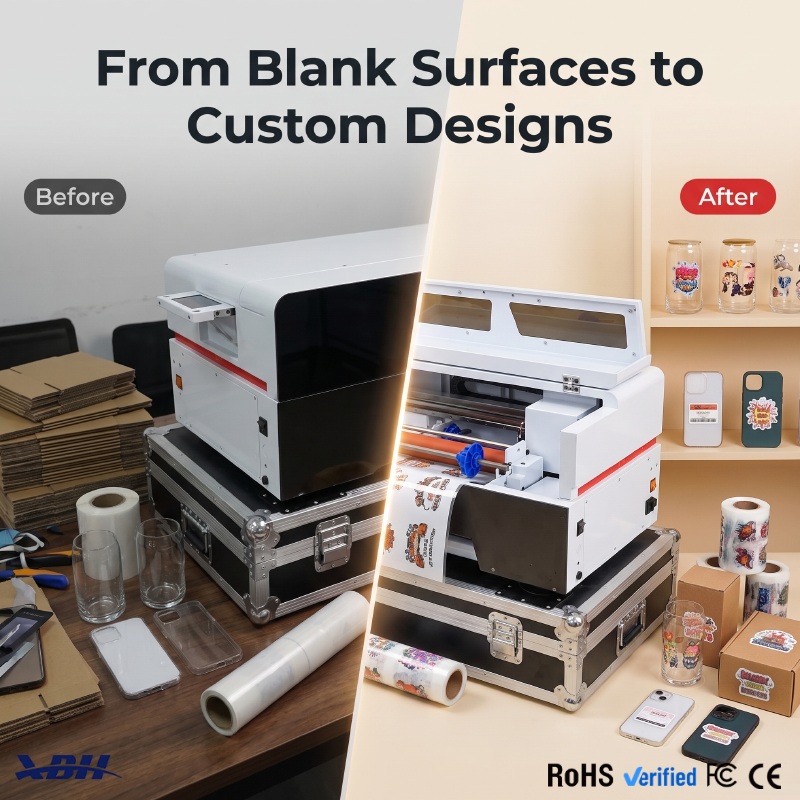
UV DTF AB film technology eliminates powder shaking, baking and heat pressing entirely. Just print on A film, laminate with B film, and transfer directly onto any hard surface. Fewer steps, less equipment, lower operating cost and faster turnaround.
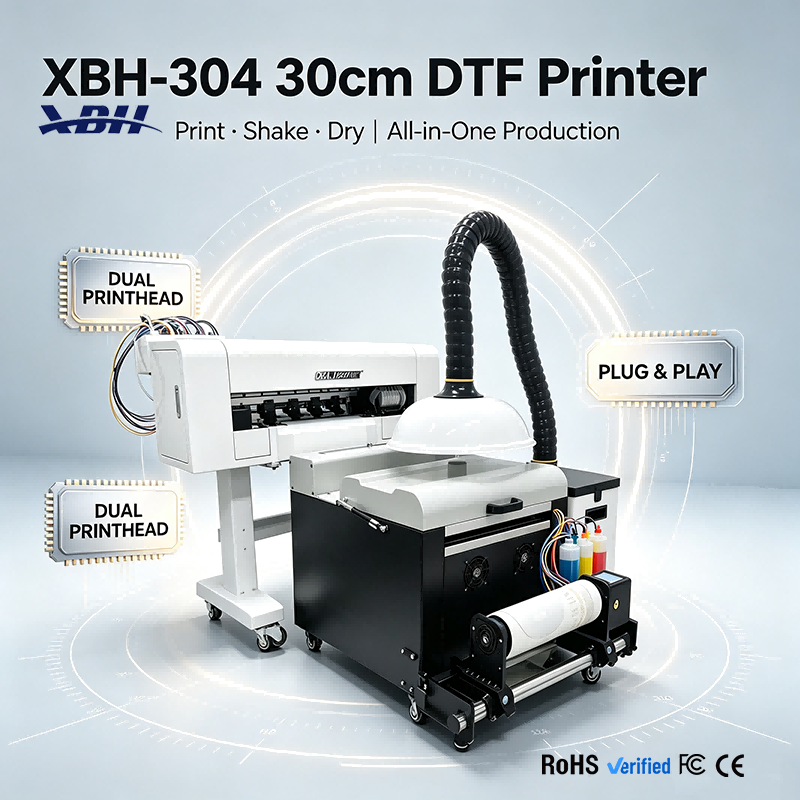
UV DTF AB Film Printer - No Powder No Heat Press Direct Transfer Sticker Machine
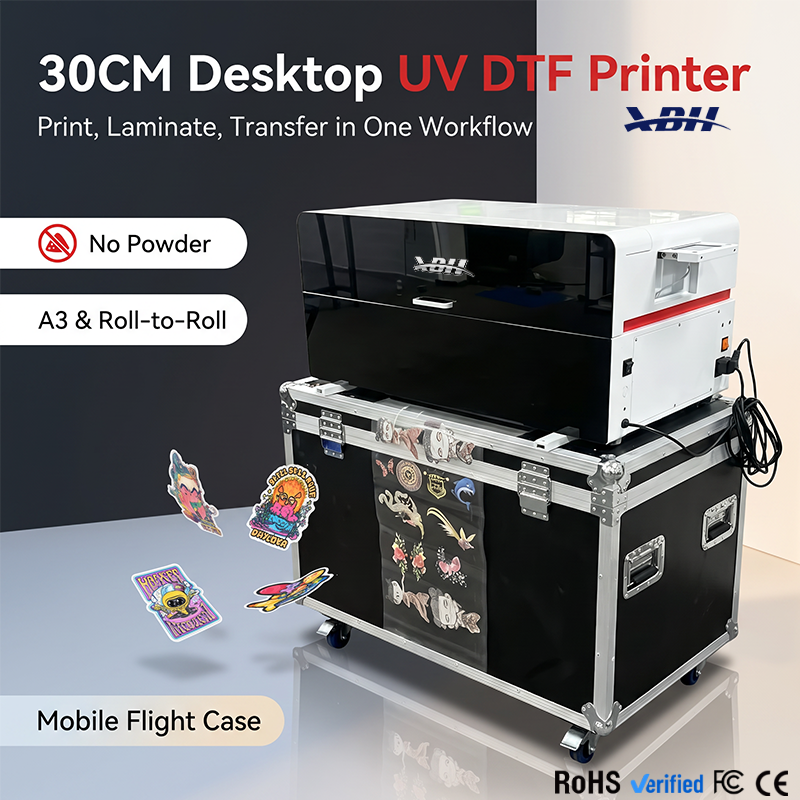
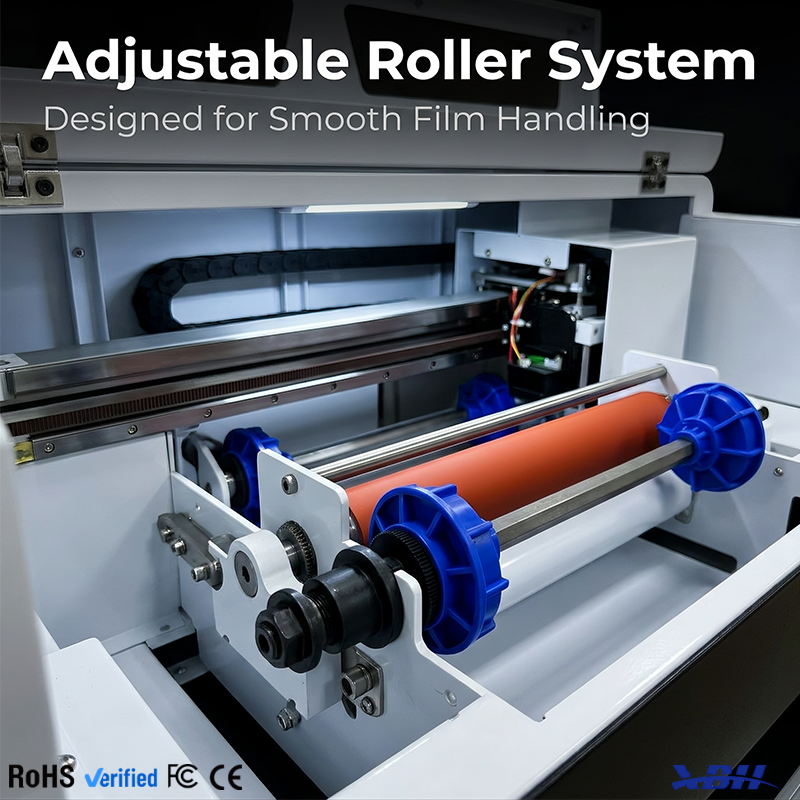
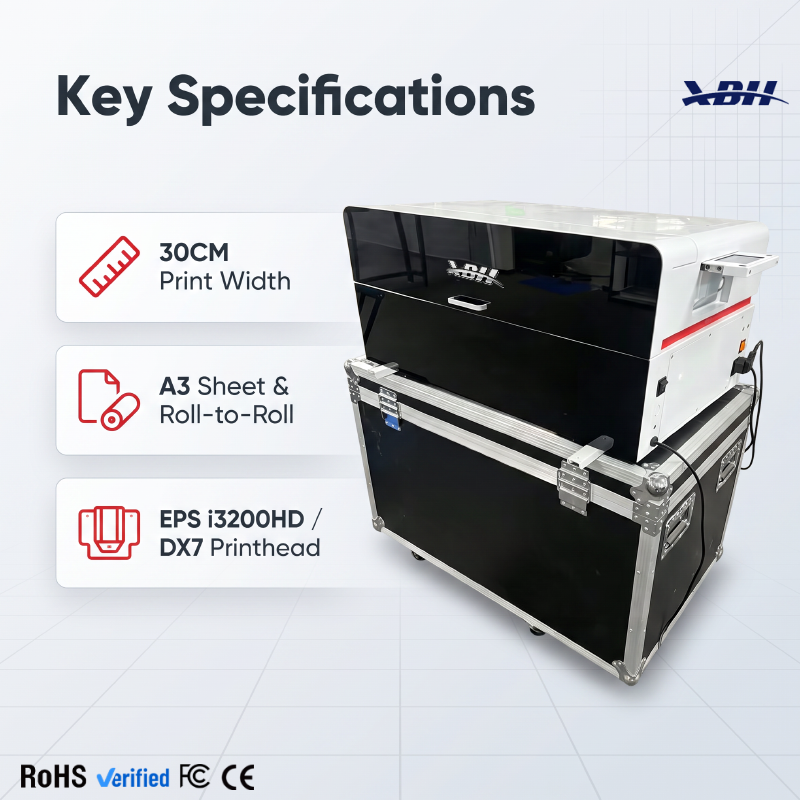
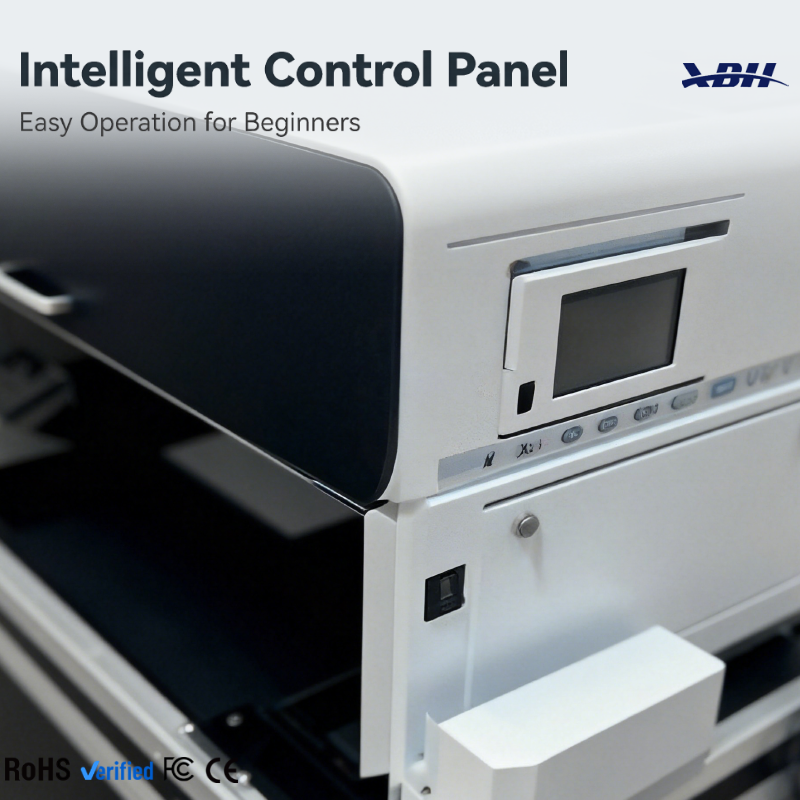
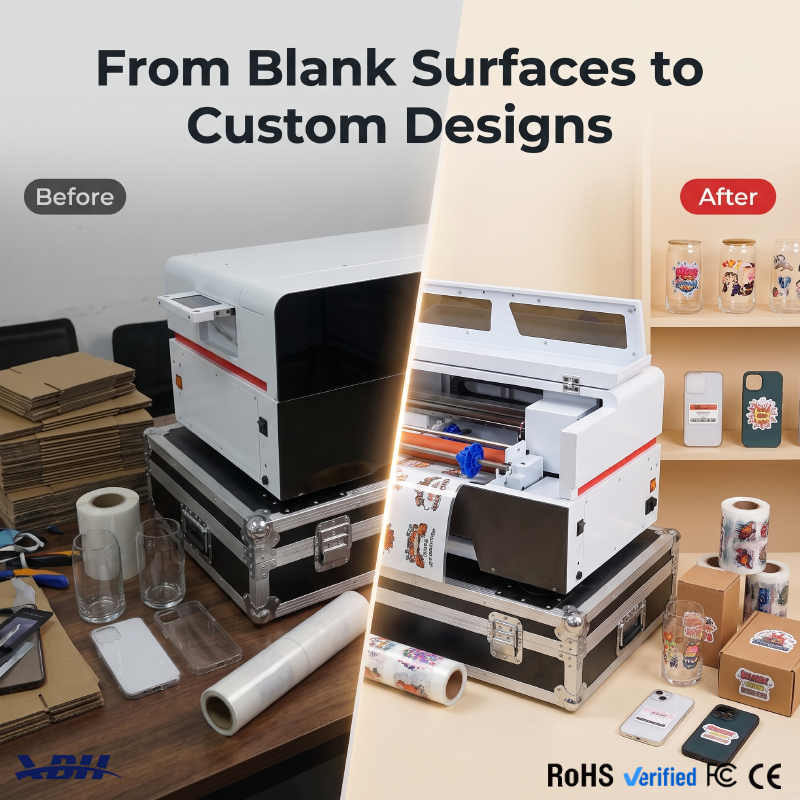
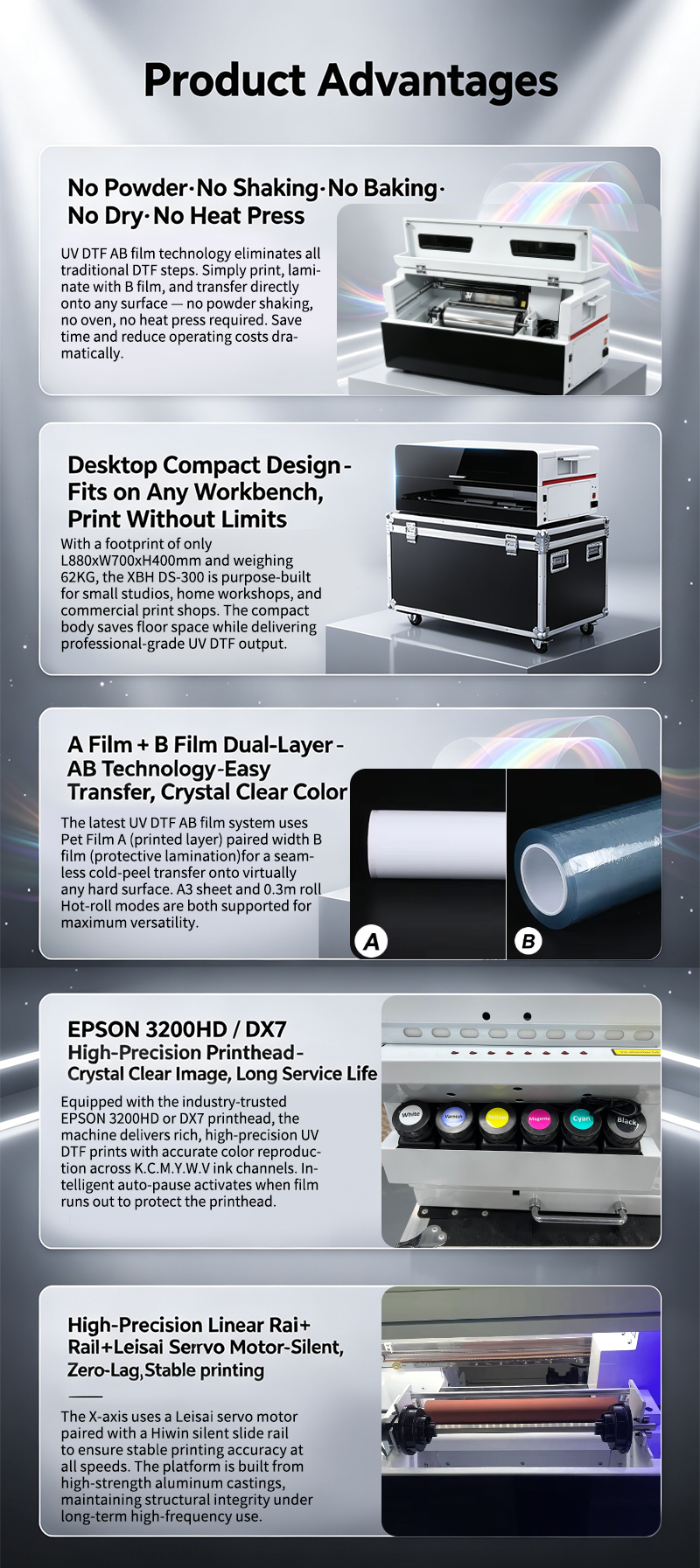

Q: What does "no powder, no heat press" actually mean in practice?A: It means the whole process is way simpler than traditional transfer methods. You print your design directly onto the A film with UV ink, then run it through the built-in laminator with the B film to seal it, and you've got a finished transfer sticker. That's it. No powder to apply and shake off, no oven to cure it, no heat press needed for the final application. You peel off the backing and stick it onto the product — done. The whole workflow is cut down to basically two steps instead of five or six.
Q: How many steps does the UV DTF process actually have?A: Three main steps, and they're all quick. First, print the design onto the A film — the printer does that automatically. Second, laminate the printed A film with the clear B film, which the machine handles in-line. Third, peel the finished transfer sticker and apply it to your product by hand. No messy powder, no curing oven, no heat press, no drying racks. You go from digital file to finished transfer in minutes, and applying it to a product takes seconds.
Q: Does this mean I need less equipment overall?A: Way less. With other transfer methods, you need a printer, a powder shaker, a curing oven and a heat press — four separate machines taking up space and costing money. With UV DTF, you just need this one printer-laminator combo, plus a squeegee or applicator tool for applying the stickers. You don't need to buy extra equipment, you don't need space for it all, and you don't have the maintenance and power costs of running multiple machines.
Q: Is the transfer really just peel-and-stick?A: Yes, that's the beauty of it. The finished transfer has an adhesive layer already built in. You peel the backing off, position the sticker on the product, rub it down firmly with a squeegee to make sure it's fully adhered, then peel off the clear top layer, and the design stays behind. No heat, no pressure machine, no waiting. The cold-peel application works on smooth hard surfaces like phone cases, acrylic, metal, glass, plastic — pretty much anything with a clean, flat surface.
Q: How does this save time on production?A: Every step that gets removed saves time. You save time not weighing and applying powder. You save time not running transfers through a dryer. You save time not heating up a press and waiting for it to transfer. You save time on cleanup because there's no powder everywhere. For a small shop or a one-person operation, all that saved time adds up to more orders you can fill in a day. And because the process is simpler, there's less to go wrong and less troubleshooting.
Q: Is the process cleaner than other transfer methods?A: Much cleaner. Powder is messy — it gets everywhere, it coats your workspace, it gets in the air, you're constantly cleaning it up. UV DTF has no powder at all. The ink is fully contained in the printer, the laminating step is clean, and the finished transfers are dry and ready to handle immediately. Your workspace stays tidy, you don't need special ventilation or dust collection, and cleanup at the end of the day is basically just putting away your materials.
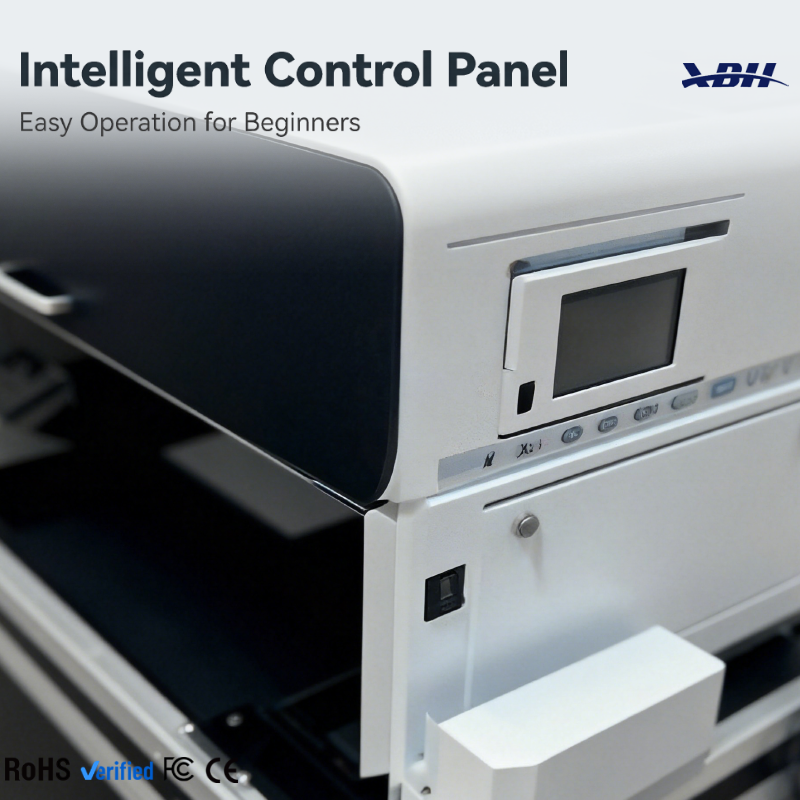
Q: Can someone with no printing experience learn this process?A: Absolutely. The simpler the process, the easier it is to learn. You don't have to master powder application amounts, curing temperatures, press timing and pressure — all the variables that make other methods tricky. With UV DTF, you learn the software, you load the film, you hit print, you laminate, and you're done. Most people are producing good quality transfers within their first day or two of practice. The learning curve is gentle because there are fewer things to get wrong.