



Opaque White Ink DTF System - Vibrant Prints on Dark & Colored Garments
Brand XBH
Product origin guangdong
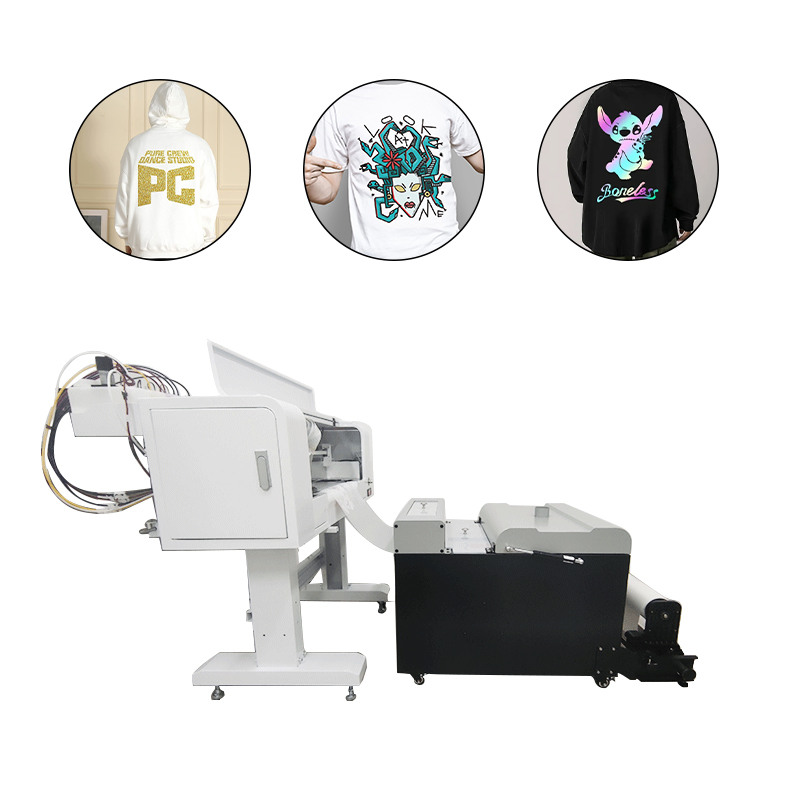
High-opacity white ink produces bright, vibrant prints on dark and colored garments. Smooth, even white underbase makes colors pop on black, navy, red and more. Consistent white density across every transfer, no patchiness, no see-through.
Opaque White Ink DTF System - Vibrant Prints on Dark & Colored Garments
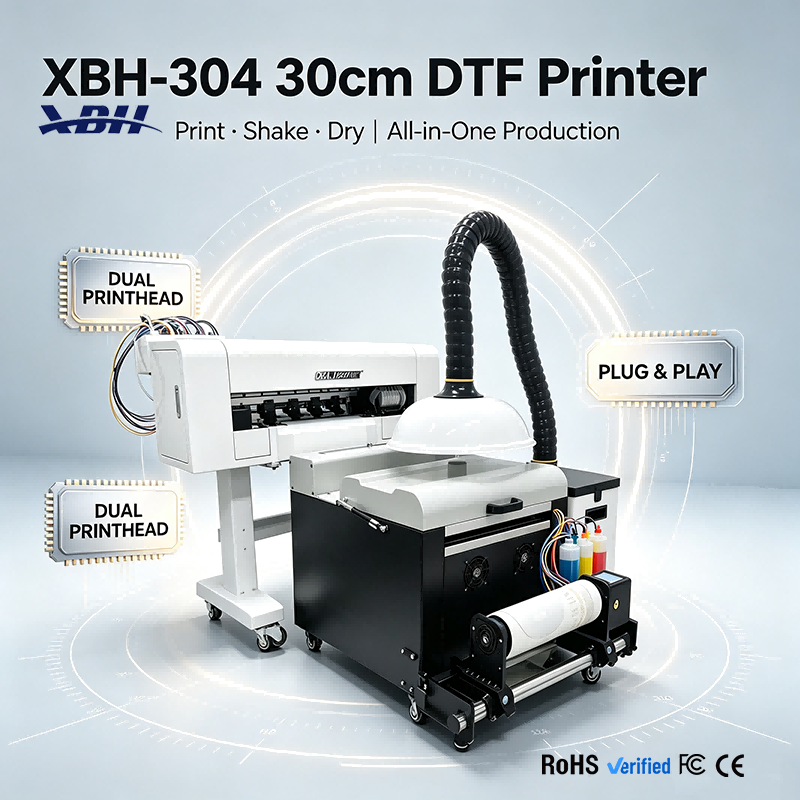
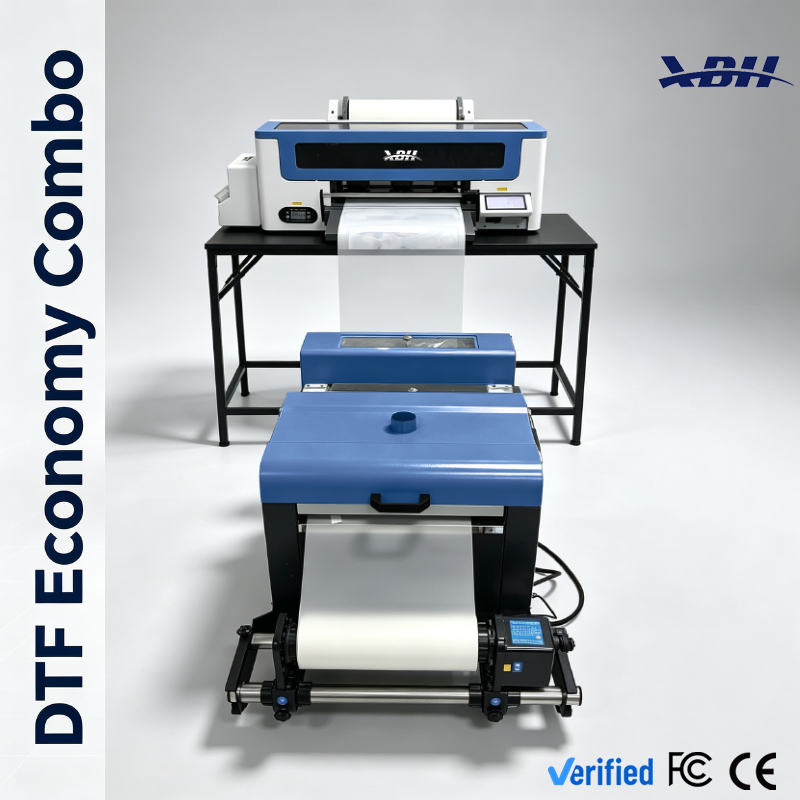
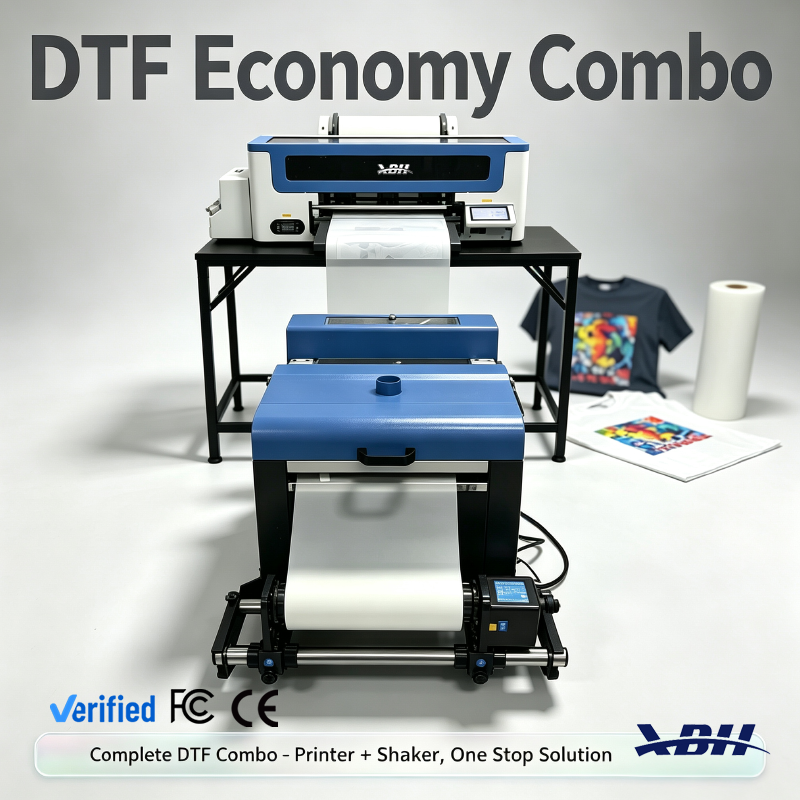
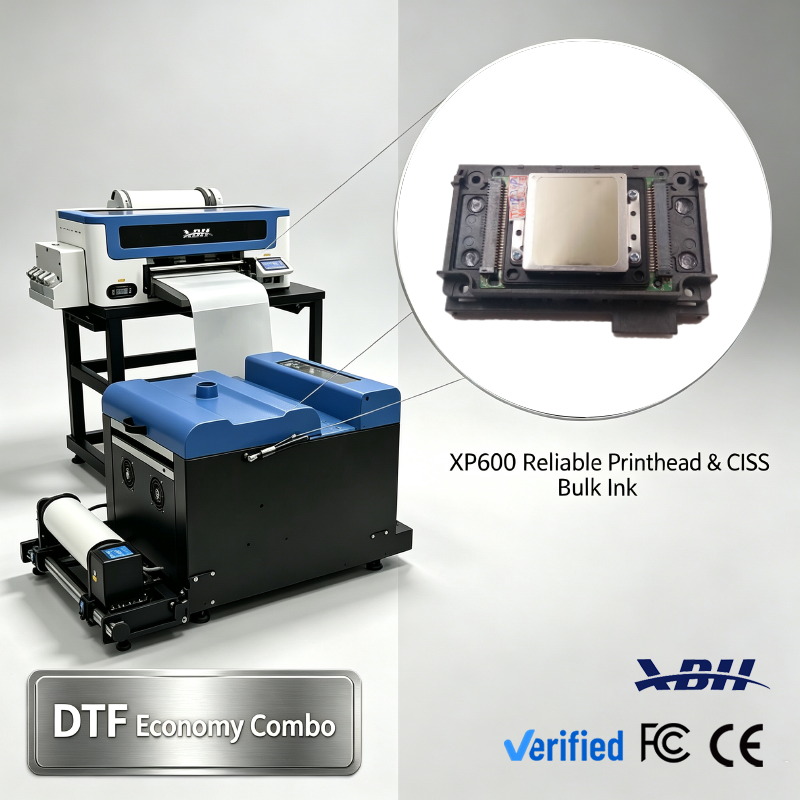
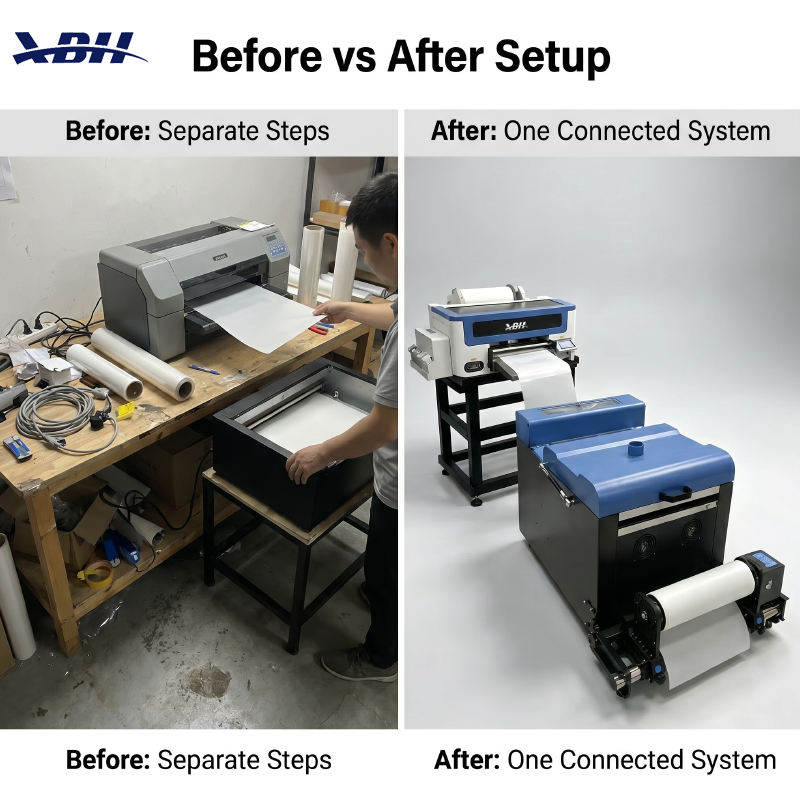
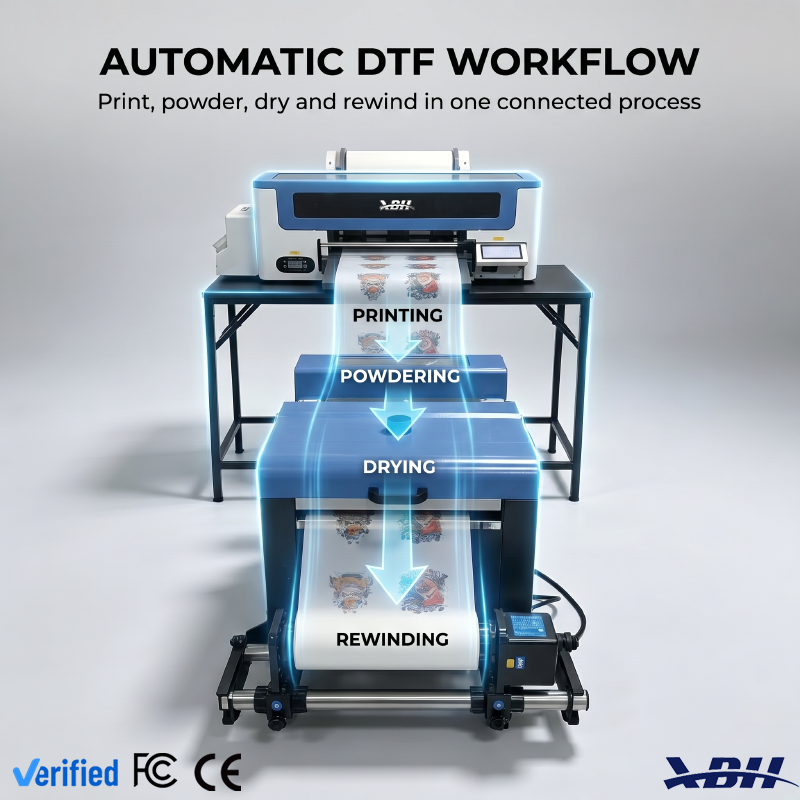
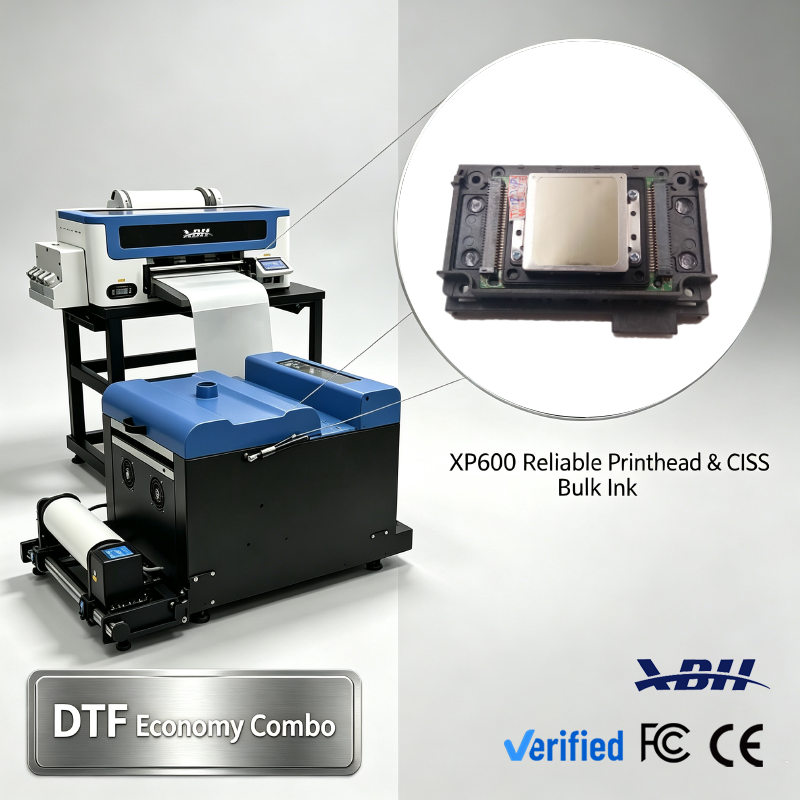
XBH A3 30cm DTF Printer Combo with dual XP600/I3200 printheads and auto powder shaker. Complete DTF workflow for T-shirts, hoodies, sportswear and custom apparel. White ink circulation, built-in cutter, easy to operate for small batch textile heat transfer printing.

| Item | Details |
|---|---|
| Model | XBH A3 DTF Combo (400D Printer + 400H Powder Shaker) |
| Printhead | 2 pcs XP600 / I3200-A1 / L1600-A1 |
| Max Printing Width | 335mm (12 inch A3) |
| Ink Configuration | CMYK + White DTF Pigment Ink, White Ink Circulation System |
| RIP Software | CADlink, RIP, Photoprint, MainTop |
| Print Speed | 3 m²/h (6 pass), 2 m²/h (8 pass) |
| Working Condition | 20-30°C, 45%-65% RH |
| Voltage | 110V/220V, 50/60Hz |
| Printer Dimension | L950×W600×H400mm |
| Powder Shaker Dimension | L760×W540×H560mm |
| Net Weight | 50kg (printer) + 30kg (shaker) = 80kg |
| Gross Weight | 80kg (printer) + 60kg (shaker) = 140kg |
| Core Functions | Roll DTF printing, auto powder shaking, melting curing, built-in cutter, linked workflow |
| Applicable Materials | Cotton, polyester, nylon, blended fabric, leather, canvas, sportswear & apparel |
| Certifications | CE, FCC, RoHS |
| Warranty | 1 year main machine warranty (excluding printheads & consumables) |
| Application | Custom T-shirts, hoodies, sportswear, hats, bags, gift apparel, textile decoration |











Q: How important is white ink in DTF printing?A: White ink is crucial — it's the foundation of every print on dark or colored garments. The white underbase layer sits between the fabric and the colored ink, making the colors show up brightly instead of getting absorbed or darkened by the fabric underneath. Without a good white underbase, your prints on dark shirts would look dull, washed out and see-through. The quality of the white ink makes a huge difference in the overall quality and vibrancy of the final print.
Q: How opaque and bright is the white ink?A: The white ink formulation is designed for high opacity and brightness. When printed at proper thickness, it creates a solid, smooth white layer that completely covers the fabric color beneath it. Colors printed on top of this white base look vivid and true — reds are bright red, blues are deep blue, yellows pop. On black shirts, navy hoodies, red jackets and other dark garments, the white underbase ensures your design looks the way it's supposed to, not muted or grayed out.
Q: Is the white ink coverage consistent across the whole print?A: Yes, very consistent. Because the ink is printed onto a smooth PET film surface rather than directly onto textured fabric, it lays down evenly across the entire printed area. You don't get thin spots or patchy coverage where the fabric texture would cause uneven ink deposition. Every part of the white layer is the same thickness and opacity, from edge to edge. This consistency is what gives DTF prints that smooth, professional, solid look.
Q: How does the white ink circulation system help?A: White ink is heavier than colored ink because of the pigment that makes it white and opaque. If it sits still, the pigment can settle, which leads to inconsistent opacity — some prints are whiter than others, some have streaks, some look thin. The circulation system keeps the white ink moving and mixed at all times, so the pigment stays evenly distributed and every print gets the same bright, solid white. It also helps prevent clogging and reduces maintenance needs.
Q: Can I adjust the amount of white ink for different effects?A: Yes, you have control over the white layer. For dark garments, you use a full white underbase for maximum opacity and color brightness. For light-colored shirts, you can use less white or even skip the underbase entirely if you want a softer, more vintage feel. You can also do effects like a "spot white" where only certain parts of the design have white underbase. The software gives you control over how much white is used and where it goes.
Q: Does white ink require more maintenance than color ink?A: It does need a bit more attention, but nothing excessive. Because white pigment is heavier, you want to make sure the circulation system is working properly and you're doing regular nozzle checks. The built-in circulation system handles most of the work automatically — it keeps the ink mixed and flowing so you don't have to manually stir or shake it. Daily maintenance for white ink is just a quick nozzle check and making sure the capping station is clean. It's manageable even for beginners.
Q: What kind of designs look best with a good white underbase?A: All kinds. Full-color photographs look vibrant and true-to-life on dark shirts. Bold logos and graphics pop with bright, saturated color. Gradients and fades look smooth and even. Fine text stays sharp and legible. Basically, any design that needs to look bright and colorful on a dark garment benefits enormously from a good, solid white underbase. It's the difference between a print that looks cheap and faded and one that looks professional, vibrant and eye-catching.