
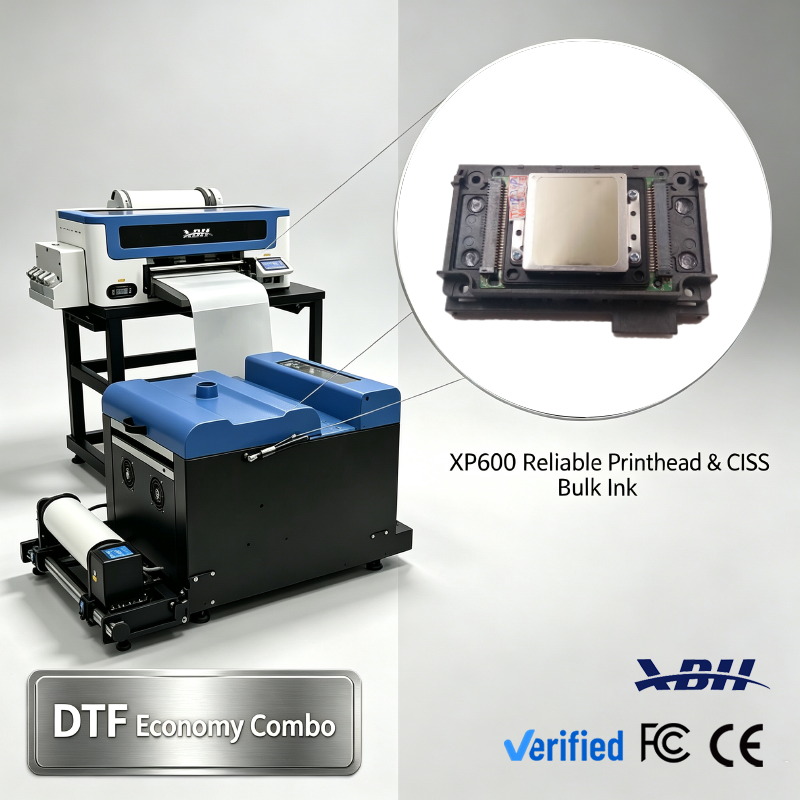
Modular DTF System - Flexible Printer & Shaker Configuration for Growing Shops
Brand XBH
Product origin guangdong
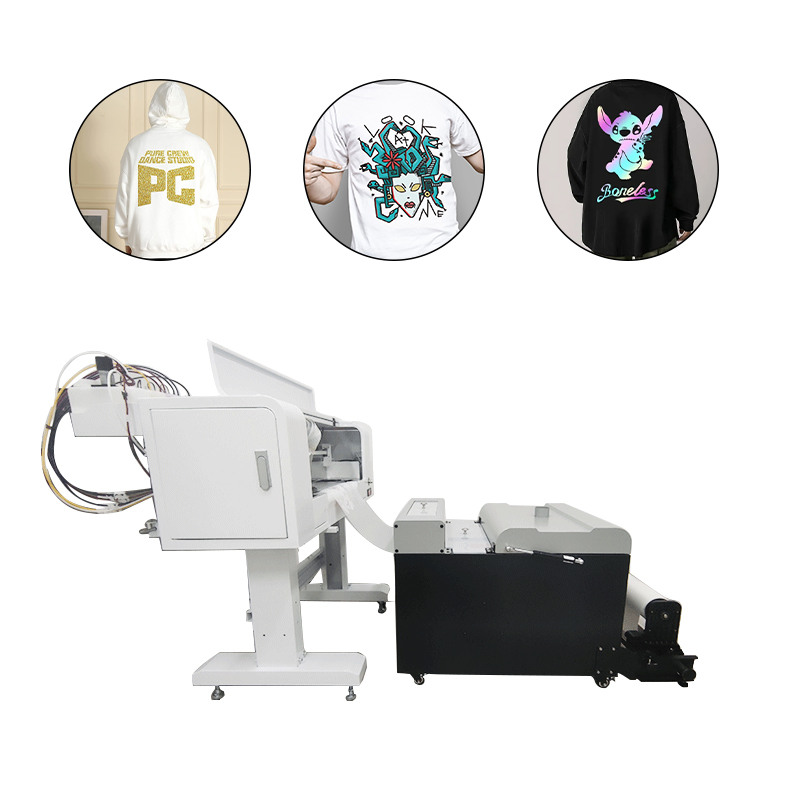
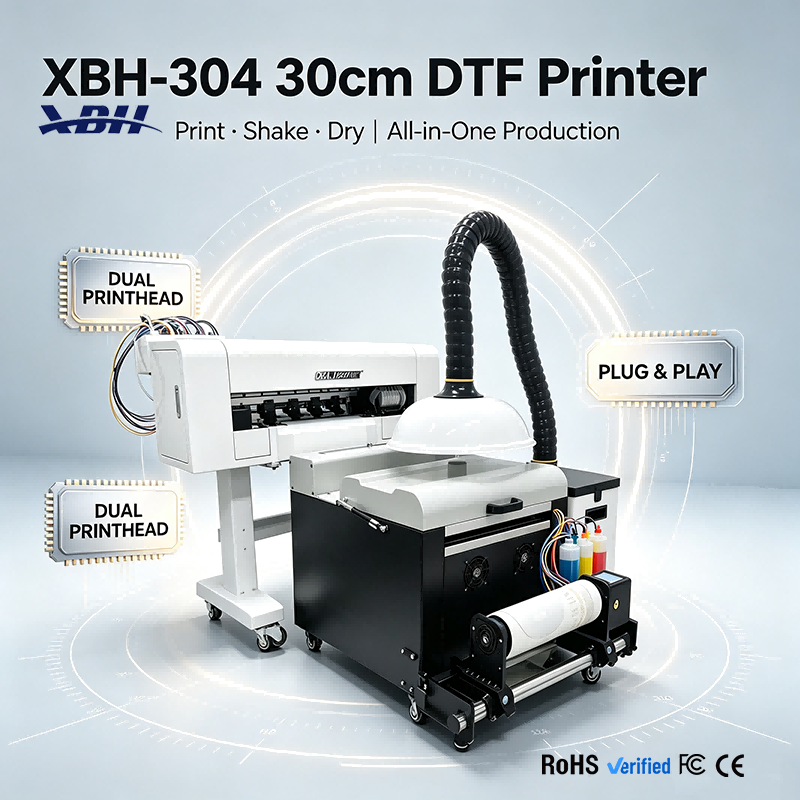
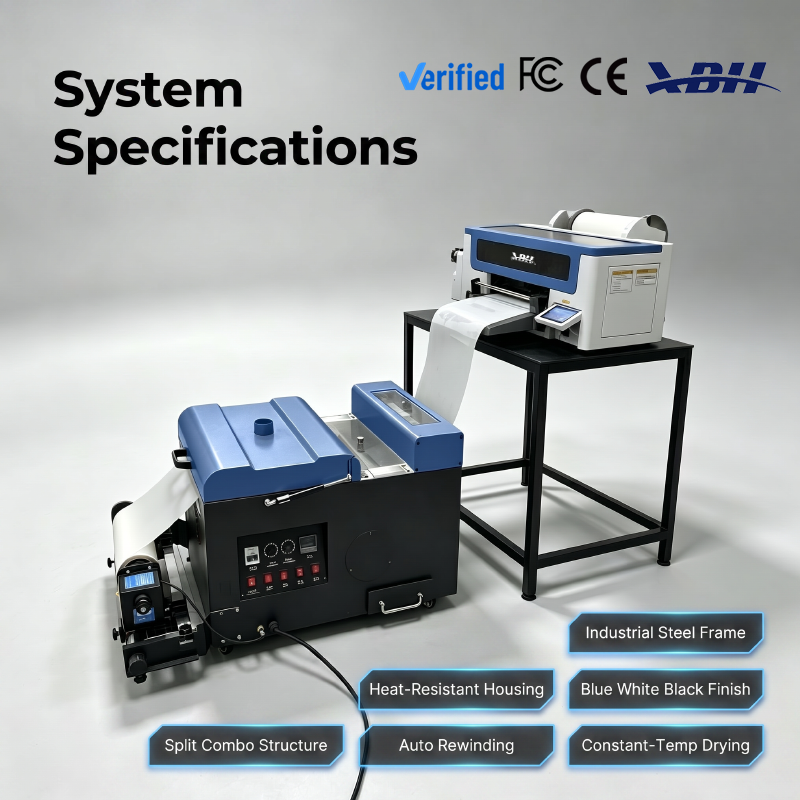
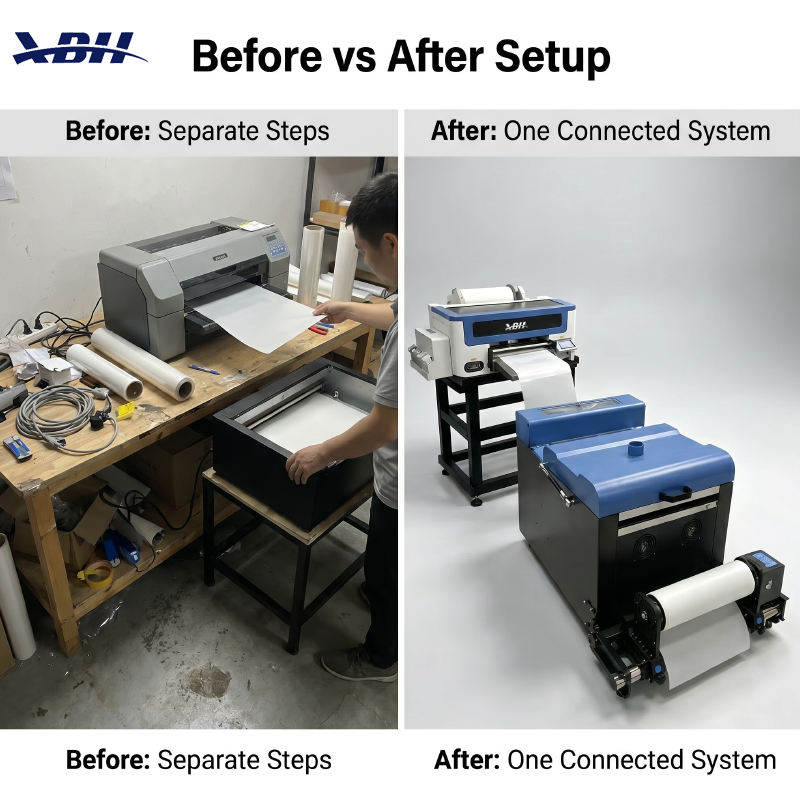
Modular DTF system lets you start with just the printer and add the shaker later, or get both as a combo. Flexible configuration grows with your business. Swap, upgrade or expand components as your production needs change.
Modular DTF System - Flexible Printer & Shaker Configuration for Growing Shops
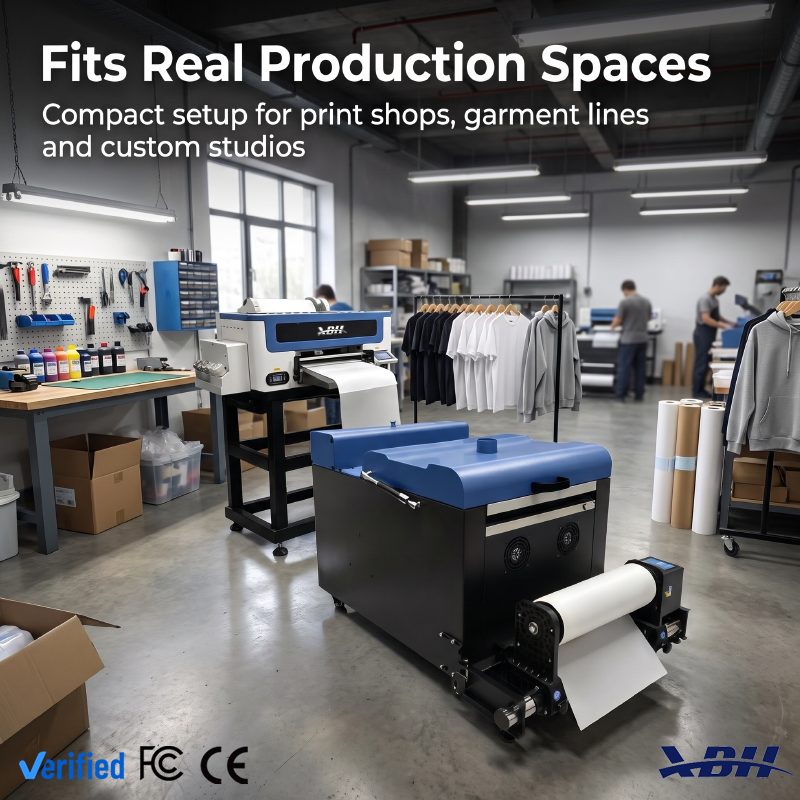
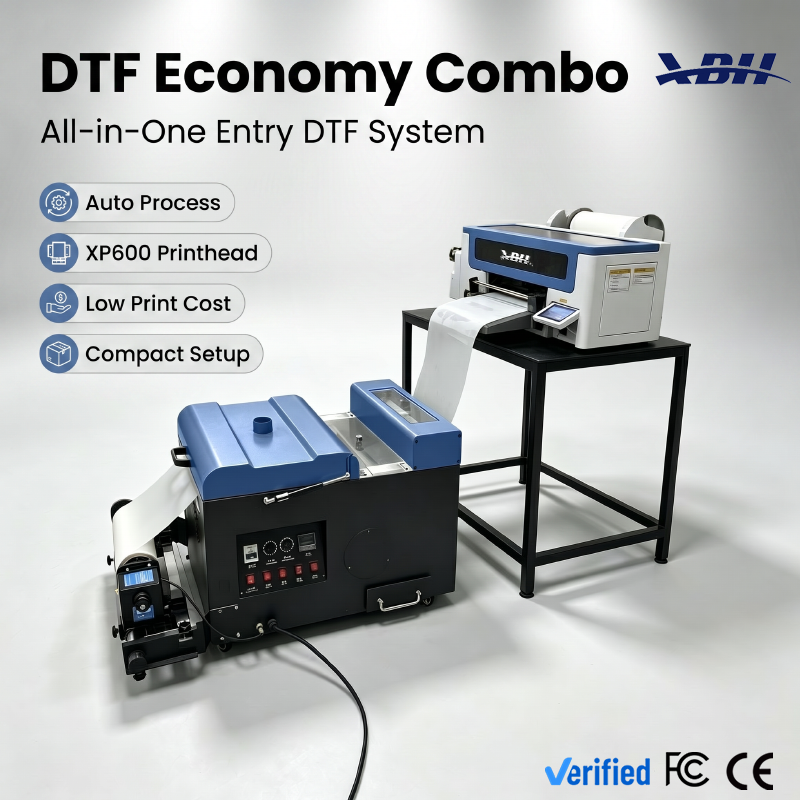
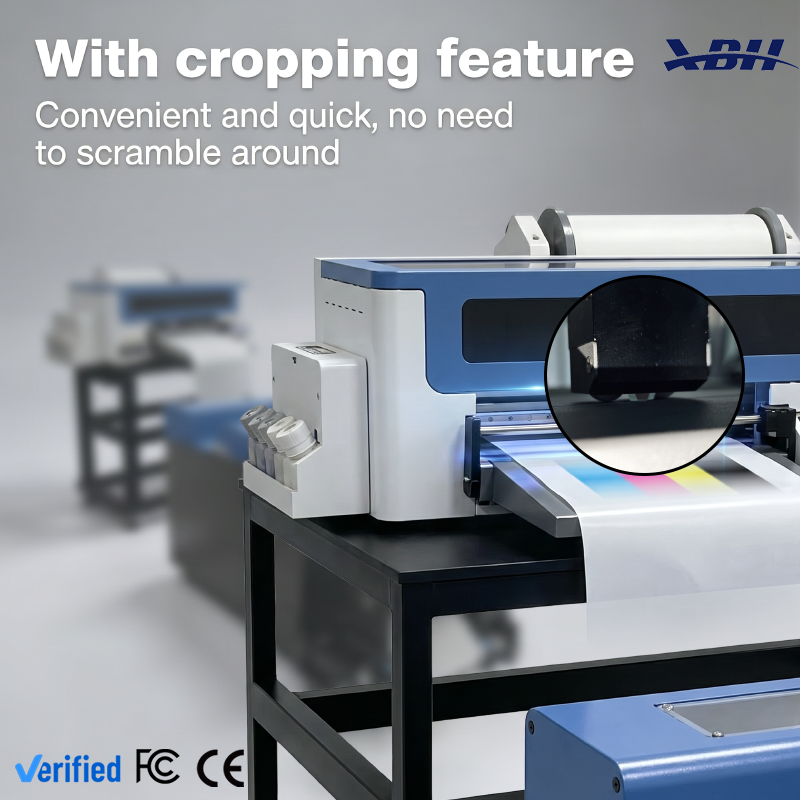
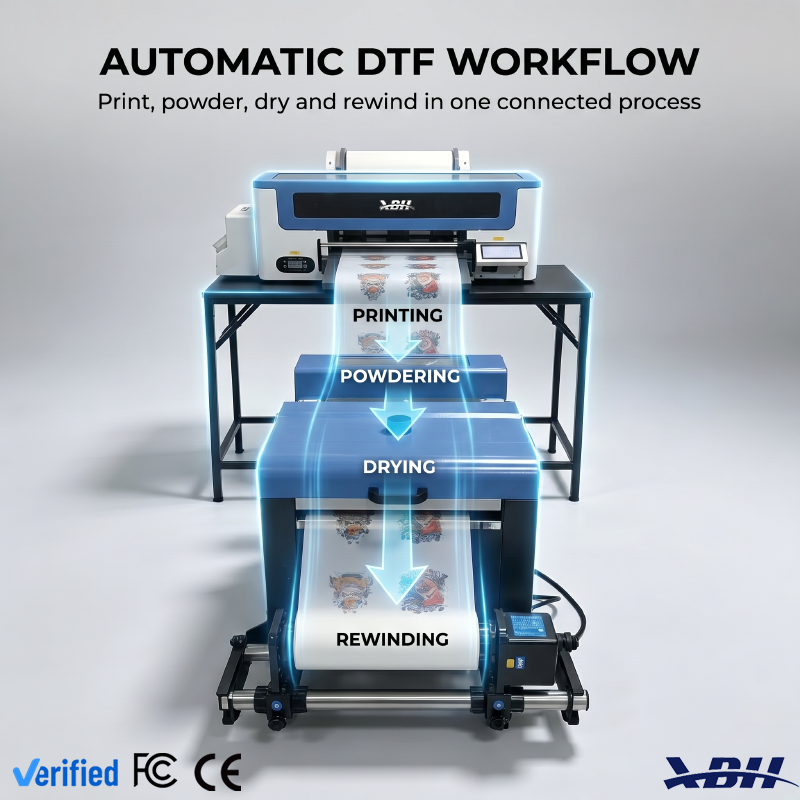
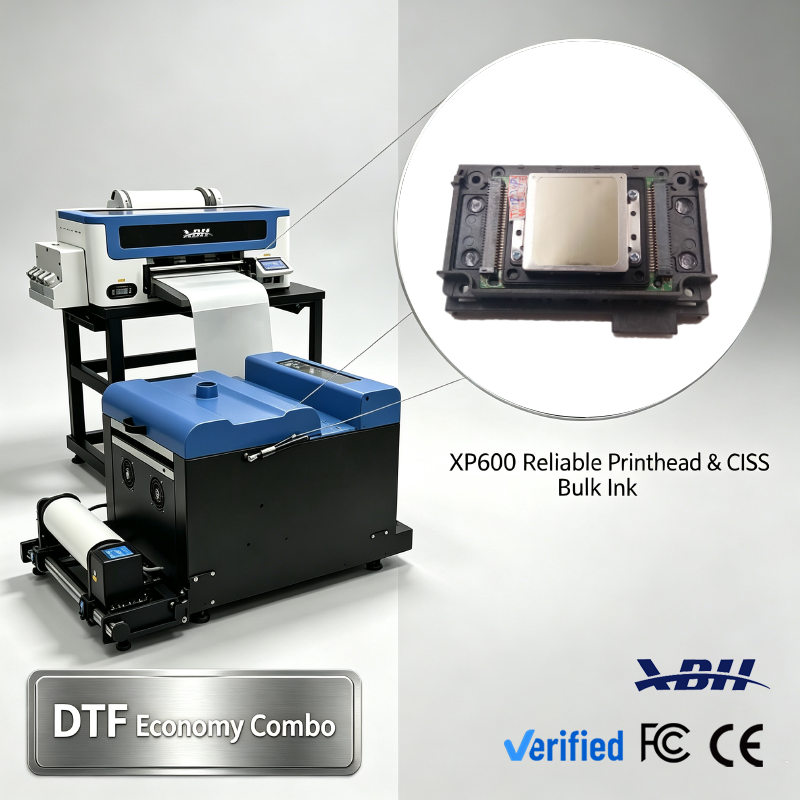
XBH A3 30cm DTF Printer Combo with dual XP600/I3200 printheads and auto powder shaker. Complete DTF workflow for T-shirts, hoodies, sportswear and custom apparel. White ink circulation, built-in cutter, easy to operate for small batch textile heat transfer printing.
| Item | Details |
|---|---|
| Model | XBH A3 DTF Combo (400D Printer + 400H Powder Shaker) |
| Printhead | 2 pcs XP600 / I3200-A1 / L1600-A1 |
| Max Printing Width | 335mm (12 inch A3) |
| Ink Configuration | CMYK + White DTF Pigment Ink, White Ink Circulation System |
| RIP Software | CADlink, RIP, Photoprint, MainTop |
| Print Speed | 3 m²/h (6 pass), 2 m²/h (8 pass) |
| Working Condition | 20-30°C, 45%-65% RH |
| Voltage | 110V/220V, 50/60Hz |
| Printer Dimension | L950×W600×H400mm |
| Powder Shaker Dimension | L760×W540×H560mm |
| Net Weight | 50kg (printer) + 30kg (shaker) = 80kg |
| Gross Weight | 80kg (printer) + 60kg (shaker) = 140kg |
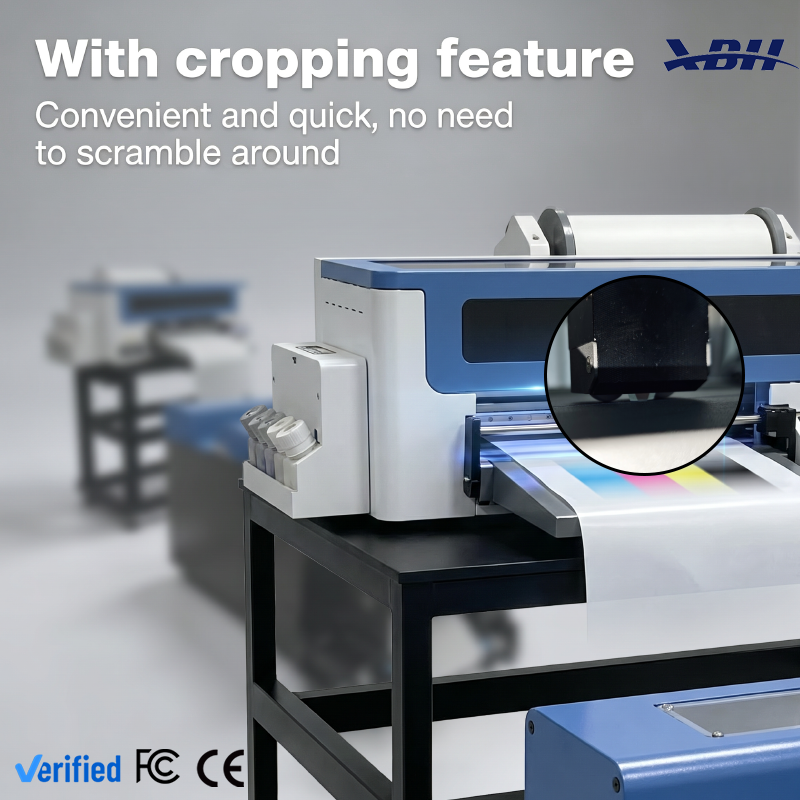
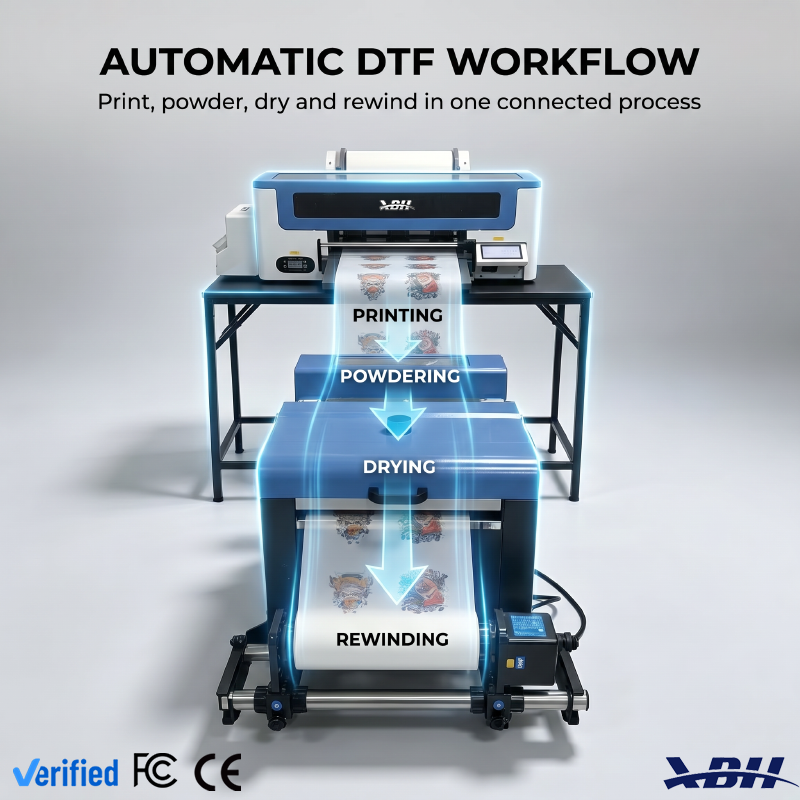
| Core Functions | Roll DTF printing, auto powder shaking, melting curing, built-in cutter, linked workflow |
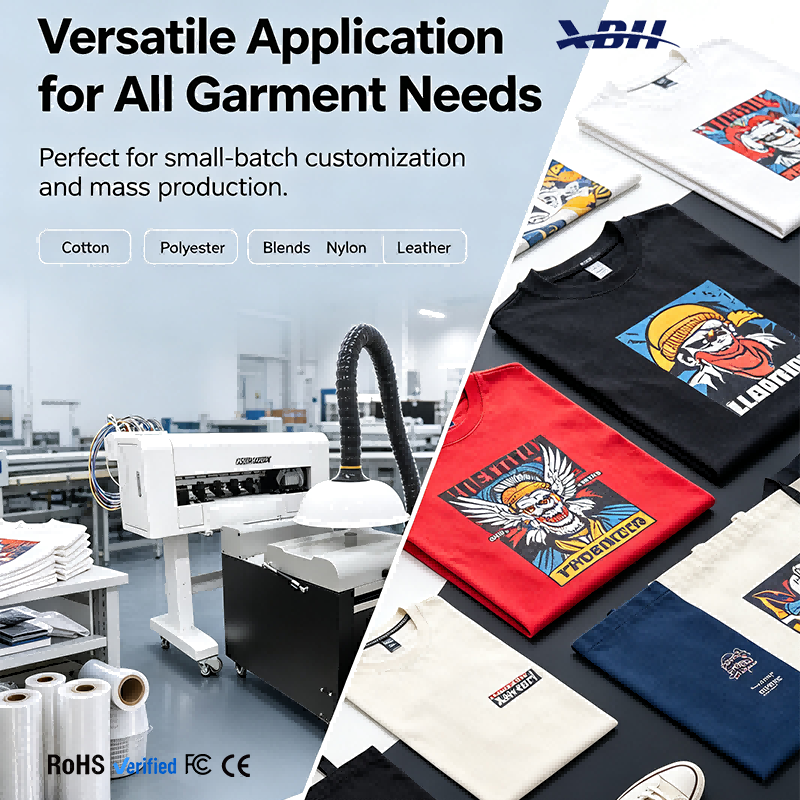
| Applicable Materials | Cotton, polyester, nylon, blended fabric, leather, canvas, sportswear & apparel |
| Certifications | CE, FCC, RoHS |
| Warranty | 1 year main machine warranty (excluding printheads & consumables) |
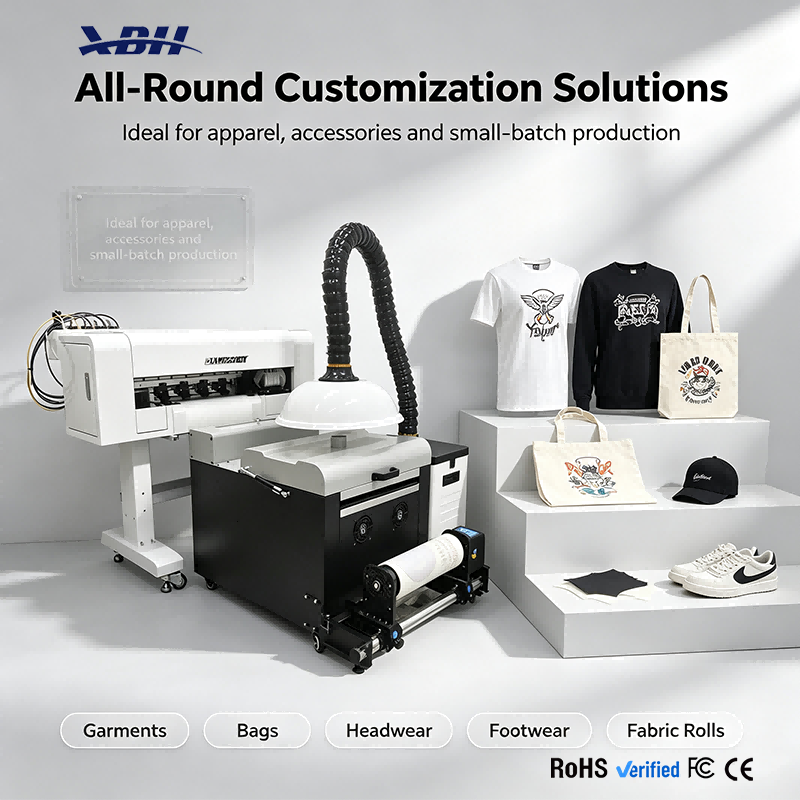
| Application | Custom T-shirts, hoodies, sportswear, hats, bags, gift apparel, textile decoration |



Q: What's the main difference between DTF and DTG printing?A: DTG (direct to garment) prints ink directly onto the fabric. DTF (direct to film) prints onto a PET film first, then you transfer it to the garment with a heat press. That difference in process changes everything. DTF has better fabric compatibility, doesn't require pre-treatment, and produces a transfer that works on almost any fabric. DTG is more limited in what fabrics it works on and requires pre-treatment for dark garments.
Q: Why is DTF better for polyester and synthetic fabrics?A: DTG struggles with polyester because the pre-treatment doesn't bond well with synthetic fibers, and you can get dye migration issues where the polyester dye bleeds into the print. DTF doesn't have that problem because the ink is on the film, not directly on the fabric. The hot melt adhesive on the transfer bonds with almost any fiber type — cotton, polyester, nylon, blends, you name it. If you print a lot of performance wear, athletic apparel or polyester-heavy garments, DTF handles them way better than DTG.
Q: Does DTF really not need pre-treatment?A: That's right. No pre-treatment spray, no curing the pre-treatment, no messy chemicals, no ventilation system for pre-treatment fumes. With DTG, you have to spray pre-treatment on every dark garment before you print it, which adds time, cost and mess. DTF skips that whole step entirely. The transfer has the adhesive built in, so you just press it onto the garment and you're done. Less equipment, less chemicals, less mess, fewer steps.
Q: How does the print feel compare between DTF and DTG?A: DTG prints can feel either heavy (if you lay down a lot of ink) or rough (if the pre-treatment isn't perfect). DTF has a thinner, more flexible feel — it's more like a thin film bonded to the fabric rather than ink soaked into the fibers. A lot of people actually prefer the DTF feel, especially on fashion garments, because it's lighter and stretches with the fabric. DTG has more of a "painted on" feel, while DTF feels more like part of the garment.
Q: What about white ink — is DTF white more opaque?A: DTF white is generally very opaque and consistent because it's printed onto a smooth film surface, where it lays down evenly. On DTG, white ink soaks into the fabric to some degree, which can make it look less opaque, especially on textured or heavy fabrics. With DTF, you get a smooth, solid white layer every time, regardless of fabric texture. That consistent white base makes the colors on top pop more reliably.
Q: Is DTF equipment cheaper than DTG?A: At the entry and mid levels, yes, DTF is generally more affordable. A good DTG printer with pre-treatment equipment can cost significantly more than a comparable DTF setup. And DTF systems are simpler — you don't need a pre-treatment machine, you don't need the same level of maintenance on the printhead, and the consumables work out to a lower cost per print in many cases. For a small shop or startup, DTF gets you into garment decoration for less upfront investment.
Q: Are there any areas where DTG is still better?A: DTG still has an edge on very soft, light-hand prints on light-colored cotton shirts, where you want the print to feel like it's part of the fabric. And for very high-volume single-design production, some industrial DTG systems can be faster. But for most small to mid-size shops, especially those that work with a variety of fabrics and order sizes, DTF offers more versatility, lower cost of entry, and fewer headaches. It's not that DTG is bad — it's just that DTF solves a lot of the problems that make DTG frustrating for many shops.