
Linked DTF Print & Powder Shaker System - Automated Transfer Production Line
Brand XBH
Product origin guangdong
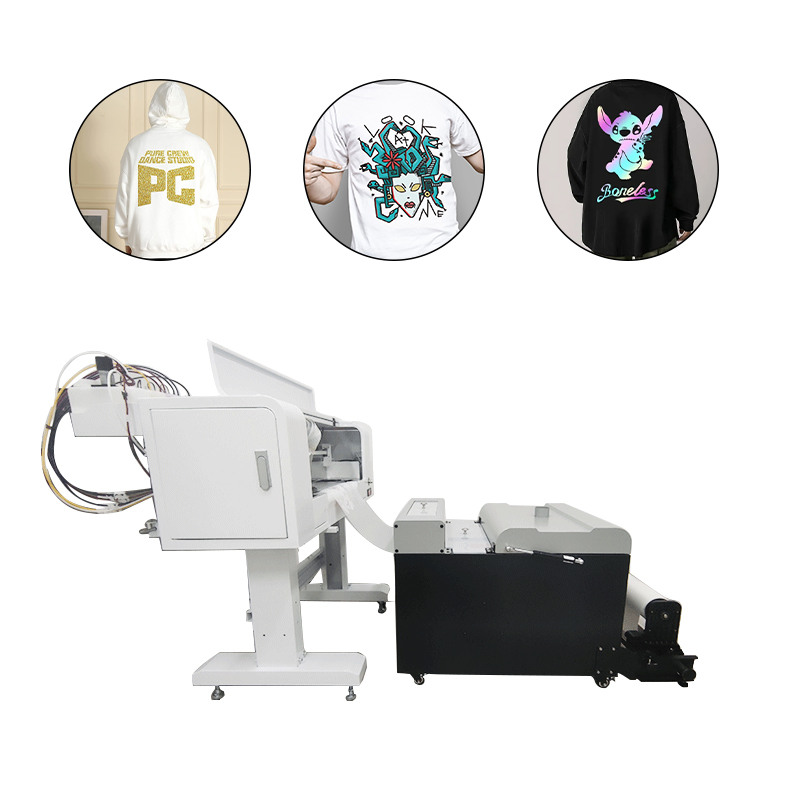
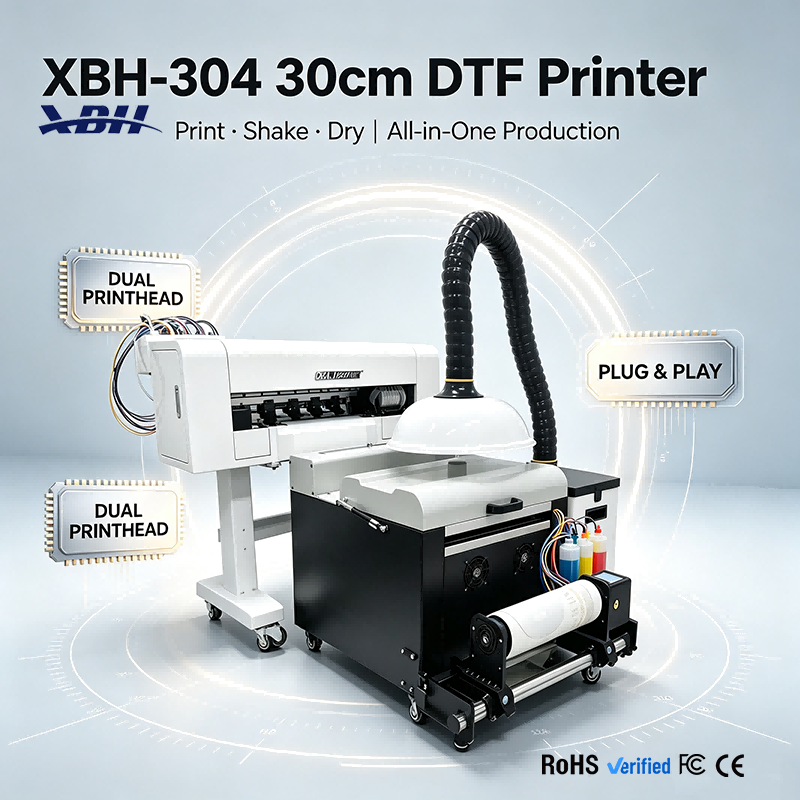
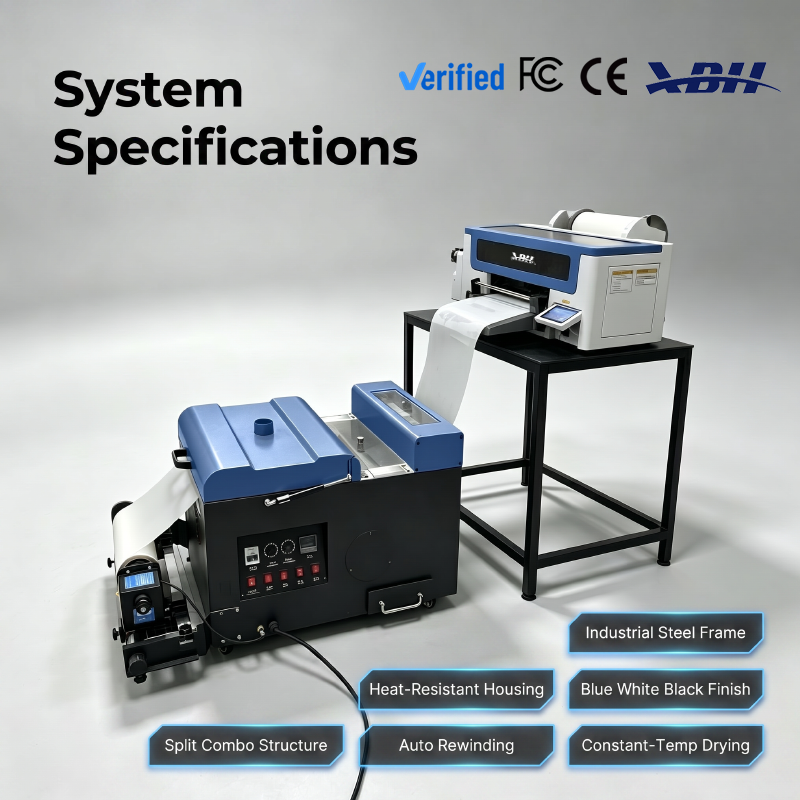
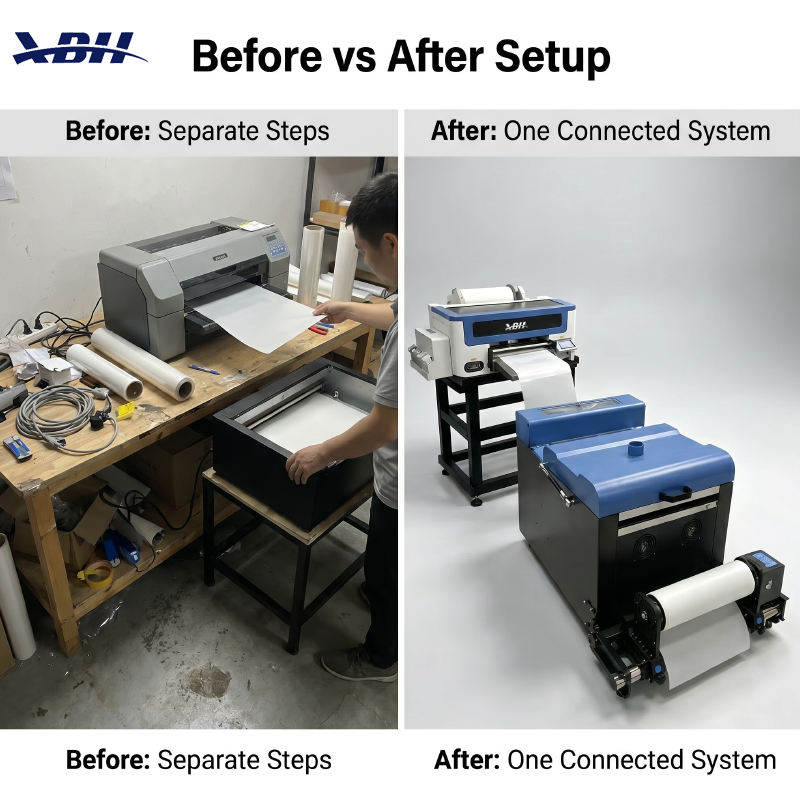
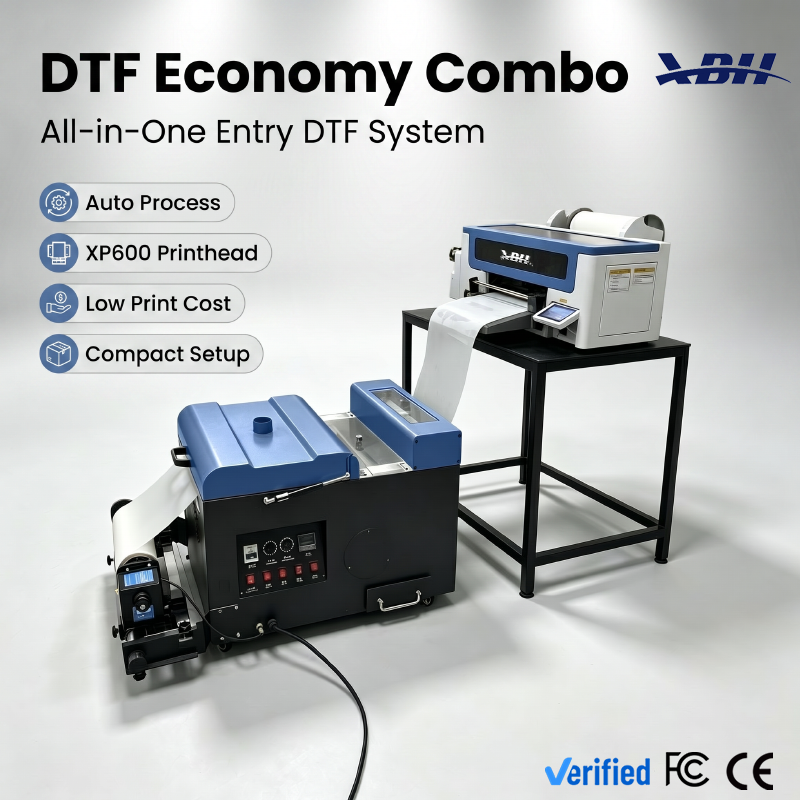
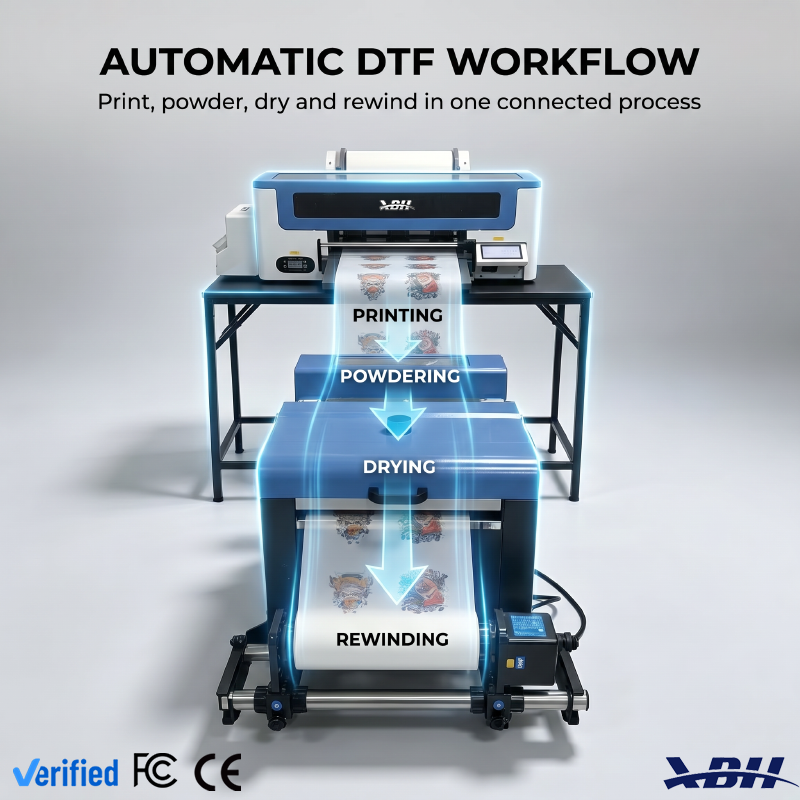
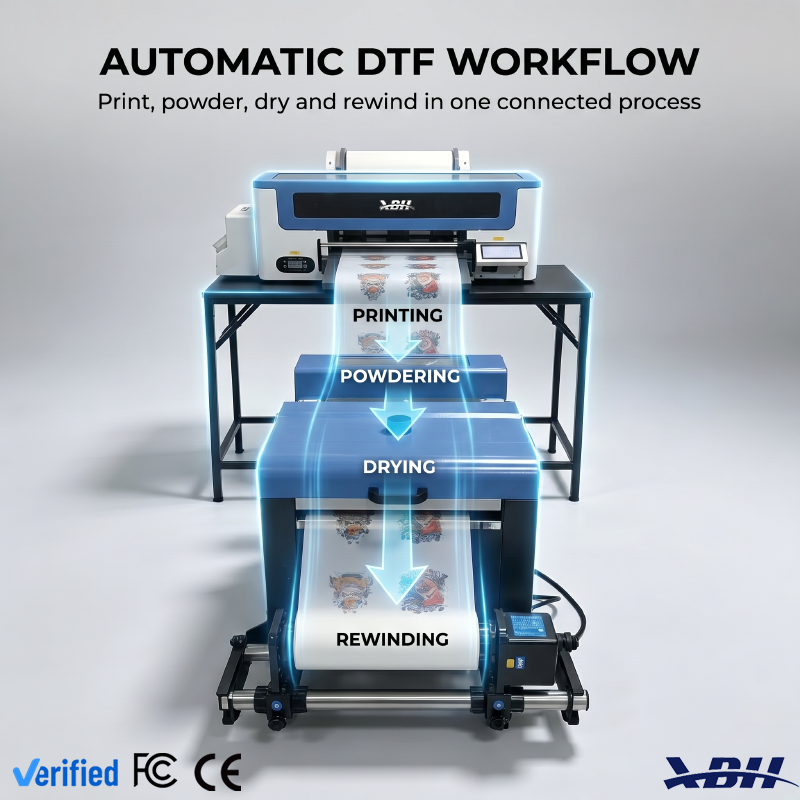
Linked DTF print and powder shaker system works as one continuous production line. Film feeds directly from printer to shaker, no manual handling. Automated workflow reduces labor, improves consistency and boosts daily output volume.
Linked DTF Print & Powder Shaker System - Automated Transfer Production Line
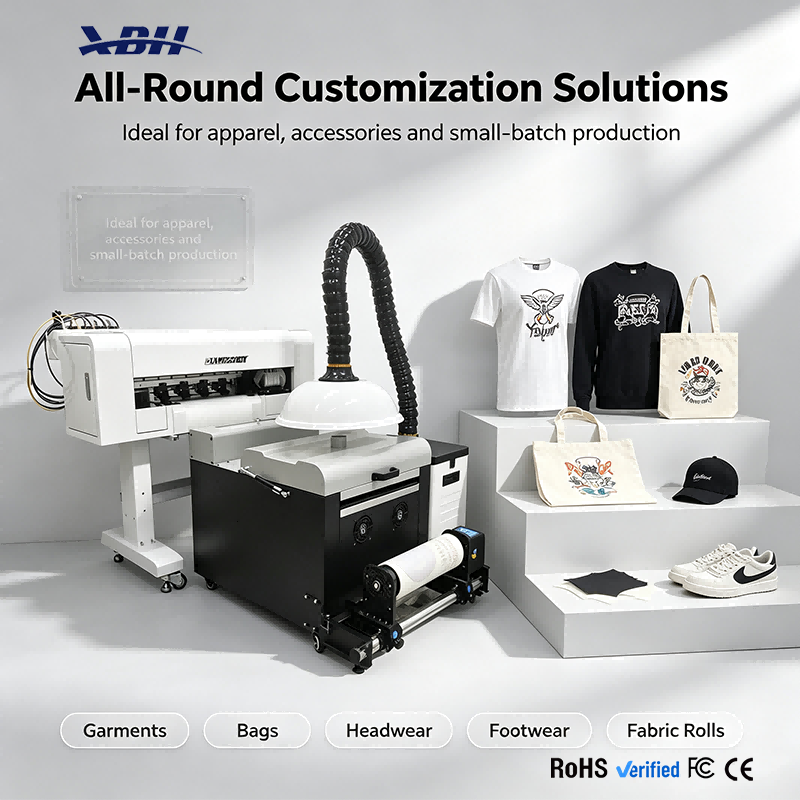
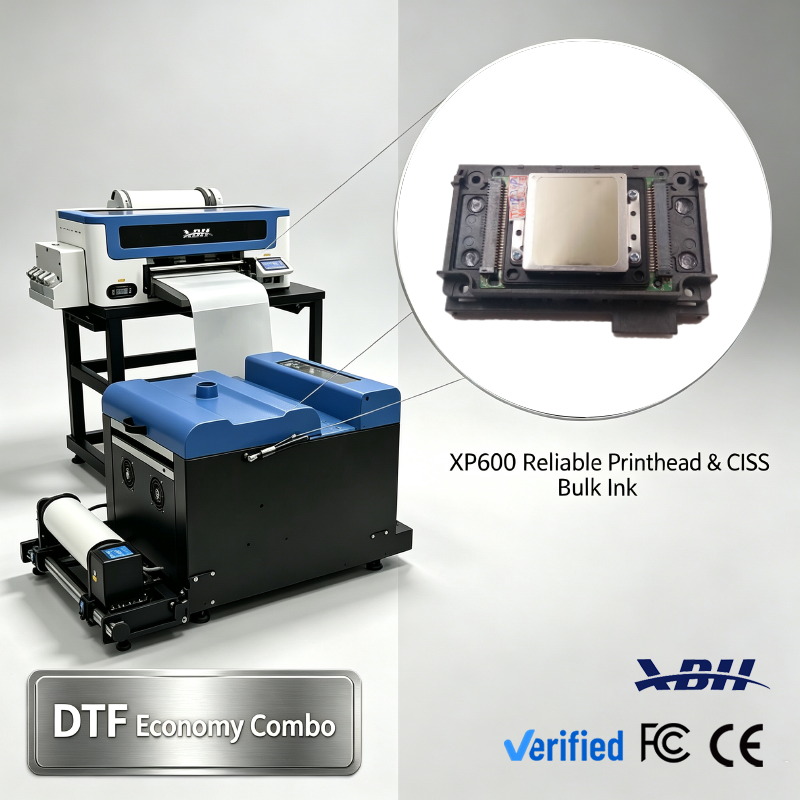
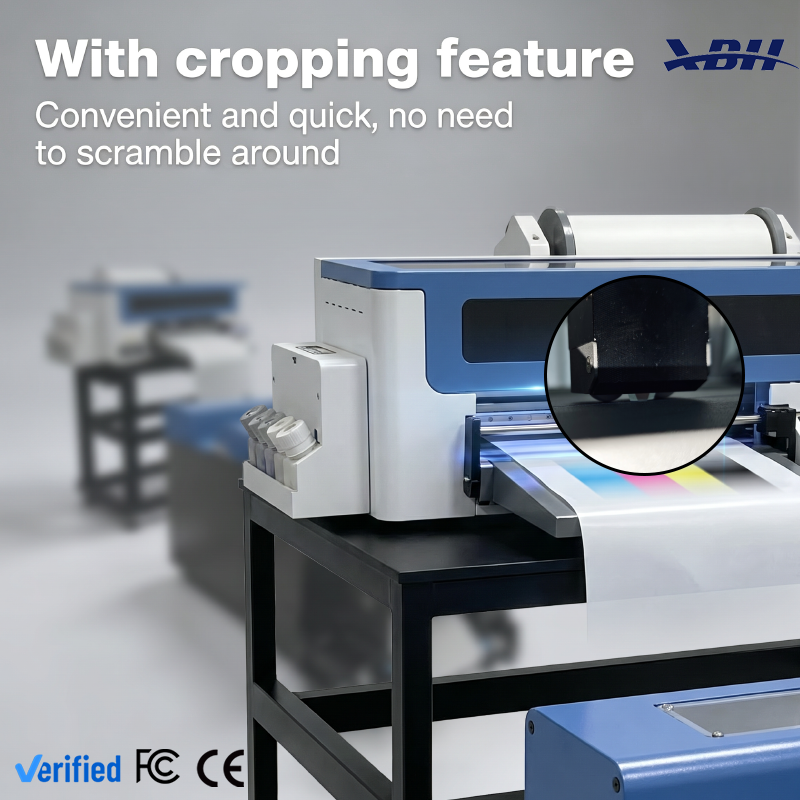
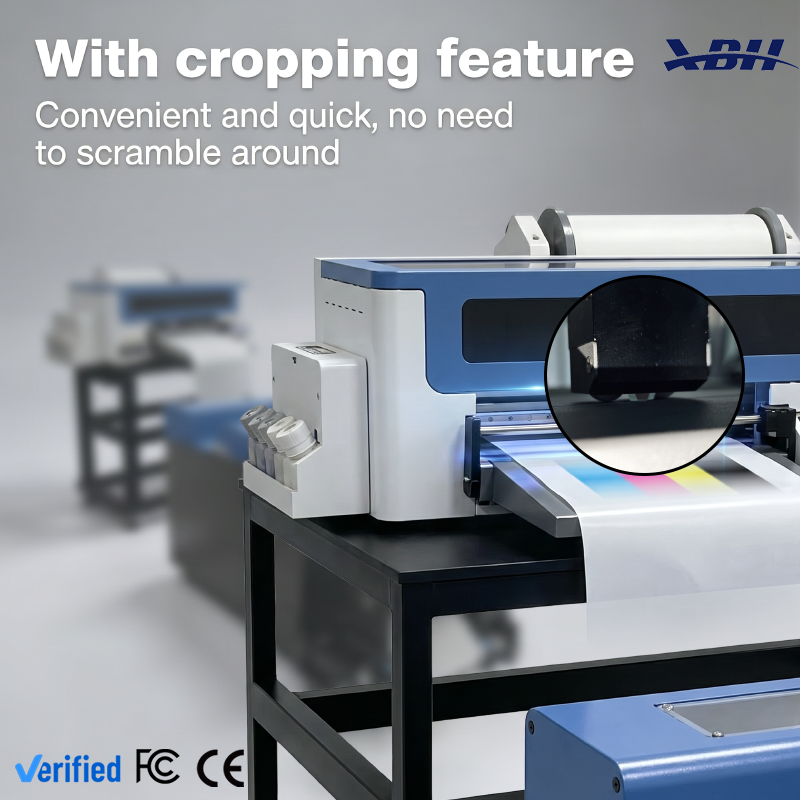
XBH A3 30cm DTF Printer Combo with dual XP600/I3200 printheads and auto powder shaker. Complete DTF workflow for T-shirts, hoodies, sportswear and custom apparel. White ink circulation, built-in cutter, easy to operate for small batch textile heat transfer printing.
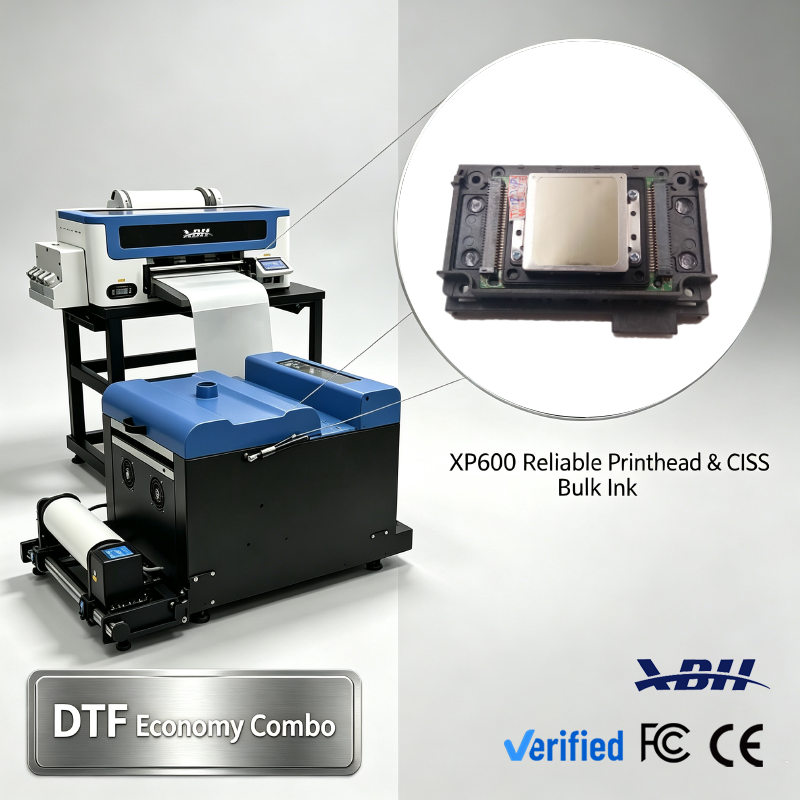
| Item | Details |
|---|---|
| Model | XBH A3 DTF Combo (400D Printer + 400H Powder Shaker) |
| Printhead | 2 pcs XP600 / I3200-A1 / L1600-A1 |
| Max Printing Width | 335mm (12 inch A3) |
| Ink Configuration | CMYK + White DTF Pigment Ink, White Ink Circulation System |
| RIP Software | CADlink, RIP, Photoprint, MainTop |
| Print Speed | 3 m²/h (6 pass), 2 m²/h (8 pass) |
| Working Condition | 20-30°C, 45%-65% RH |
| Voltage | 110V/220V, 50/60Hz |
| Printer Dimension | L950×W600×H400mm |
| Powder Shaker Dimension | L760×W540×H560mm |
| Net Weight | 50kg (printer) + 30kg (shaker) = 80kg |
| Gross Weight | 80kg (printer) + 60kg (shaker) = 140kg |
| Core Functions | Roll DTF printing, auto powder shaking, melting curing, built-in cutter, linked workflow |
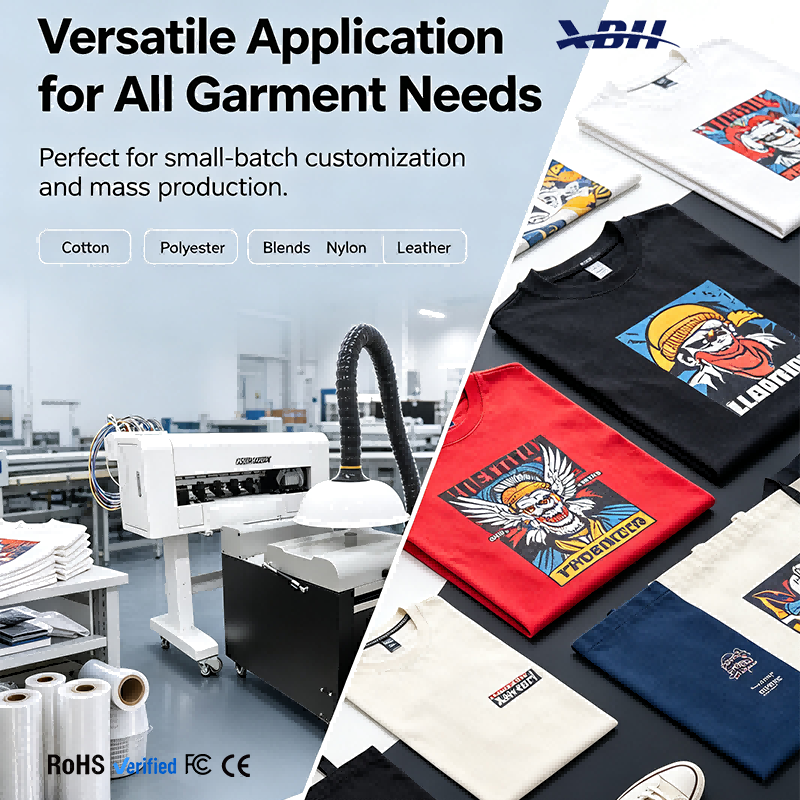
| Applicable Materials | Cotton, polyester, nylon, blended fabric, leather, canvas, sportswear & apparel |
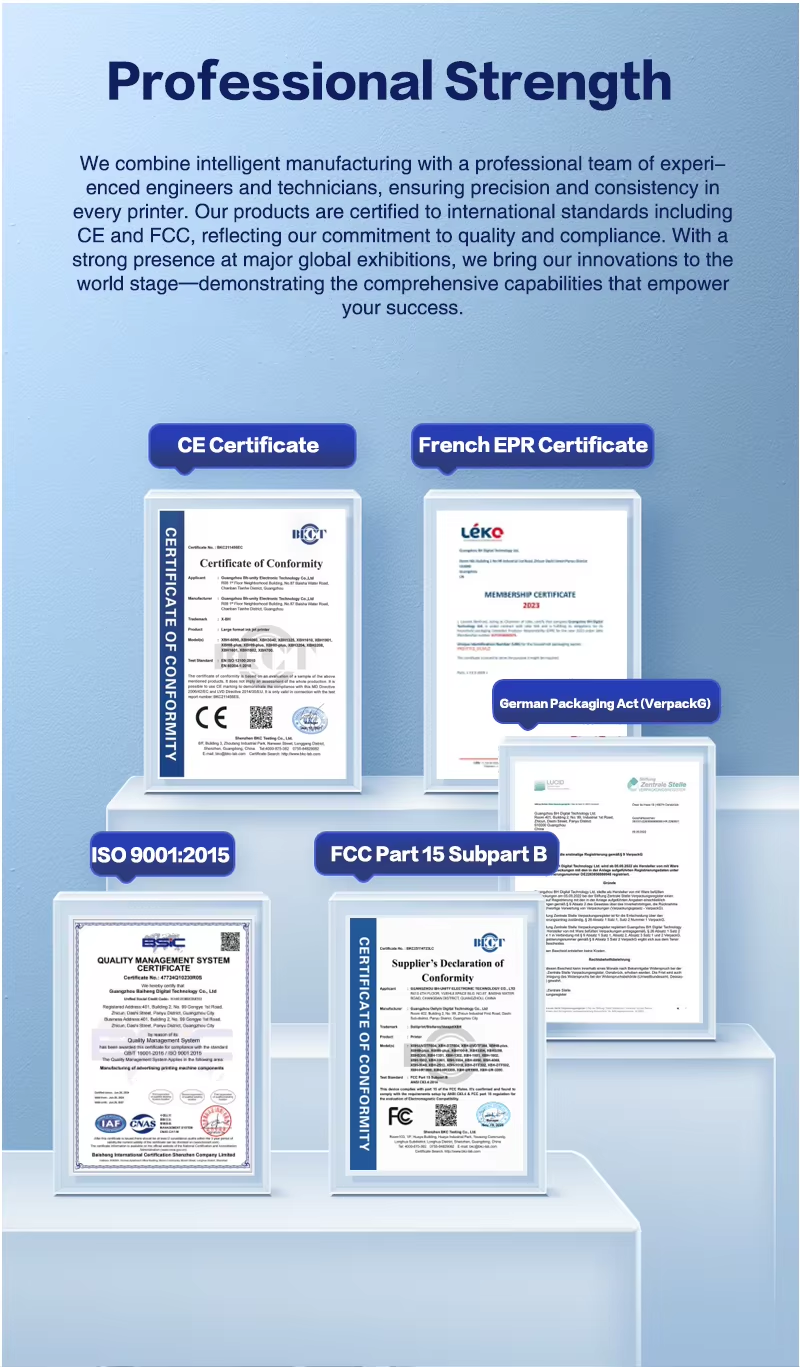
| Certifications | CE, FCC, RoHS |
| Warranty | 1 year main machine warranty (excluding printheads & consumables) |
| Application | Custom T-shirts, hoodies, sportswear, hats, bags, gift apparel, textile decoration |


Q: Why would a screen print shop want to add DTF?A: Because not every job belongs on a screen printing press. Small orders, full-color designs, last-minute reorders, sample runs — these are all jobs that are either unprofitable or impossible to do efficiently with screen printing. Adding a DTF for screen printers setup lets you say yes to those jobs instead of turning them away or outsourcing them. You keep the customer, you make the margin, and your screen press stays focused on the big runs it's good at.
Q: What kinds of jobs are better on DTF than screen?A: Short runs — anything under 24 or 36 pieces is usually faster and cheaper on DTF than setting up screens. Full-color photographic designs that would need process color screens and a skilled printer. Jobs with lots of colors where screen setup would be expensive. Last-minute rush orders where you don't have time to burn screens. Sample and proof runs where you need one or two shirts to show the customer. Basically any job where the setup cost of screen printing doesn't make sense for the quantity.
Q: Does DTF compete with my screen printing business?A: It complements it, not competes. Your core screen printing business — large runs, spot color jobs, high-volume orders — stays exactly where it is. DTF handles the stuff that falls through the cracks: the small jobs, the complex jobs, the rush jobs. Instead of telling a customer "we can't do that" or "the minimum is 50 pieces," you say "yes, we can do that." You keep the customer happy, you make money on the small job, and when they have a big order later, you've already got them as a customer.
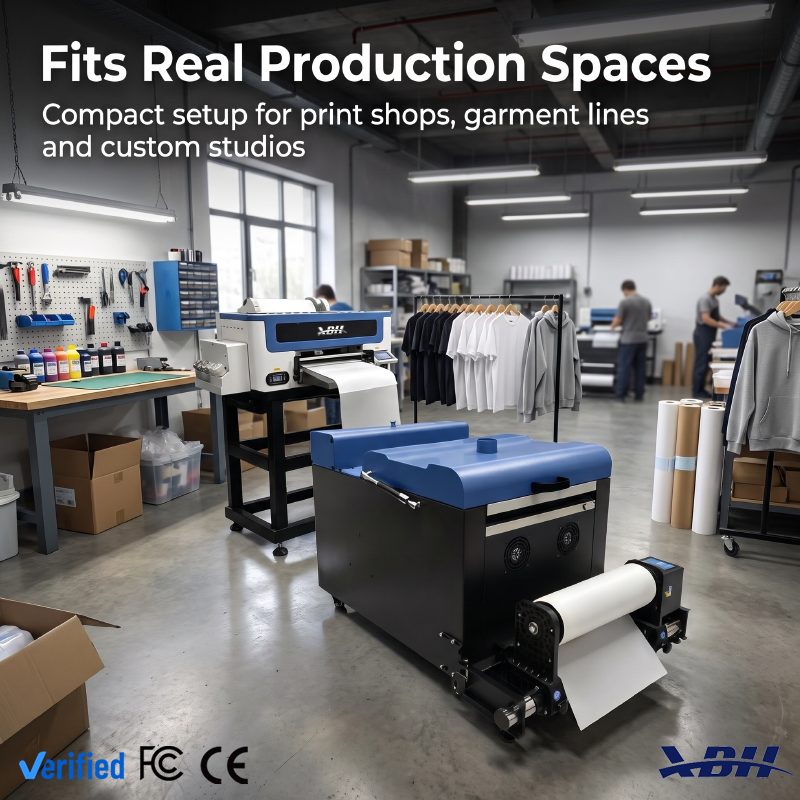
Q: How hard is it to add DTF to an existing shop?A: Easier than you might think. The equipment is compact — it fits on a tabletop, you don't need a whole new production area. The learning curve is gentle, especially if you already understand garment printing basics. You don't need to learn screen making, color separation, press setup — it's basically send a file, print a transfer, press it on. Most screen printers pick up DTF within a week or two. And since you already have heat presses and garment handling down, you're halfway there already.
Q: Can I use DTF for underbase or special effects on screen jobs?A: Some shops do exactly that — they use DTF for tricky parts of a design and screen print the rest. For example, you might screen print the big spot color elements and use a DTF transfer for a small full-color photographic element in the same design. It's a hybrid approach that lets you combine the best of both methods. It's not the most common use case, but it's a creative option for shops that want to push what they can offer.
Q: What about the feel — is DTF as good as screen print?A: It's different, not necessarily worse. DTF has a softer, thinner feel than a thick plastisol screen print, and it stretches with the fabric better. Some customers actually prefer the DTF feel, especially on fashion-forward garments. It's not going to replace screen printing for that classic thick-ink look, but for a lot of applications — full-color designs, performance wear, lightweight garments — DTF actually delivers a better product. You can offer both and let the customer choose.
Q: How do I price DTF jobs vs. screen jobs?A: Differently. With screen printing, you price based on number of colors and quantity, with setup fees built in. With DTF, the cost per print is more consistent regardless of color count, so you can price based on size and quantity without worrying about color count. Many shops price DTF slightly higher per piece than screen for small runs (since there's no setup fee) and slightly lower than screen would be if you had to charge setup. The exact numbers depend on your market, but the key is that DTF opens up price points and order sizes that screen printing can't touch.