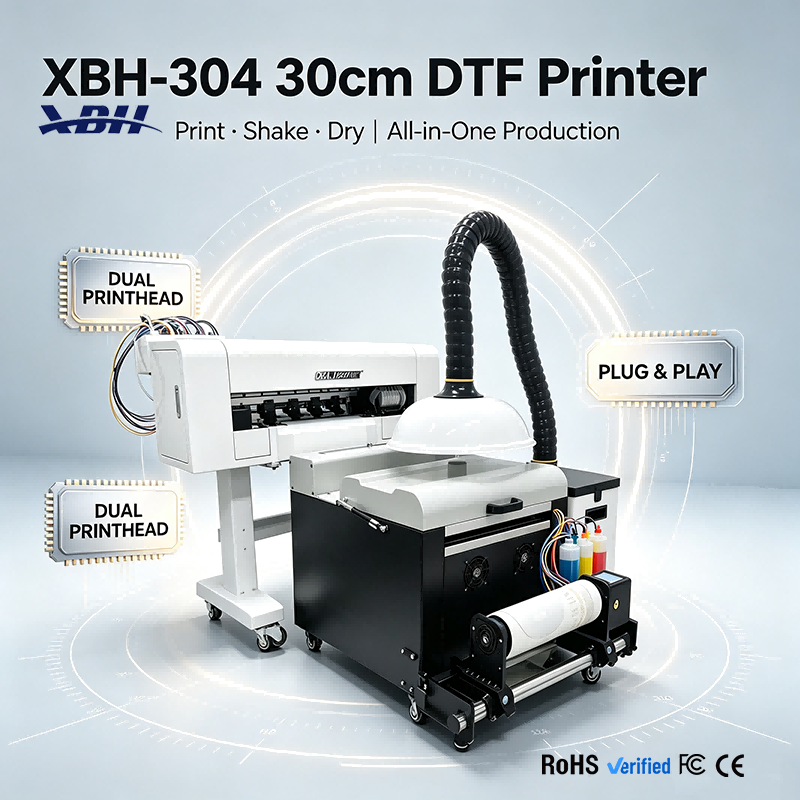

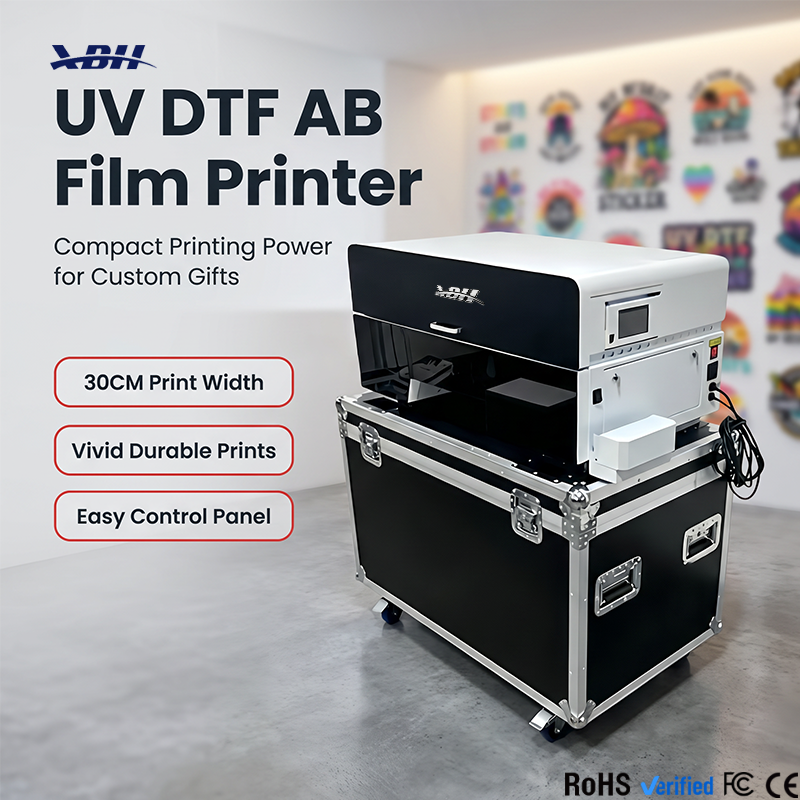
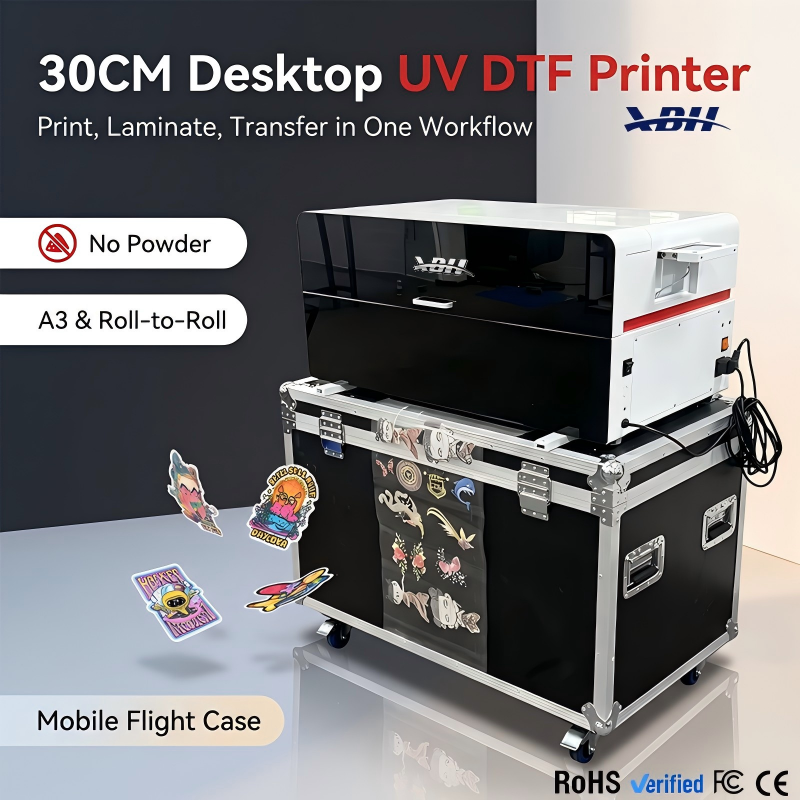
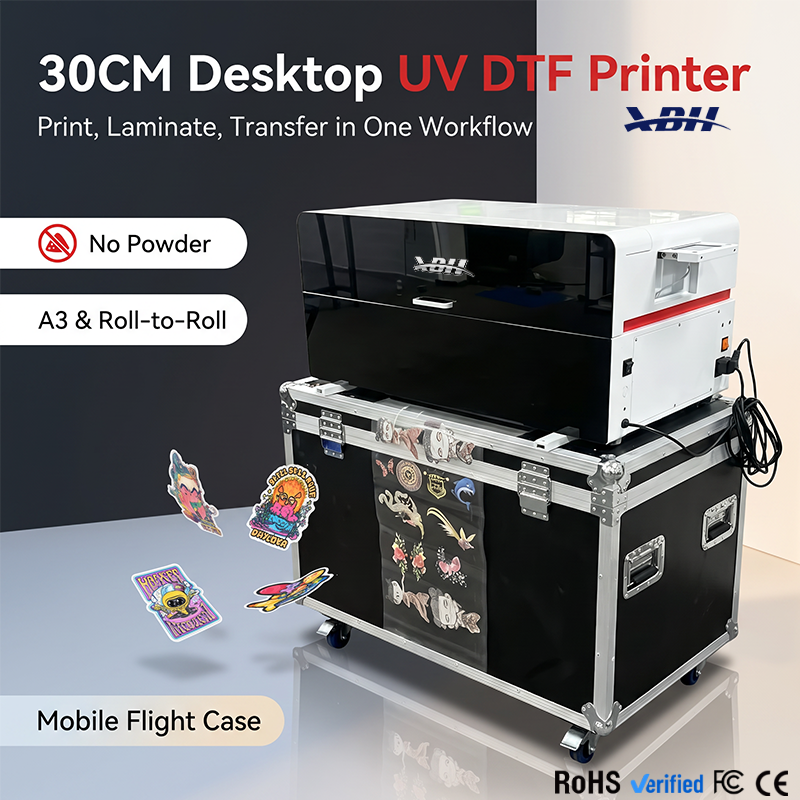
High Precision UV DTF Printer - Servo Motor & Linear Rail Stable Printing
Brand XBH
Product origin guangdong
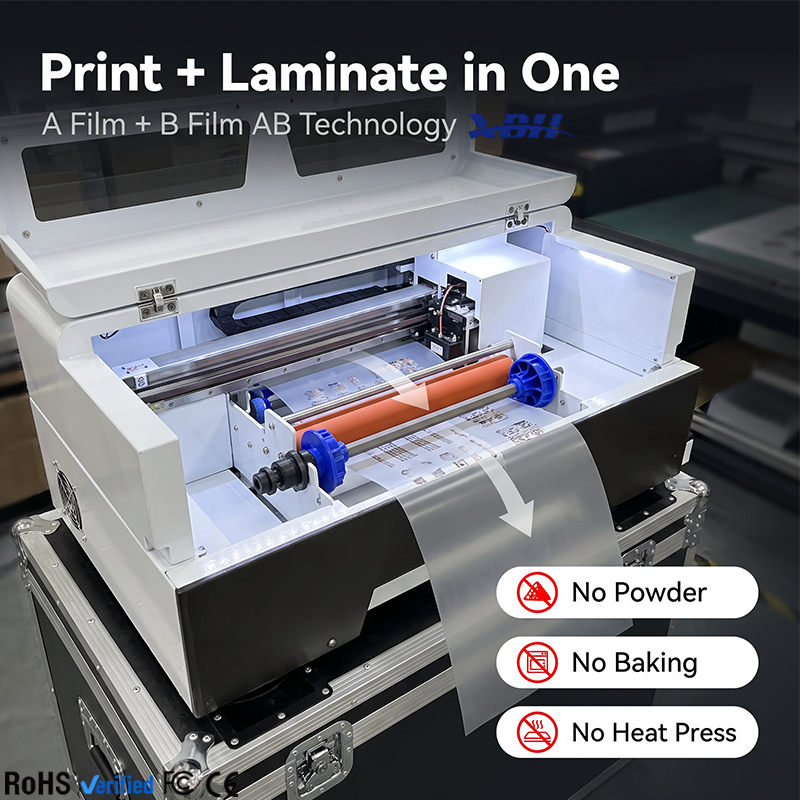
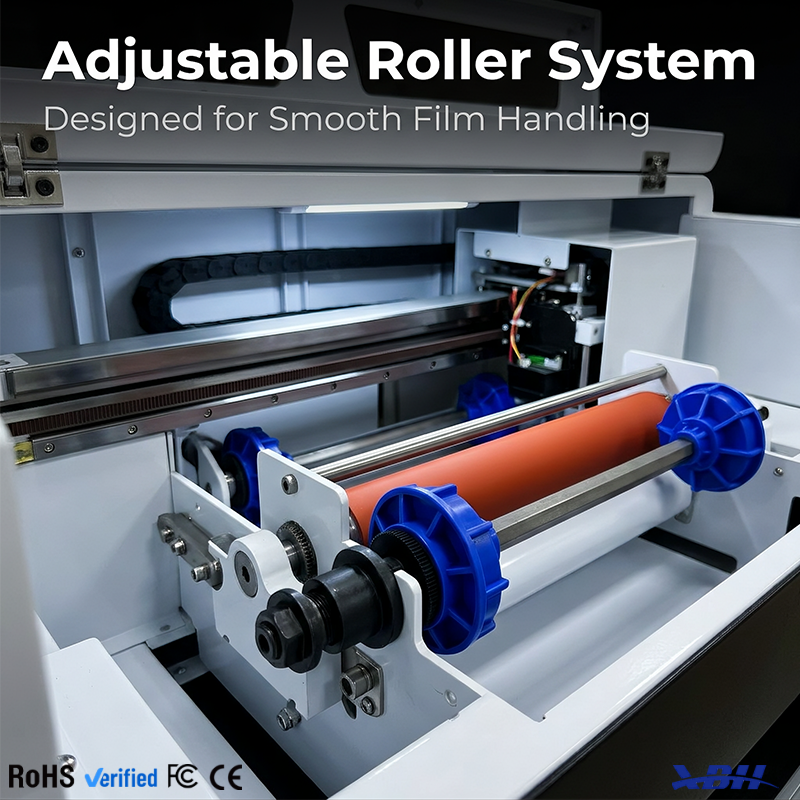
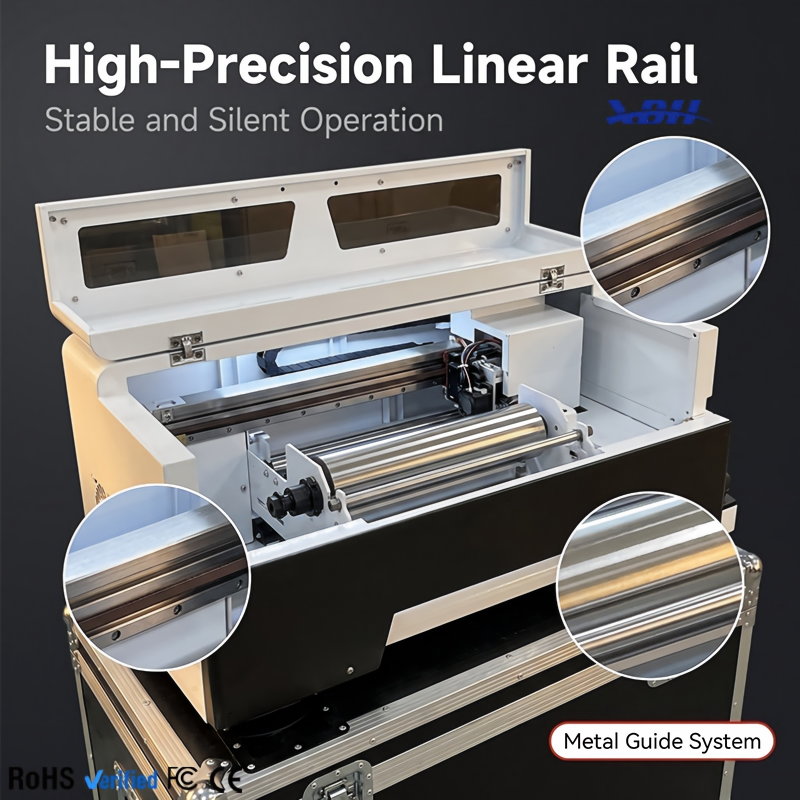
Leisai servo motor paired with Hiwin linear rail ensures stable, precise printing at all speeds with zero lag. High-strength aluminum platform maintains structural integrity under long-term high-frequency use. Smooth, quiet and consistent.
High Precision UV DTF Printer - Servo Motor & Linear Rail Stable Printing
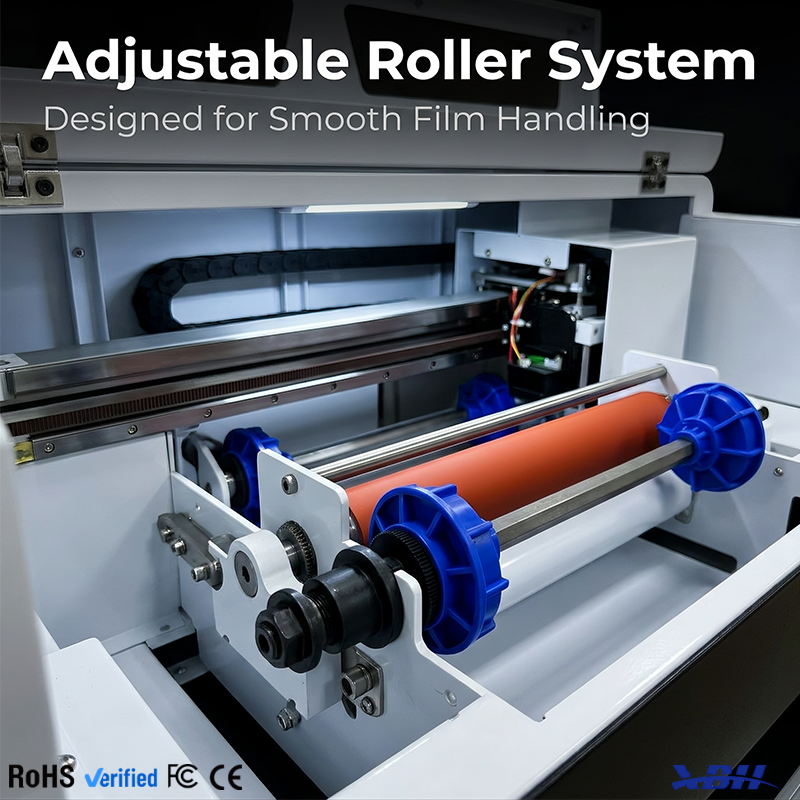
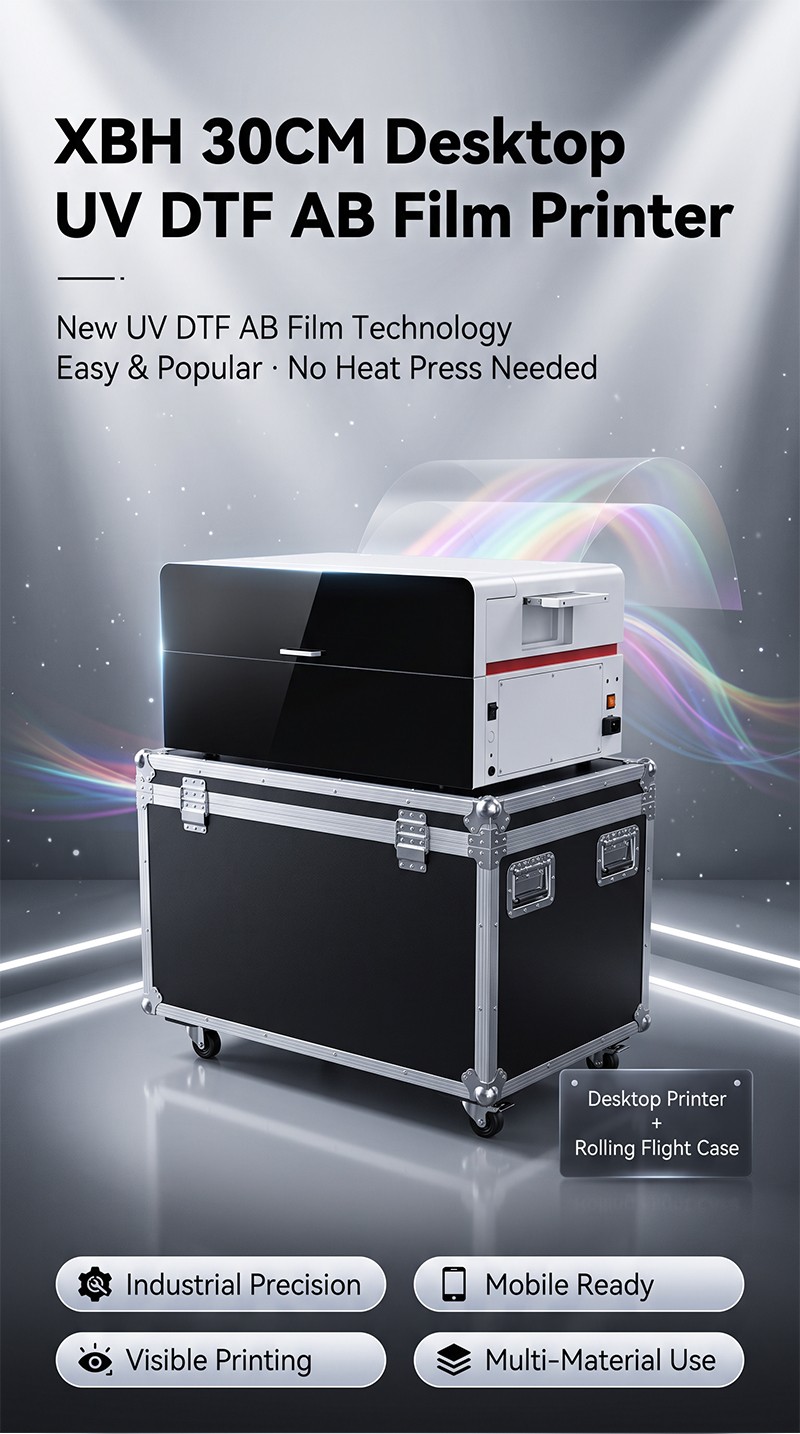
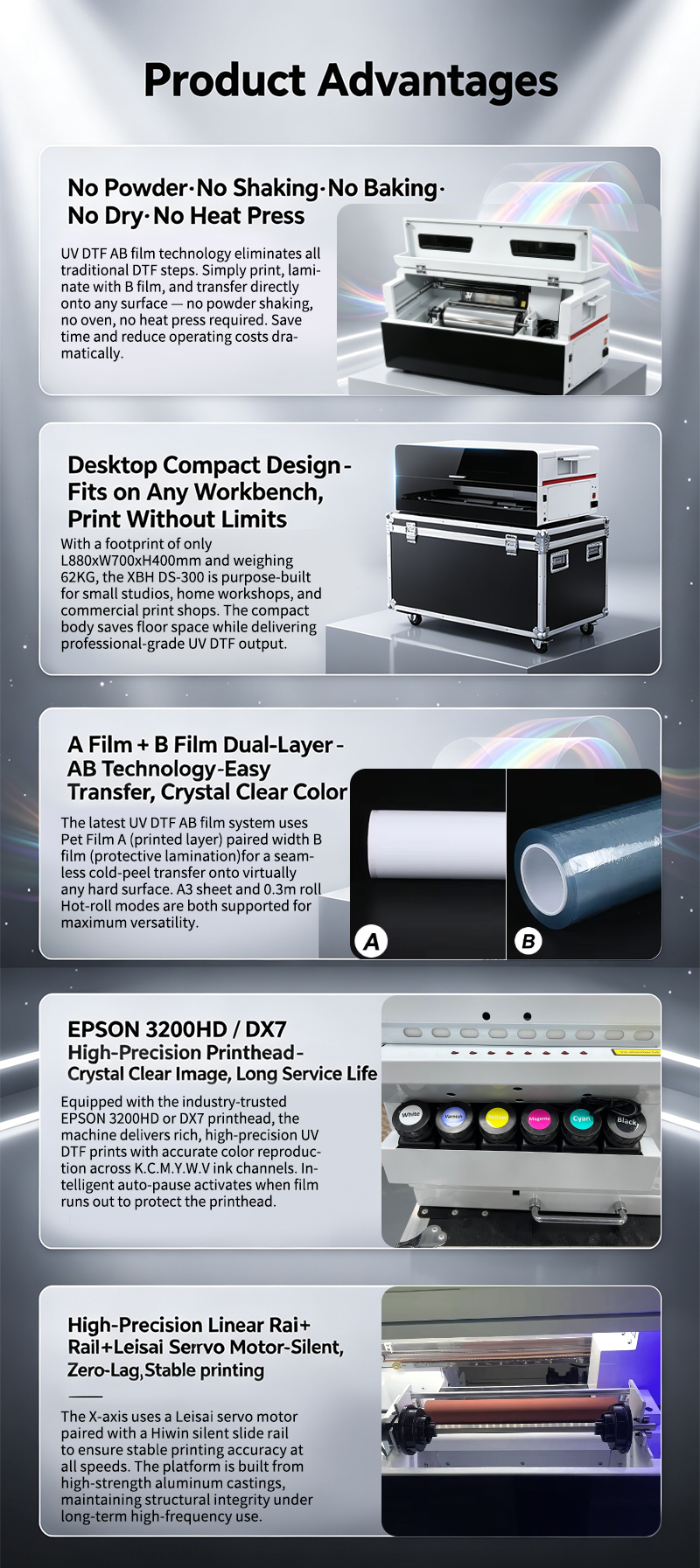


Q: What kind of motion system does the printer use?A: The X-axis uses a Leisai servo motor paired with a Hiwin silent linear slide rail. These are professional-grade motion components — not the cheap stepper motors and plastic rails you find on hobby-level machines. The servo motor provides precise, responsive movement with accurate positioning, and the linear rail keeps the printhead carriage moving smoothly and straight. Together they deliver stable, high-precision motion that translates directly into better print quality.
Q: How does a better motion system improve print quality?A: When the printhead moves smoothly and accurately, every droplet of ink lands exactly where it's supposed to. You get sharp edges, clean lines, uniform color coverage and no banding or blurring. Cheaper motion systems can have vibration, backlash or positioning errors that show up as wavy lines, fuzzy text or uneven color in the final print. A precision servo and rail system eliminates those problems, so your prints look clean and professional every time.
Q: What does "zero lag" mean in this context?A: Zero lag means the printhead carriage responds instantly and accurately to movement commands. When the printer tells the carriage to move to a specific position, it gets there exactly — no delay, no overshoot, no correction passes. Servo motors have position feedback, so they know exactly where they are at all times and can adjust in real time. This matters at higher print speeds because the faster you go, the more important precise motion control becomes. You get clean prints even at faster production speeds.
Q: Is the printer quiet during operation?A: Yes, noticeably quieter than machines with cheaper motion systems. The Hiwin linear rail is designed for smooth, silent operation, and the servo motor runs smoothly without the high-pitched noise that stepper motors can make. For a desktop machine in a small space — like a home studio, a retail back room or a shared workspace — lower noise level makes a real difference in comfort. You can run the printer all day without it being loud or distracting.
Q: How is the platform constructed, and why does that matter?A: The platform is built from high-strength aluminum castings. Aluminum is rigid, stable and doesn't flex or warp easily. That matters because if the frame flexes or vibrates during printing, the printhead moves relative to the film, and you get blurry or misaligned prints. A solid, rigid platform keeps everything perfectly aligned during printing, even at high speeds and during long production runs. The structural integrity also means the machine stays accurate over years of use.
Q: Does the precision hold up during long production runs?A: Yes, that's one of the benefits of industrial-grade components. The servo motor and linear rail maintain their accuracy hour after hour, day after day. You don't get gradual drift in position or quality as the machine heats up or runs for extended periods. The first transfer off the roll looks the same as the last one on a 100-meter roll. For production work where consistency matters — like repeat orders for the same client — that reliability is worth its weight in gold.
Q: Why should I care about what's inside the machine?A: Because the internal components determine how well the machine performs, how long it lasts and how much trouble it gives you. A printer with cheap motors and rails might seem like a good deal upfront, but you'll deal with quality issues, breakdowns and early replacement costs. Using quality components like Leisai servos and Hiwin rails means the machine runs better, prints better, lasts longer and needs less maintenance. You spend less time fixing problems and more time producing and making money.