
Cost-Effective DTF System - Low Consumable Expense & Strong Profit Margins
Brand XBH
Product origin guangdong
Low consumable cost per transfer with strong profit margins. Inexpensive film and powder, efficient ink usage, and minimal waste. Quick return on investment for both startup businesses and established shops adding new production capability.
Cost-Effective DTF System - Low Consumable Expense & Strong Profit Margins
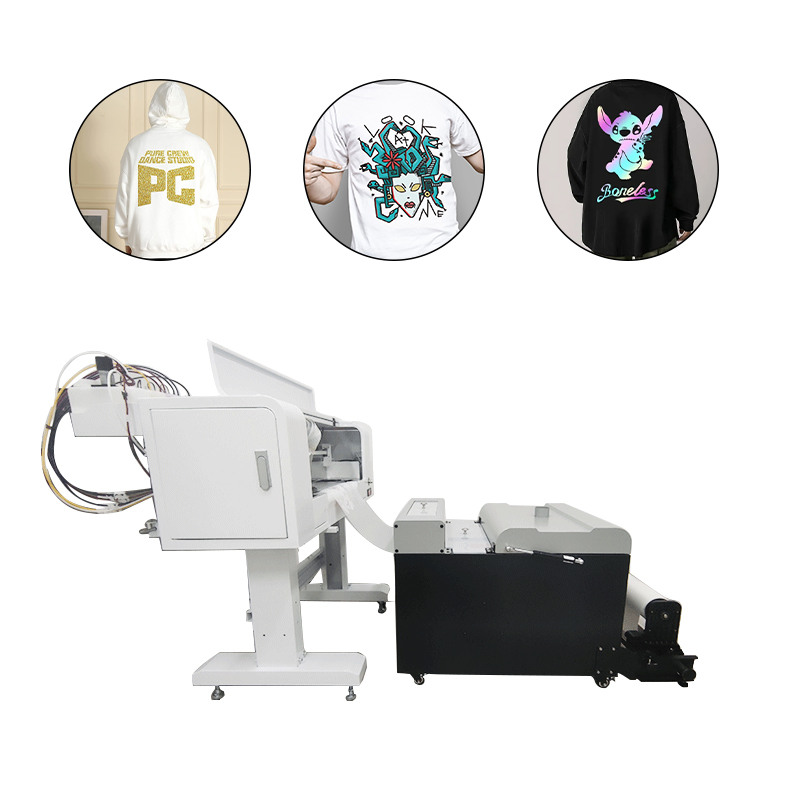
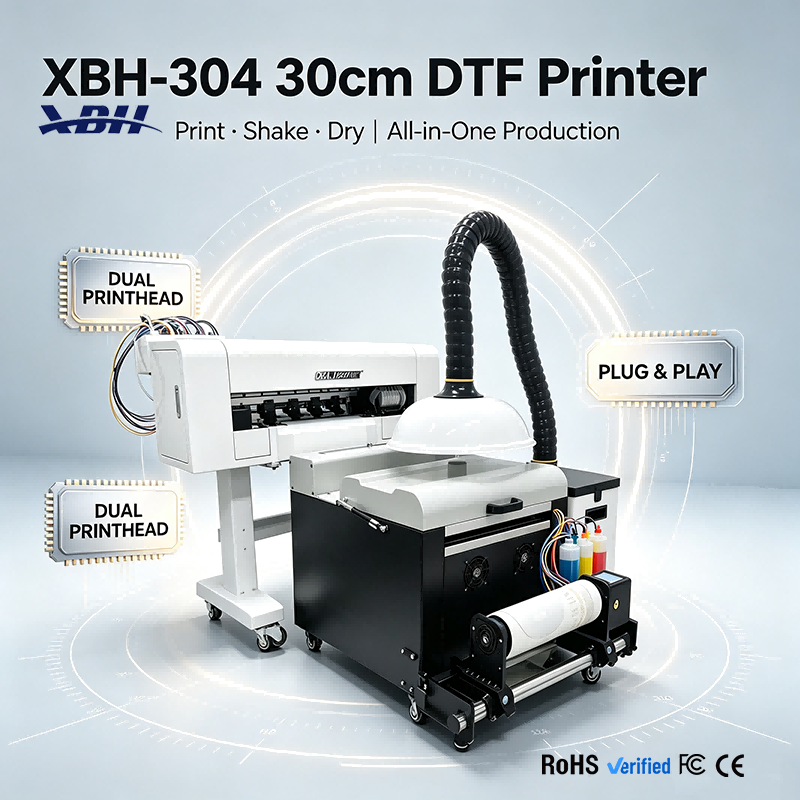
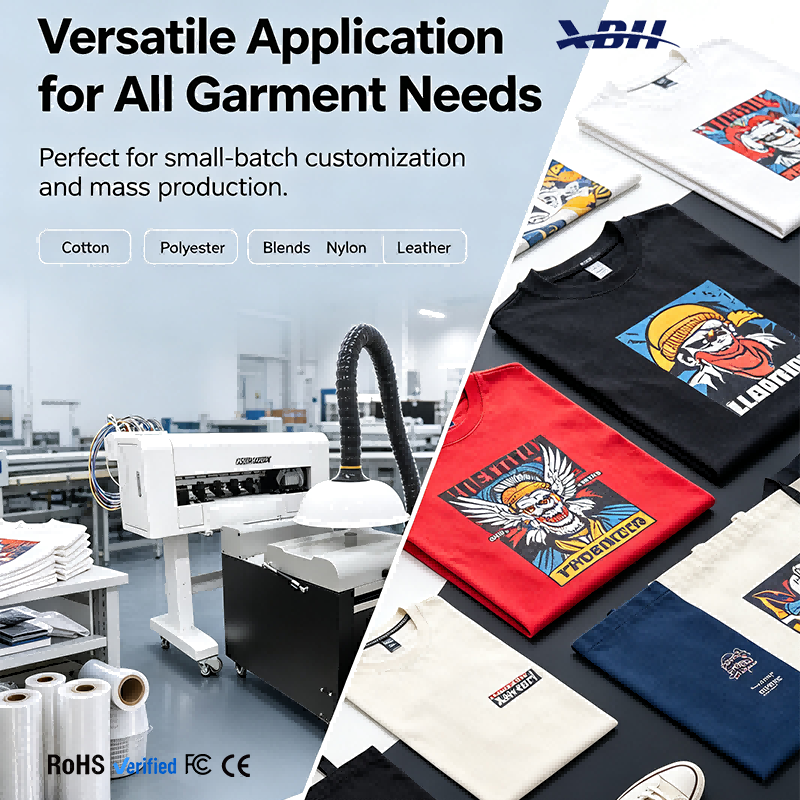
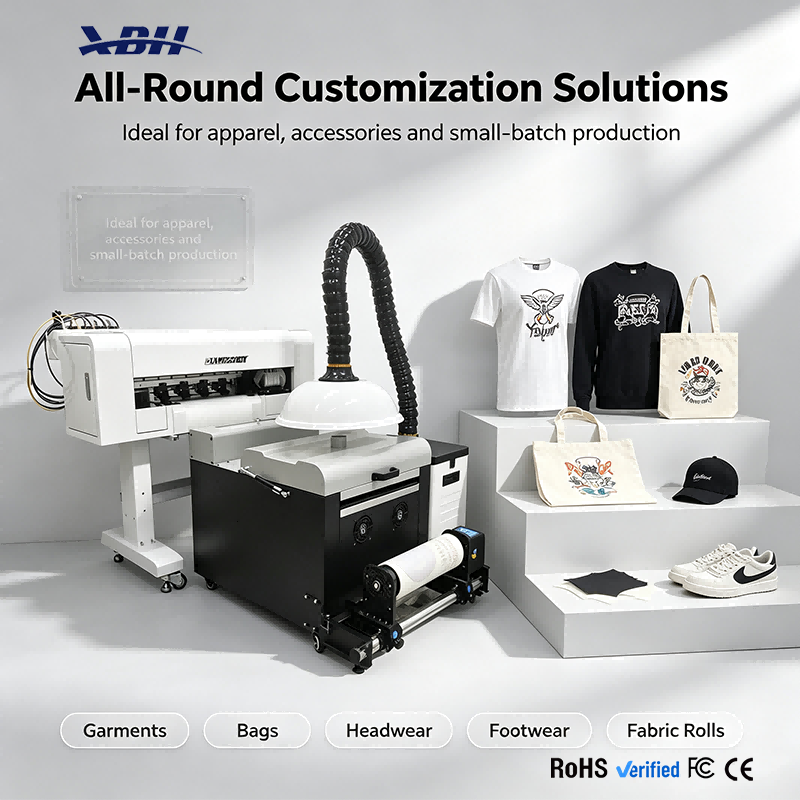
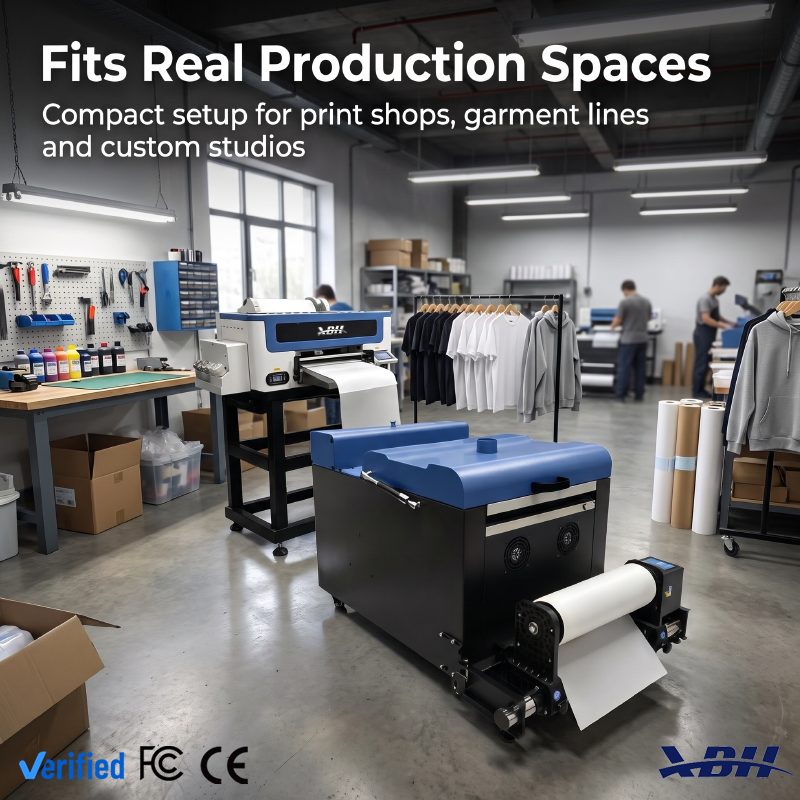
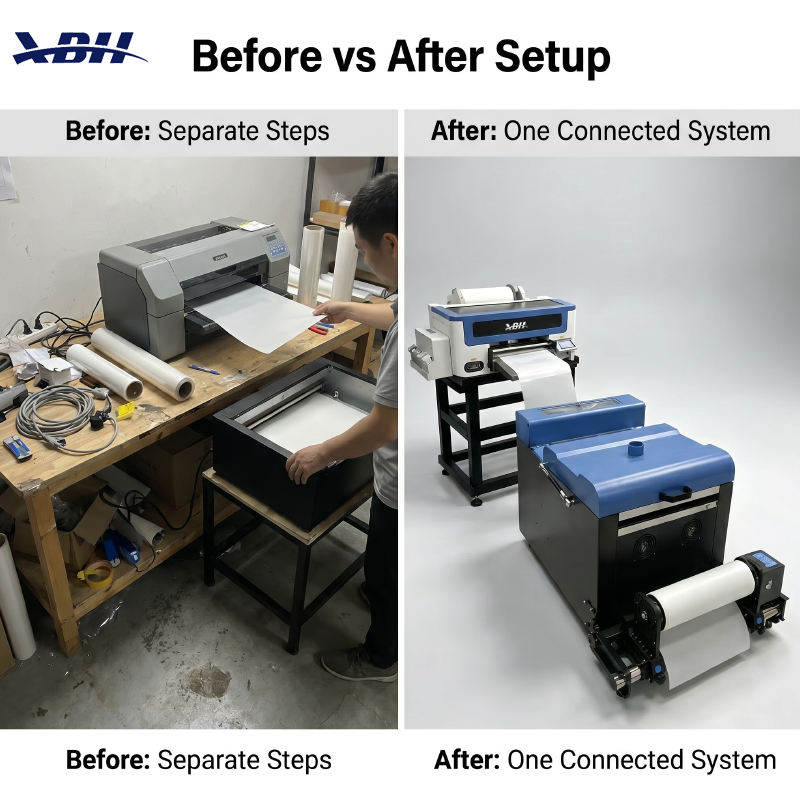
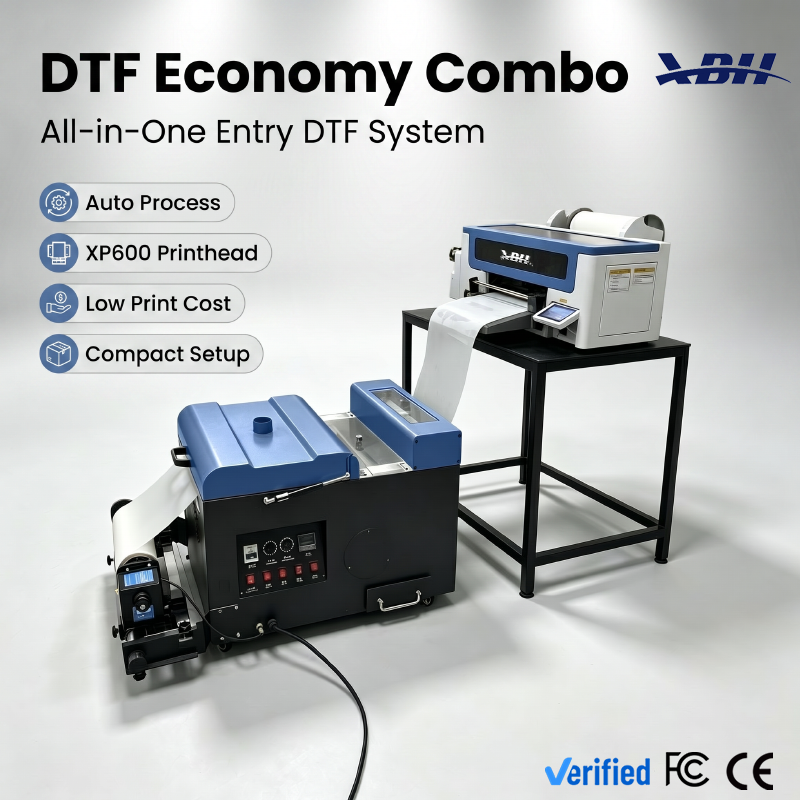
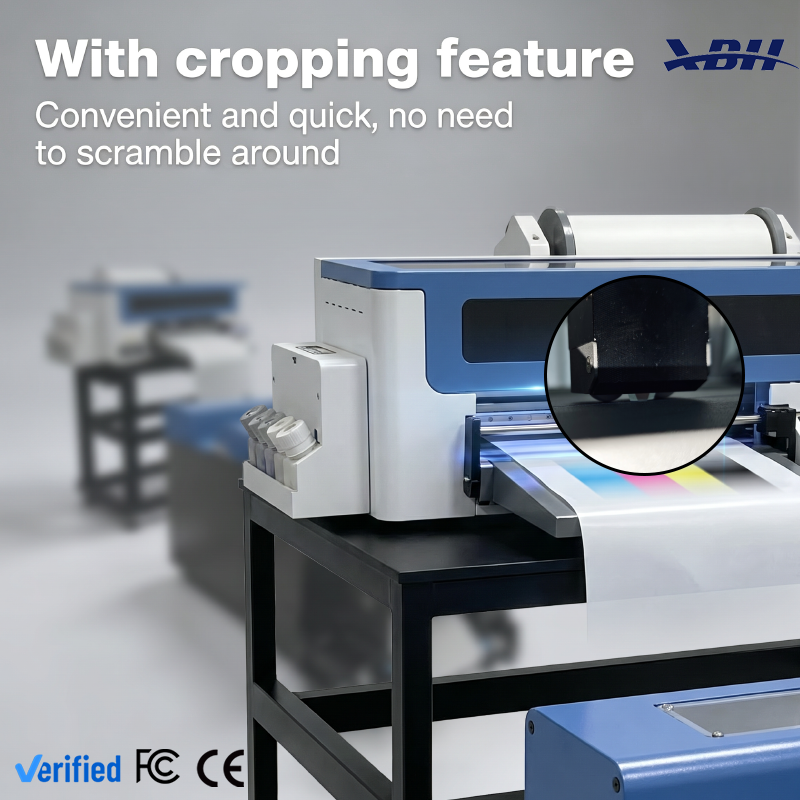
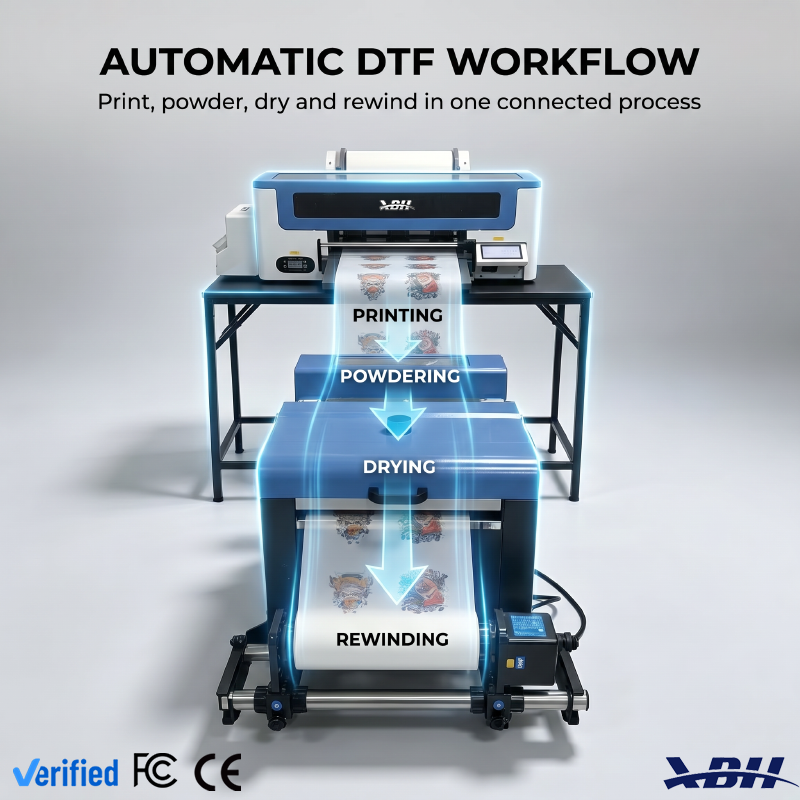
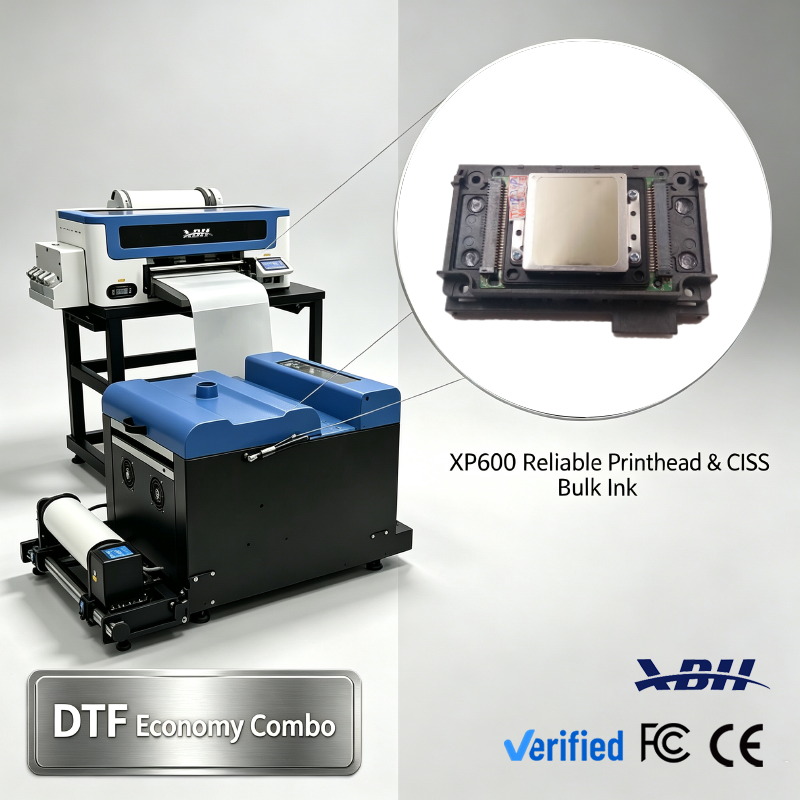
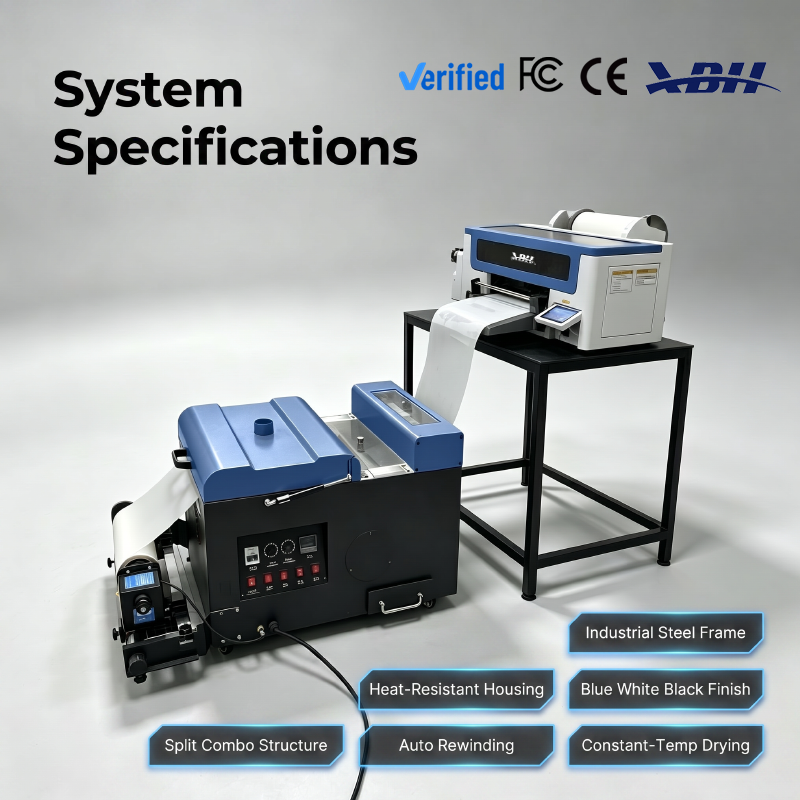
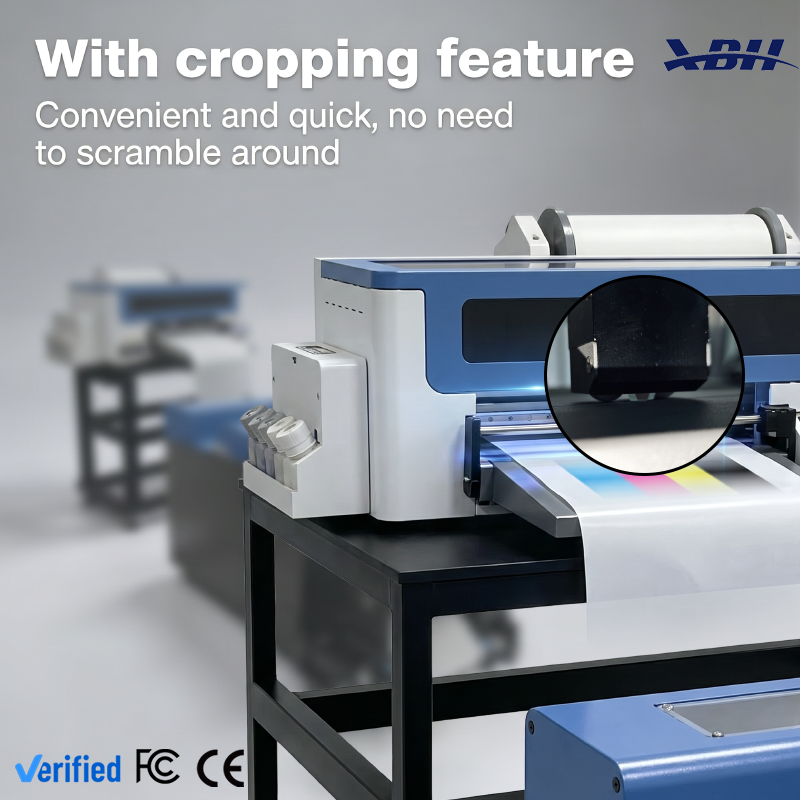
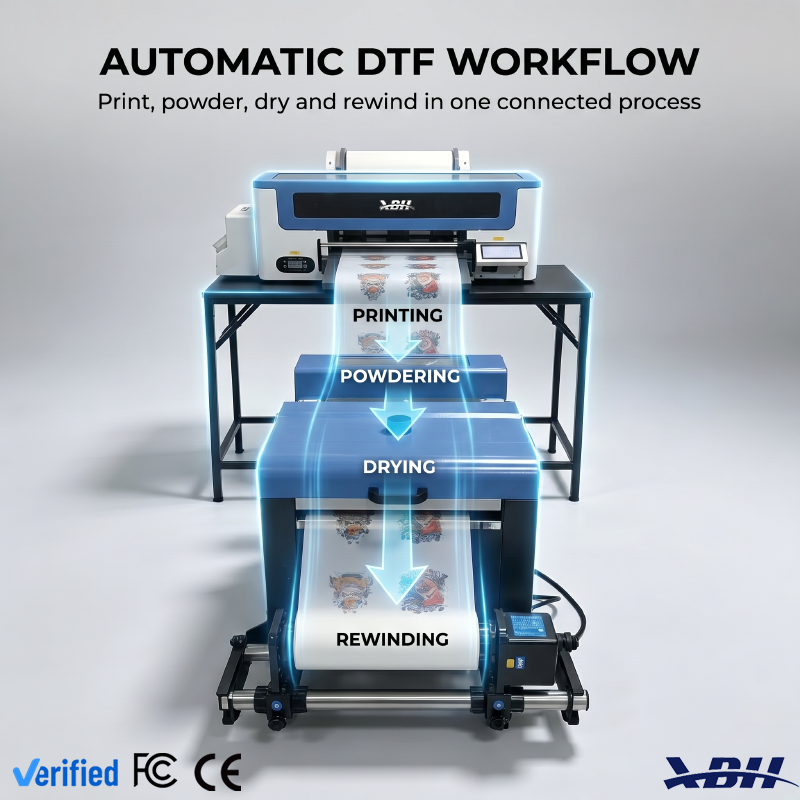
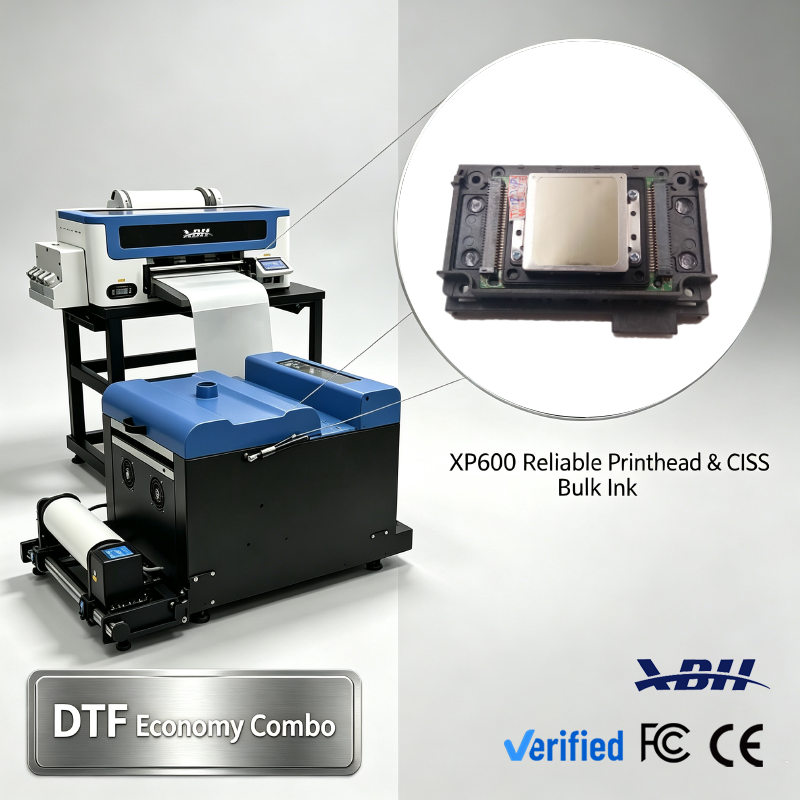
XBH A3 30cm DTF Printer Combo with dual XP600/I3200 printheads and auto powder shaker. Complete DTF workflow for T-shirts, hoodies, sportswear and custom apparel. White ink circulation, built-in cutter, easy to operate for small batch textile heat transfer printing.
| Item | Details |
|---|---|
| Model | XBH A3 DTF Combo (400D Printer + 400H Powder Shaker) |
| Printhead | 2 pcs XP600 / I3200-A1 / L1600-A1 |
| Max Printing Width | 335mm (12 inch A3) |
| Ink Configuration | CMYK + White DTF Pigment Ink, White Ink Circulation System |
| RIP Software | CADlink, RIP, Photoprint, MainTop |
| Print Speed | 3 m²/h (6 pass), 2 m²/h (8 pass) |
| Working Condition | 20-30°C, 45%-65% RH |
| Voltage | 110V/220V, 50/60Hz |
| Printer Dimension | L950×W600×H400mm |
| Powder Shaker Dimension | L760×W540×H560mm |
| Net Weight | 50kg (printer) + 30kg (shaker) = 80kg |
| Gross Weight | 80kg (printer) + 60kg (shaker) = 140kg |
| Core Functions | Roll DTF printing, auto powder shaking, melting curing, built-in cutter, linked workflow |
| Applicable Materials | Cotton, polyester, nylon, blended fabric, leather, canvas, sportswear & apparel |
| Certifications | CE, FCC, RoHS |
| Warranty | 1 year main machine warranty (excluding printheads & consumables) |
| Application | Custom T-shirts, hoodies, sportswear, hats, bags, gift apparel, textile decoration |


Q: What's the typical cost per DTF transfer?A: For a standard full-front shirt design — roughly 10 by 12 inches with good coverage — the total consumable cost including ink, PET film and hot melt powder usually comes in well under a dollar. Smaller designs like left-chest logos or sleeve prints cost even less. When you compare that with what customers pay for custom printed apparel, the per-unit margin is very healthy. The low cost per print is one of the main reasons DTF has become such a popular production method.
Q: What are the main consumable expenses?A: Three things make up the bulk of the cost: DTF ink in CMYK plus white, PET film rolls, and hot melt powder. White ink is typically the largest cost factor since it's used heavily for underbases on dark garments. Film and powder are relatively inexpensive per unit. All three consumables are widely available from multiple suppliers, so you can shop around and find competitive pricing. There's no lock-in to proprietary or brand-specific consumables.
Q: How much waste does the process generate?A: Very little. The digital printing process uses exactly the amount of ink needed for each design — no excess, no leftover ink to throw away. The film is used efficiently, and any unused portions of the roll stay on the roll for the next job. The powder that doesn't stick to the printed area gets collected and can be reused. Compared with other printing methods that generate significant waste from setup and cleanup, DTF is a very clean, low-waste process, which keeps your material costs down.
Q: How quickly does the equipment pay for itself?A: It depends on how much you use it, but many businesses see a return on their investment within a few months. The math is straightforward: if you're making several dollars profit per shirt and you print even a few dozen shirts a week, the equipment pays for itself fast. Even part-time use can generate enough profit to cover the cost in a reasonable timeframe. The combination of low entry cost and high per-unit margin makes for a quick ROI compared with many other types of production equipment.
Q: Does the 30cm format help keep costs down?A: Yes, in a few ways. First, the machine itself is more affordable than wider industrial models, so your upfront investment is lower. Second, 30cm film is the most common and competitively priced format, so your consumable cost per square meter is lower. Third, most garment designs fit within 30cm width anyway, so you're not paying for extra capacity you rarely use. The 30cm format hits a sweet spot between capability and cost-effectiveness for most custom apparel work.
Q: How labor-efficient is the process?A: Very. One person can handle the entire operation — running the printer, managing the shaker, operating the heat press, and finishing garments. There's no need for a team of people with different specialized skills. The printer and shaker run mostly automatically once you start a job, so the operator can handle other tasks while production is running. Low labor cost per piece directly improves your margins and makes the business more profitable even at modest volumes.
Q: Can I save money by buying consumables in bulk?A: Yes, bulk purchasing usually brings the per-unit cost down further. Film, ink and powder all have quantity discounts when you buy larger volumes. As your production volume grows, you can take advantage of bulk pricing to reduce your cost per print even more, which increases your profit margin. Many customers find that as they scale up their business, their consumable cost per piece actually goes down because they're buying in larger quantities and using material more efficiently.