Holographic Hot Stamping Foil for HTV: Working With Multi-Colour Metallics
Sixteen away kits, sixteen colour-shift numbers, four hours before the team bus leaves. That order is where most shops learn that holographic foil is not plain PU vinyl with a shinier surface. The material reflects the room, so every error in pressure or dwell shows up twice as clearly as it would on matte film.
What sits inside the roll
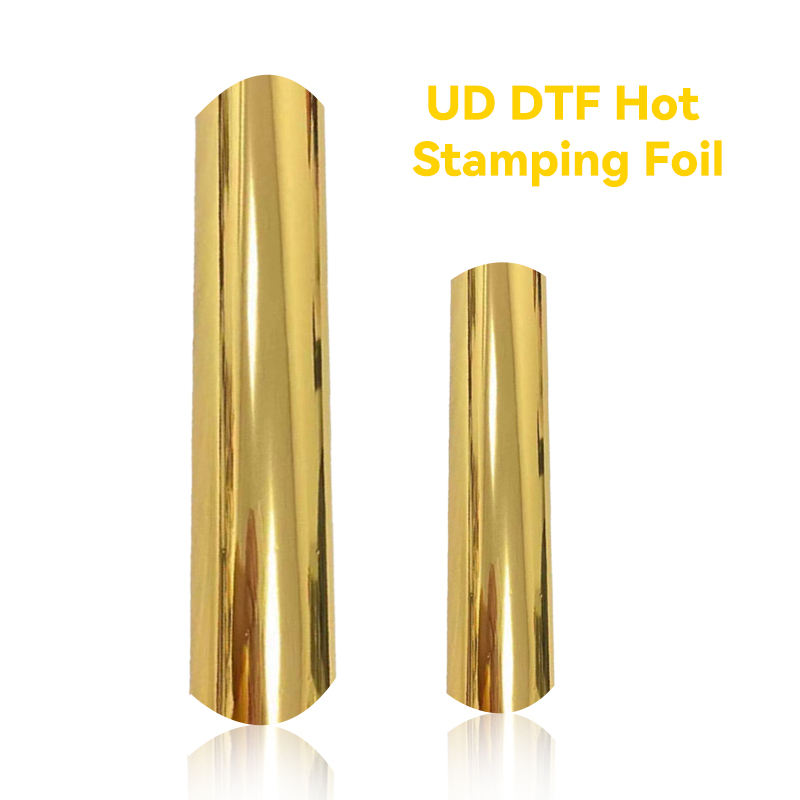
A PET carrier, a release layer, a metallised holographic layer and a heat-activated adhesive. Colour comes from the interference structure in the metal layer rather than from pigment, which is why the shade shifts with the viewing angle and why two panels cut from the same roll can look different under a camera flash. Multi-colour rolls let one job mix silver, rainbow and tinted effects without touching the press settings beyond temperature.
Which fabrics take it
Cotton and poly/cotton jersey are safe ground. Coated polyester, nylon shells and stretch blends need less heat and a shorter dwell, or the fabric glazes before the adhesive flows. On PU leather and coated textiles the foil bonds well when the grain is flat; a deep embossed surface will show silver only on the peaks and grey in the valleys. Press an offcut before you commit a panel.
Settings to start from
• Cotton jersey: 145 to 150 C, 10 to 12 seconds, medium-heavy pressure, cold peel
• Poly/cotton: 140 C, 8 to 10 seconds, medium pressure, warm peel
• Coated polyester: 130 C, 6 to 8 seconds, light-medium pressure, cold peel
• PU leather trim: 125 to 130 C, 6 seconds, medium pressure, cold peel
Registration across several colours
Lay the largest, darkest block first and the fine highlight last, so a second press does not flatten the hologram underneath. Leave 1 to 2 mm between colours: butt joins read sharp, overlaps turn dull grey and cannot be recovered. Cut with a 45 degree blade and a fresh carrier sheet, because the metallised layer blunts blades noticeably faster than PU.
The failures you will actually see
A dull satin finish instead of a mirror means too little heat or too little pressure. Silver creeping past the cut line means the opposite, over-pressure squeezing adhesive sideways. Cracking along a fold is a stretch problem: the foil has almost no elongation, so keep large panels away from waistbands and side seams and use separate pieces instead. A wash test at 40 C after 24 hours rest catches most of these before an order ships.
Colour planning for mixed sets
On a multi-colour job, group by finish rather than by size. One press run for all silver pieces, one for rainbow, one for tinted, keeps the platen temperature stable and stops the operator from chasing settings on every garment.
Who orders it
Teamwear and club kit suppliers, dance and performance costume makers, streetwear brands putting metallic numbers on hoodies, and bag makers trimming straps and pocket edges. Most keep two or three colours and a single width, and reorder by the roll through the season.
Send us the fabric composition and the effect you want and we will suggest a starting temperature at https://www.xbh-printer.com/contact. Further heat-press notes for foil and vinyl are published at https://www.xbh-printer.com/news.