
BH-Unity 30cm DTF Printer: Adding Custom Apparel to an Existing Print Shop
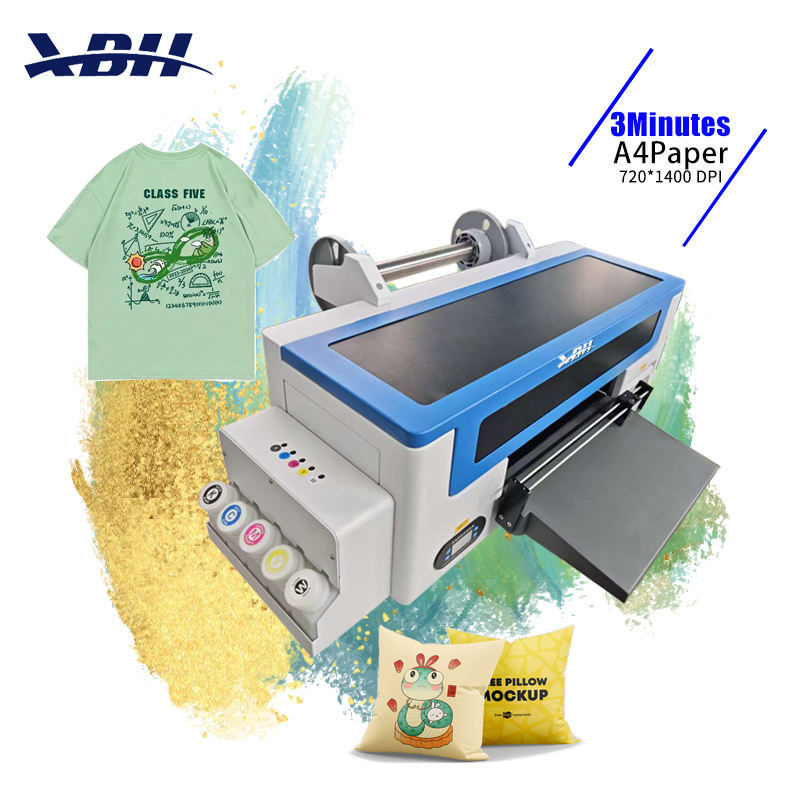
Twenty-four hoodies, full colour front and back, wanted by Friday. The shop that quoted the job already runs a vinyl cutter, a laminator and a small-format printer, and has been saying yes to apparel for a year by sending the work out. That is the point where a 30cm DTF printer stops being an idea and becomes a question about floor space.
The Order Your Current Equipment Refuses
Layered vinyl handles one colour and a name. It does not handle a photograph, a soft gradient, or a design carrying eight tones. Every time a job like that lands, the shop either declines it or pays somebody else to produce it, and the customer learns the name of that somebody else.
Fitting a 30cm Machine Into an Occupied Room
The printer footprint is modest. The process footprint is not. You need a clear metre in front for loading film, a bench for powder work, and a press within arm's reach of the curing station. Lay the workflow out as a line: print, powder, cure, press, fold. If the press lives in another room, the operator spends the day walking and the throughput quietly halves.
Power draw on this class of machine is ordinary wall supply, but powder is a fine dust and it travels. Give it a corner with an extractor or real cross-ventilation, and keep ink and film off the floor.
What One Shift Actually Consumes
Budget consumables per hundred shirts before you buy, not after. The numbers below are a planning baseline for the 30cm format, adjustable to your film and powder supplier.
• Film - 30cm DTF PET, 75 micron, 100 m roll
• Ink - CMYK plus white in 1 L bottles, white empties fastest
• Powder - fine grade for detail, coarse grade for large solids
• Cure - 110 to 120 C at the oven zone, film at 0.6 to 0.8 m/min
• Press - 160 C for cotton, 145 C for polyester
• Time per A3 sheet - about two minutes printing, three to four minutes powder and cure
Training the Person Already There
Nobody needs a new hire for this. The operator who runs the cutter today can learn the full cycle in a day because there are only three decisions: is the film dry, is the powder even, is the press closed. Everything else is repetition. Tape those three checks to the wall beside the machine and let the routine do the training.
Quoting the Add-On Without Giving It Away
Price the garment, the print area and the labour separately in your own figures, then compare the total with what your market already pays. Custom apparel margins are commonly quoted in the 60 to 75 percent range at the better end, but that number evaporates if press time is left out. Two press loads per hoodie is twenty seconds of machine time and two minutes of handling.
When to Decline
Four hundred pieces in three days is a job this printer can start and your press cannot finish. The 30cm format earns its keep on runs of twelve to sixty, on team sets, on names, and on the samples that win the larger order later.
The BH-Unity 30cm automatic DTF printer sits between 1,099 and 2,299 USD depending on configuration. Tell us what you print today and which jobs you keep refusing, and we will say plainly whether this format pays for itself in your shop: https://www.xbh-printer.com/contact. Workflow write-ups for other machines are at https://www.xbh-printer.com/news.