
A3 DTF Printer with Automatic Oven: Why Drying Control Decides Wash Fastness
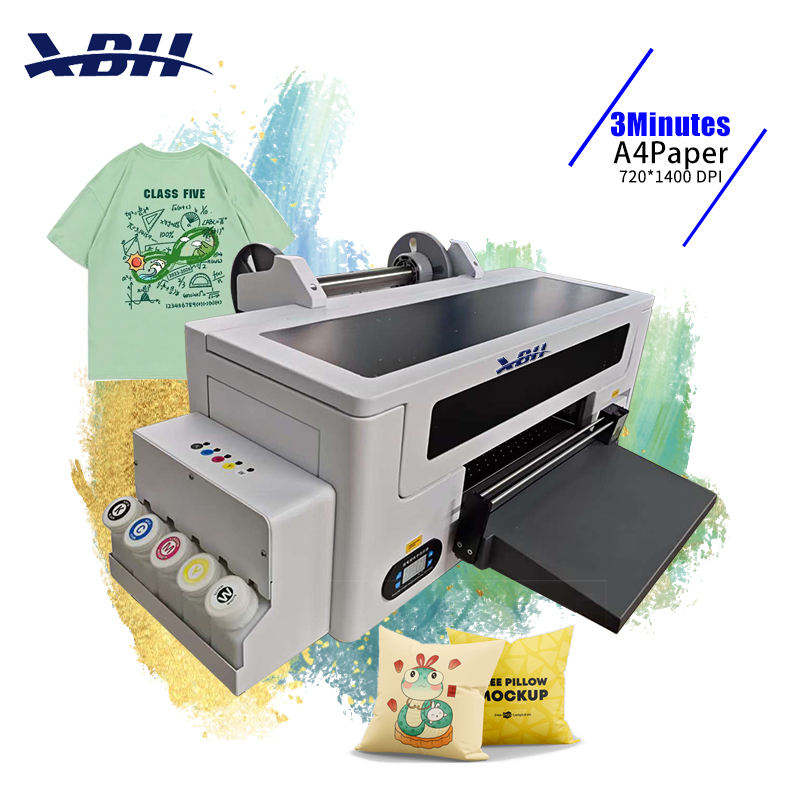
A customer sent a photo last month of a black cotton tee, washed five times. The transfer still held at both shoulders. Across the chest the ink had opened into a web of fine cracks, like dried mud. The press was fine. The film was fine. The print had reached the powder while still wet, and the oven had been left at whatever setting it shipped with.
Where Wash Fastness Is Really Decided
The press takes the blame, but adhesion is settled in three places. The binder has to wet out into the fibre under heat. The powder has to fuse into a continuous layer. And the water has to be gone before either of those happens. The third is the only one an automatic oven exists to guarantee.
What an Oven Does That a Heat Gun Cannot
An oven on this machine is a short tunnel: a heat zone, an air flow, and a fixed dwell time. Film travels through at a steady rate, so every centimetre receives the same number of seconds. Hand drying heats the edges harder than the centre, and the centre is where cracks begin.
The Two Ways Drying Goes Wrong
Dry too hard and the adhesive skins over. The surface closes, moisture stays trapped underneath, and the press turns that moisture into steam. The result is blisters, a plastic hand feel, and a print that fails at the second wash.
Dry too little and the powder sinks. Particles migrate down into a wet layer, the white ends up thin and grainy, and the print looks dusty before it ever touches a shirt.
A Starting Recipe to Adjust From
These are starting points for 30cm film, not universal settings. Change one variable at a time.
• PET film 75 micron - 0.6 to 0.8 m/min through the oven
• Oven zone - 110 to 120 C at the sensor, dwell 90 to 120 seconds
• Powder - applied while the film is still tacky, then tapped off
• Rest before stacking - 5 to 10 minutes on a rack, printed side up
• Press on cotton - 160 C, 15 seconds, medium pressure
• Press on polyester - 145 C, 12 seconds, light pressure
• Peel - cold for fine detail, warm for large solid areas
Humidity Is a Variable You Own
A shop at 30 percent relative humidity in winter and 80 percent in summer will not get the same result from the same oven setting. Wet film in a humid room needs more dwell time, not more heat. Raising the temperature to compensate is how people scorch the adhesive and then blame the powder for a problem the oven created.
Wash one sample five times at 40 C with ordinary detergent and compare it with an unwashed control under the same light, for every new film batch. A bad batch is cheaper to catch on one sample than on forty shirts that come back in a bag.
Where This Machine Belongs
This is a bench machine for short runs, samples and one-off names, and it is priced from 189 to 1,389 USD. What it does need is a drying step that repeats, because that is the whole difference between a print that survives a season and one that returns as a complaint.
If you are weighing whether the oven version earns its place in your workflow, send your typical order size and fabric mix through https://www.xbh-printer.com/contact and we will tell you honestly where the bottleneck will sit. More process notes like this one are collected at https://www.xbh-printer.com/news.