


XBH-YH1908 Sublimation Printer - THK Silent Guide Rail Stable Metal Frame Industrial Build
Brand XBH
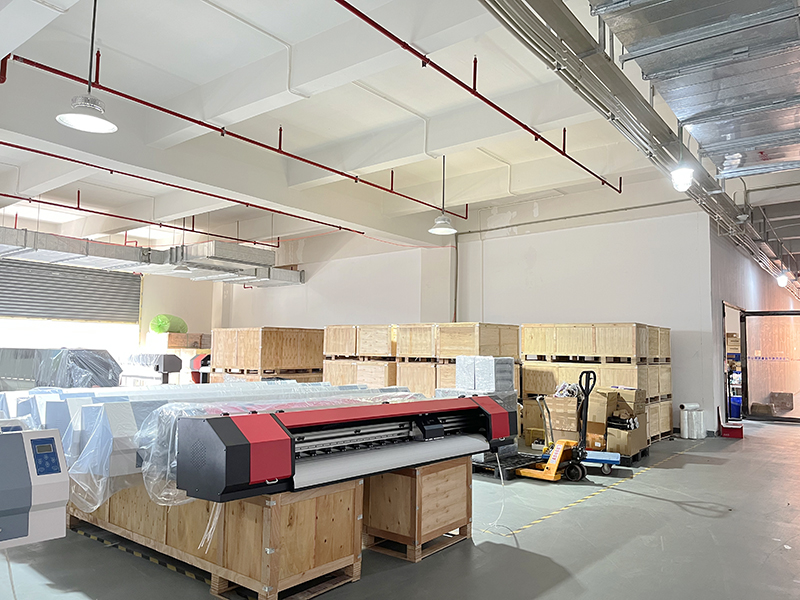
XBH-YH1908 built with THK silent guide rails for smooth, vibration-free printhead carriage movement and a heavy-duty stable metal frame for industrial reliability. 950kg net weight provides a solid foundation that maintains precision at 320 m²/h high speeds. Quiet operation, consistent print quality, and long-term stability for continuous production environments.


Q: What is the THK silent guide rail and why does it matter?
A: The THK guide rail is the precision linear motion system that the printhead carriage travels on as it moves back and forth across the 1.9m print width. THK is a well-known manufacturer of high-quality linear motion components, and their silent guide rails are designed for ultra-smooth, low-friction, low-vibration movement. This matters because any vibration, wobble or inconsistency in the carriage movement directly affects print quality — if the carriage shakes even slightly as it moves, the printhead deposits ink in slightly wrong positions, causing blurred text, jagged lines and banding. The THK silent guide rail ensures the carriage moves with perfect smoothness and precision across the entire width, even at the high speeds of 320 m²/h production mode. The "silent" designation also means the rail operates with very low noise, which contributes to a quieter, more comfortable working environment in the production facility.
Q: How does the stable metal frame contribute to print quality at high speeds?
A: The frame is the foundation of the entire printer — everything else (printheads, media feed, drying system) mounts to and moves relative to this structure. A heavy-duty, stable metal frame provides the rigidity needed to maintain precise alignment and absorb vibration during high-speed operation. At 320 m²/h, the printhead carriage is moving rapidly back and forth across 1.9 meters, and the media is advancing continuously — all of this generates inertia and vibration. If the frame flexed or vibrated, the relative position between printhead and media would shift, causing print defects. The stable metal frame (contributing to the 950kg net weight) absorbs and dampens these forces, keeping everything perfectly aligned and stable. This is what allows the machine to maintain sharp, consistent print quality even at maximum production speed — the frame doesn't move, so the printhead and media stay in precise relative position, print after print, meter after meter.
Q: Why is the 950kg net weight important for industrialuction? prod
A: A heavy, solid machine is a stable machine. The 950kg net weight means the XBH-YH1908 has substantial mass that resists movement and vibration. When the printhead carriage accelerates and decelerates at each end of its 1.9m travel, the inertia would cause a lighter machine to rock or shift — the heavy weight prevents this, keeping the machine firmly planted. When the media feed and take-up systems pull large, heavy rolls of paper, the solid frame maintains alignment without flexing. For a machine that runs continuously for hours at high speed, this stability is essential for consistent print quality over long runs. The weight also contributes to durability — a heavy, well-built machine with quality components like THK guide rails is designed to last for years of industrial use, maintaining its precision and reliability over time. For production facilities that depend on the machine running shift after shift, this level of build quality is a critical investment.
Q: How does the industrial build affect long-term reliability and maintenance?
A: Industrial-grade construction directly translates to long-term reliability and lower maintenance requirements. The THK silent guide rails are designed for long service life with minimal wear — they maintain their precision over millions of carriage cycles, so you don't experience degradation in print quality over time. The stable metal frame doesn't warp or shift, so calibration stays consistent and you don't need frequent realignment. Quality components throughout — motors, bearings, belts, electronics — are selected for industrial durability. The result is a machine that runs reliably day after day, shift after shift, with fewer unexpected breakdowns and less downtime for repairs. Routine maintenance is straightforward and manageable: regular nozzle checks, occasional cleaning, lubrication of moving parts per the maintenance schedule. For a production business where uptime directly equals revenue, a machine built for industrial reliability is essential — it minimizes the risk of costly production stoppages and protects your investment over the long term.