
Premium UV Fluorescent Ink - Better Color Sharper Edges vs Budget Alternatives
Brand XBH
Product origin guangdong
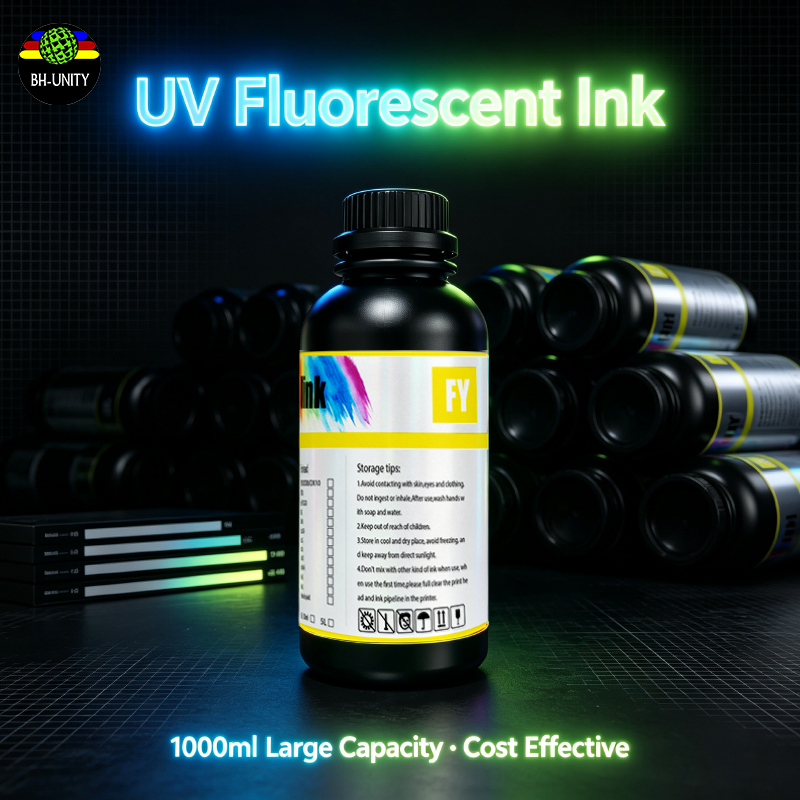
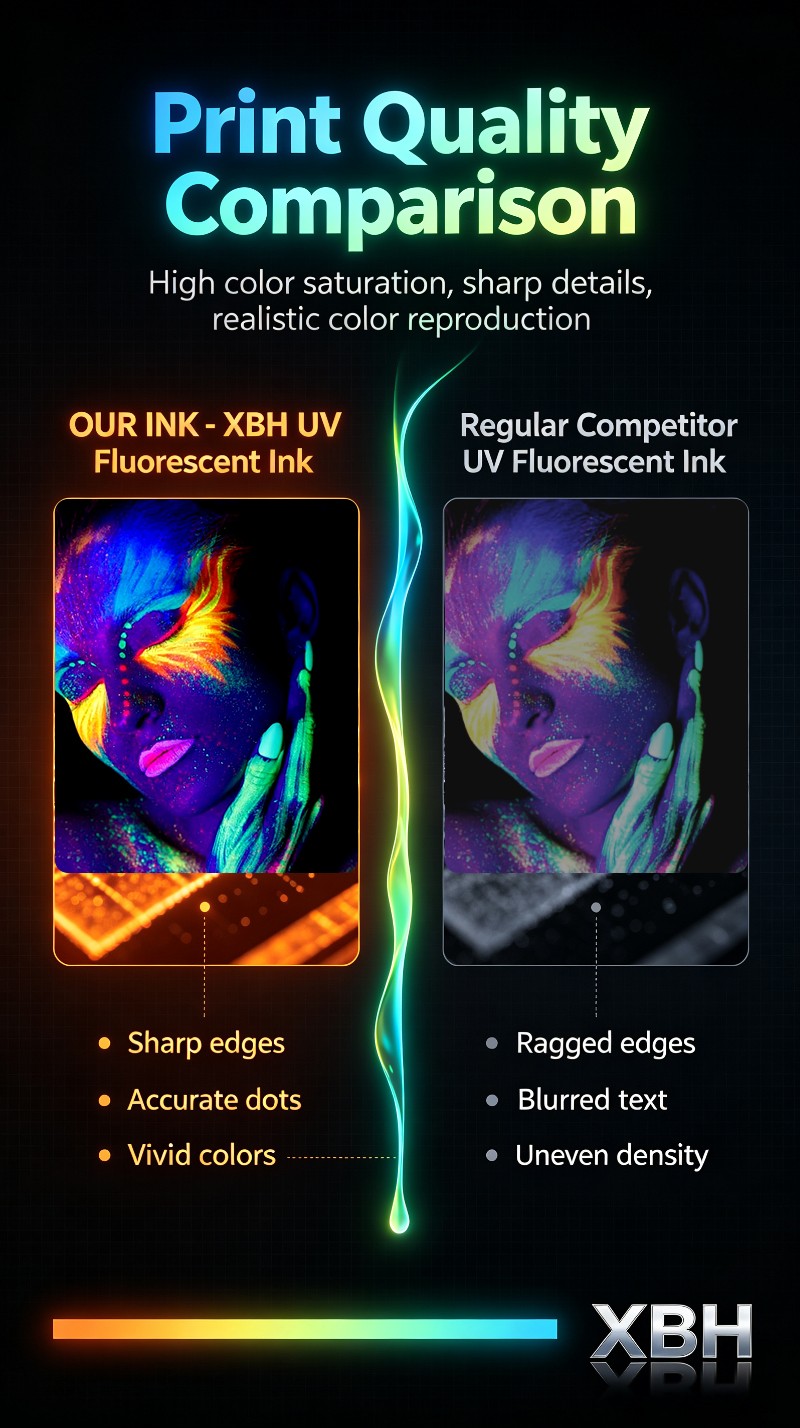
Premium UV fluorescent ink delivers sharper edges, more accurate dots and more vivid colors than budget alternatives. Higher pigment concentration, uniform nano particles and stable flow mean professional quality results, every print run.
Premium UV Fluorescent Ink - Better Color Sharper Edges vs Budget Alternatives
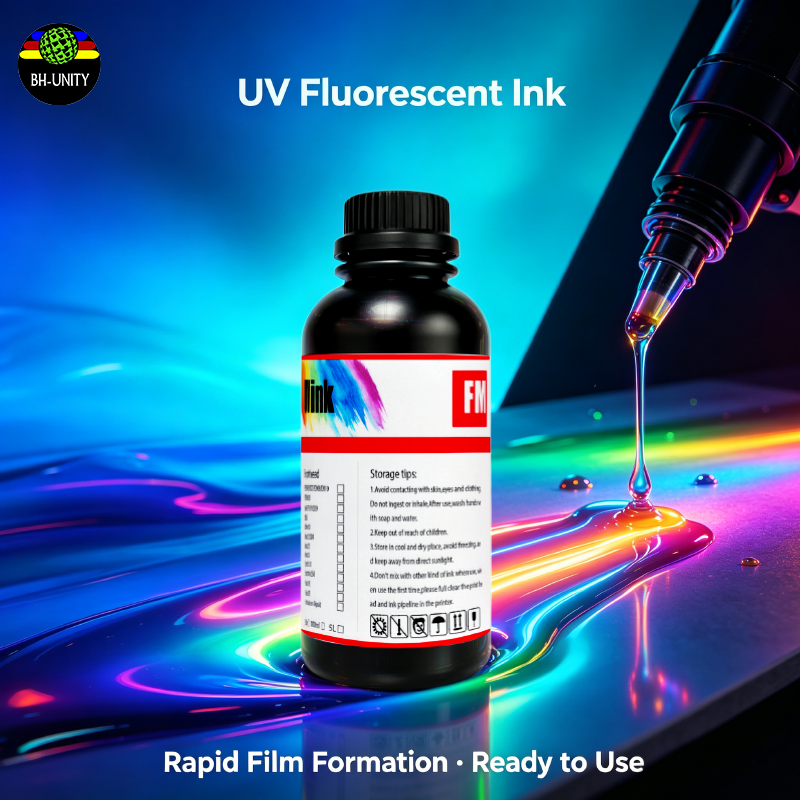
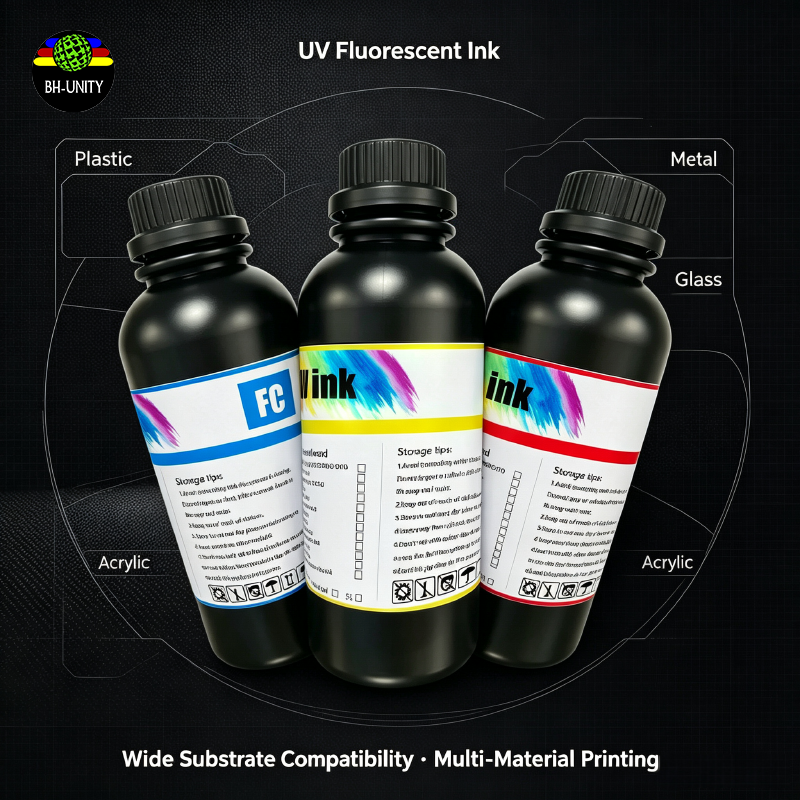
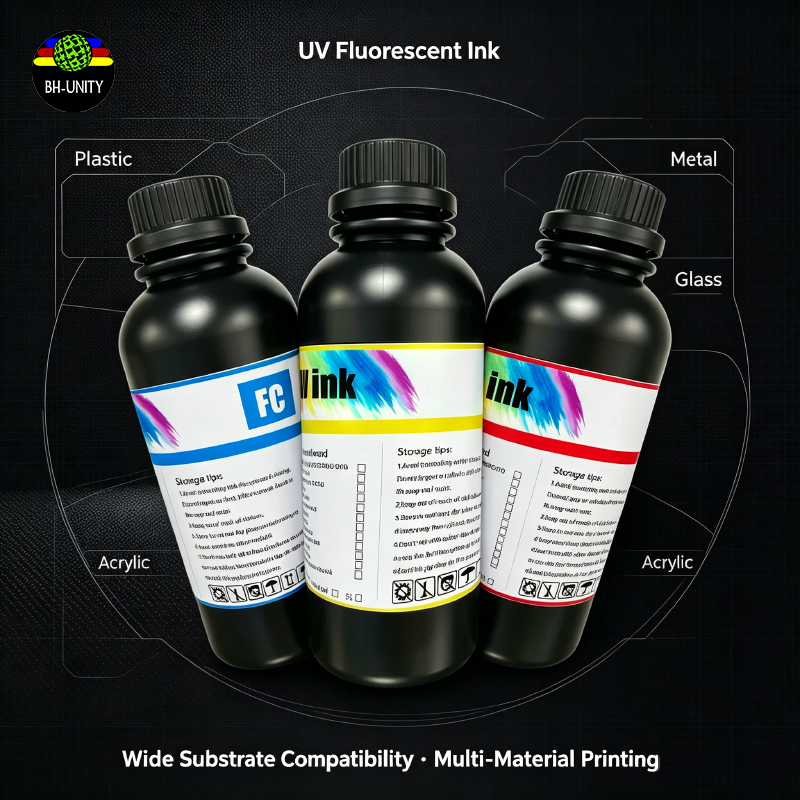
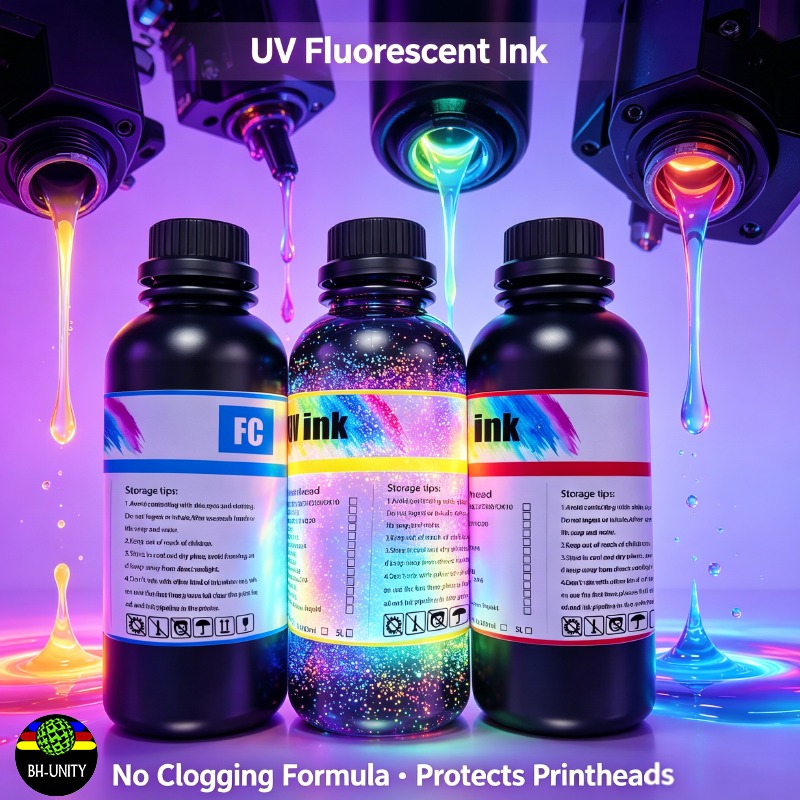
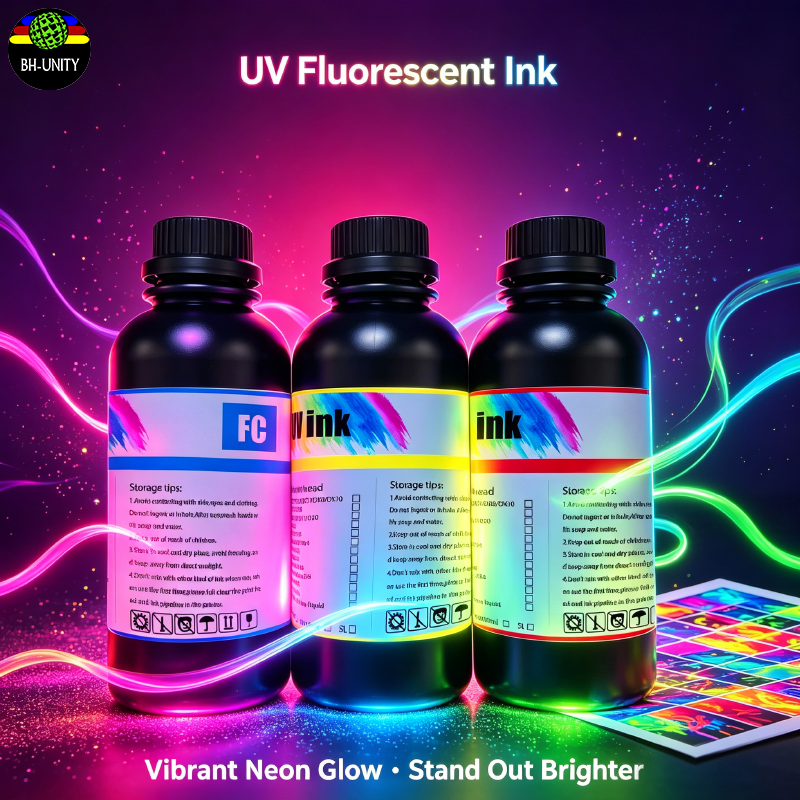
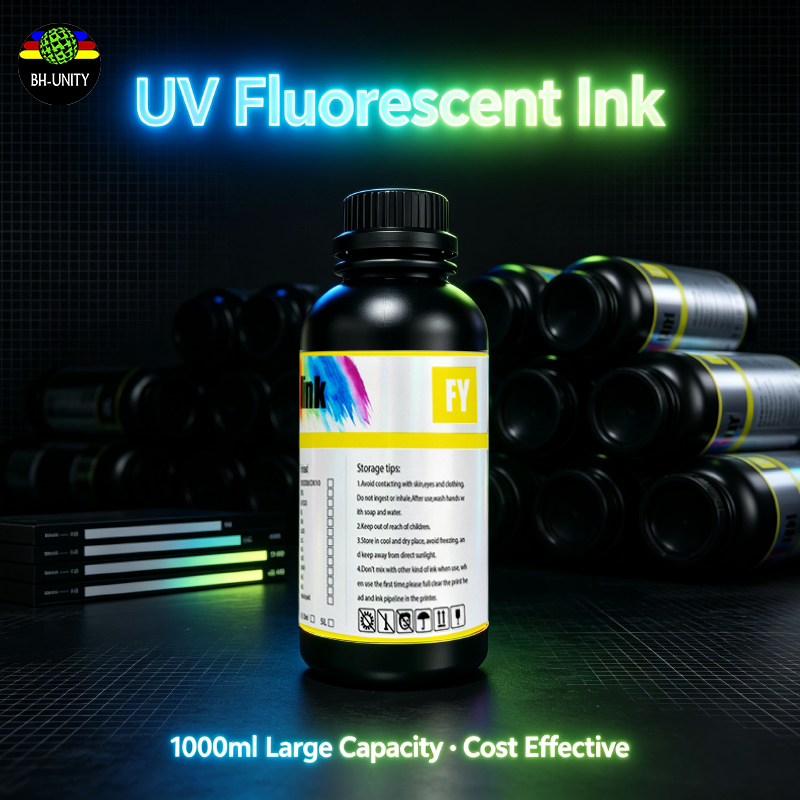
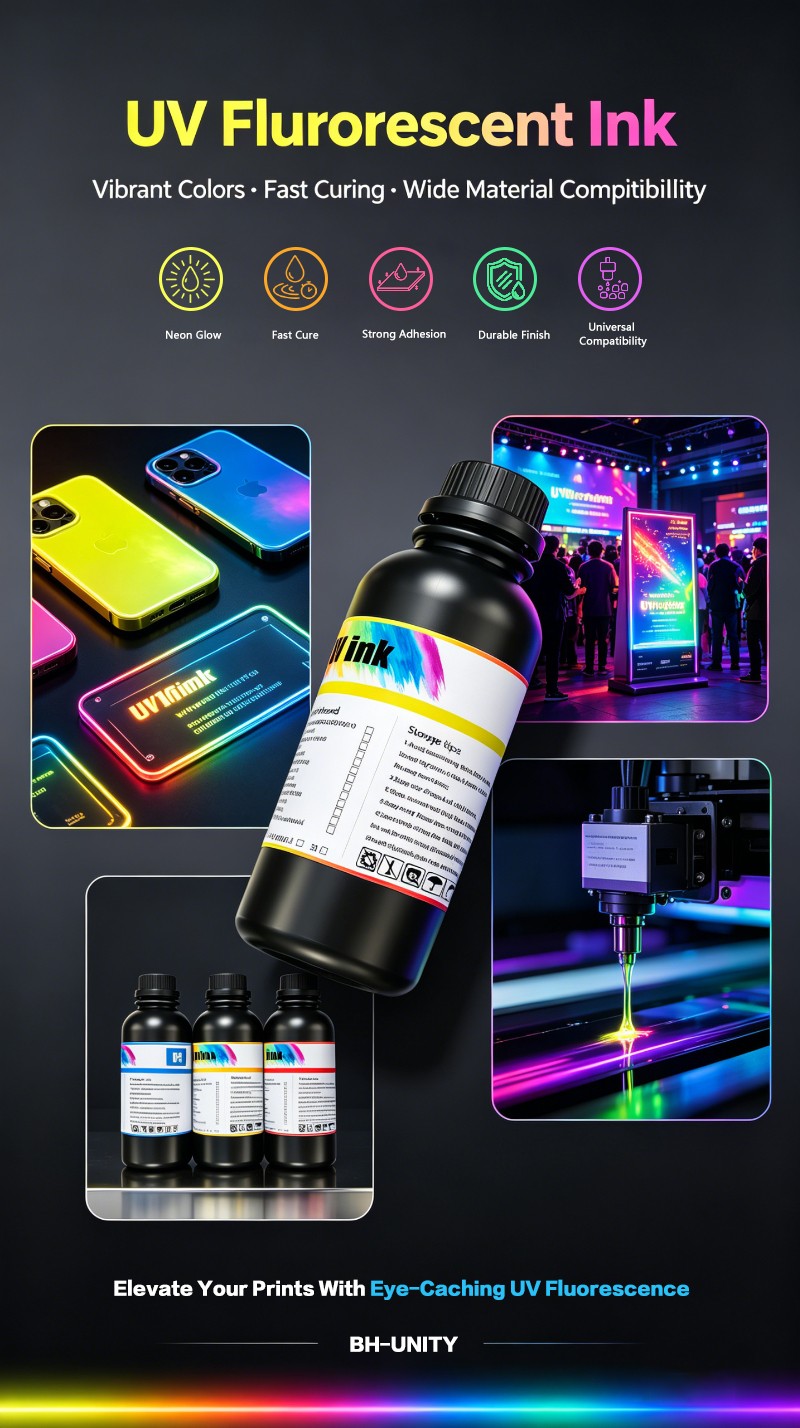
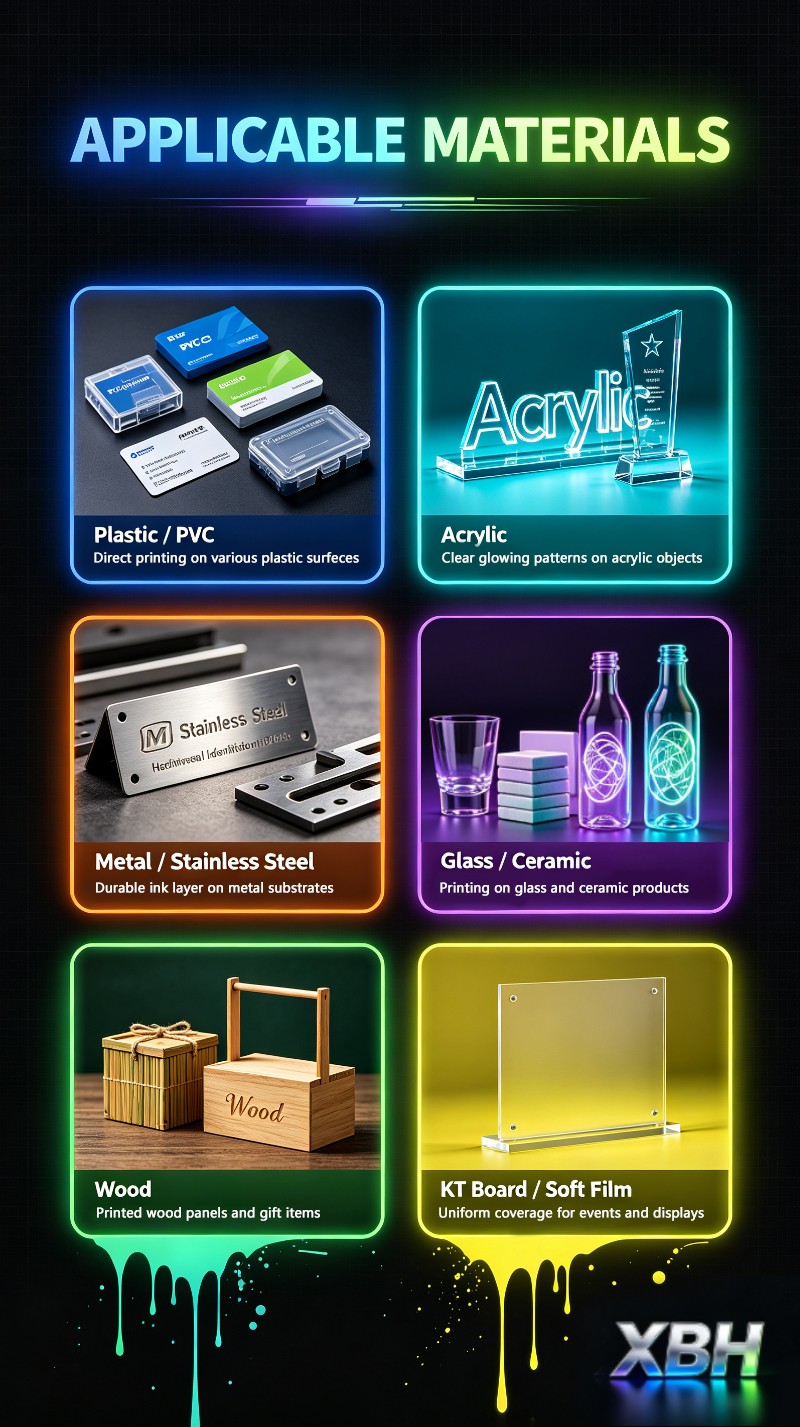
XBH UV fluorescent ink delivers ultra-bright neon colors with instant UV curing on hard substrates. Formulated for smooth anti-clog printing and strong adhesion on plastic, acrylic, metal and glass — durable, scratch-resistant results for every UV print job.
Product Specification Table
| Product Name | UV Fluorescent Ink |
| Brand | XBH |
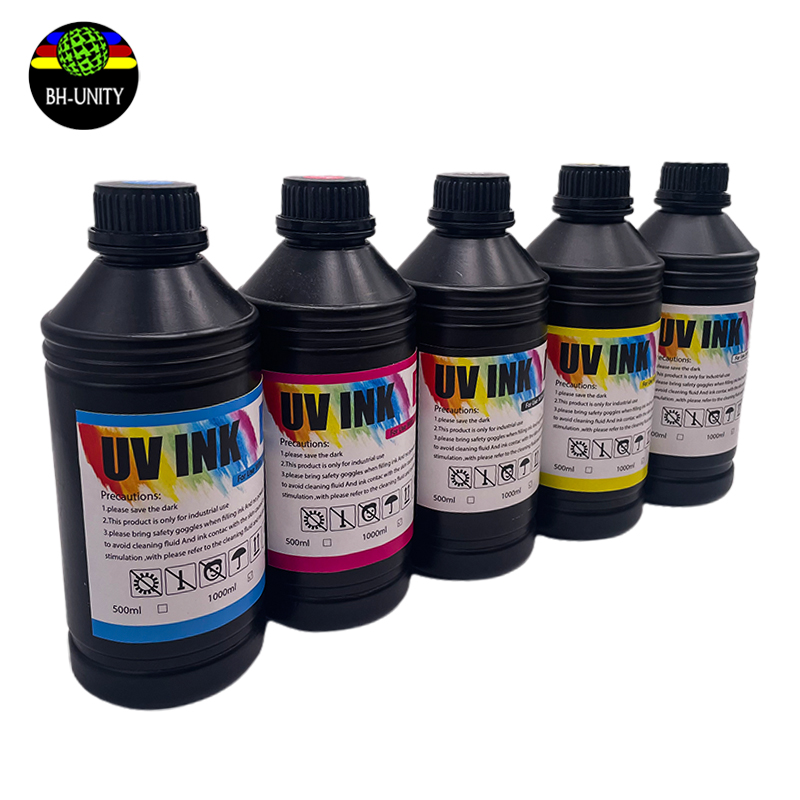
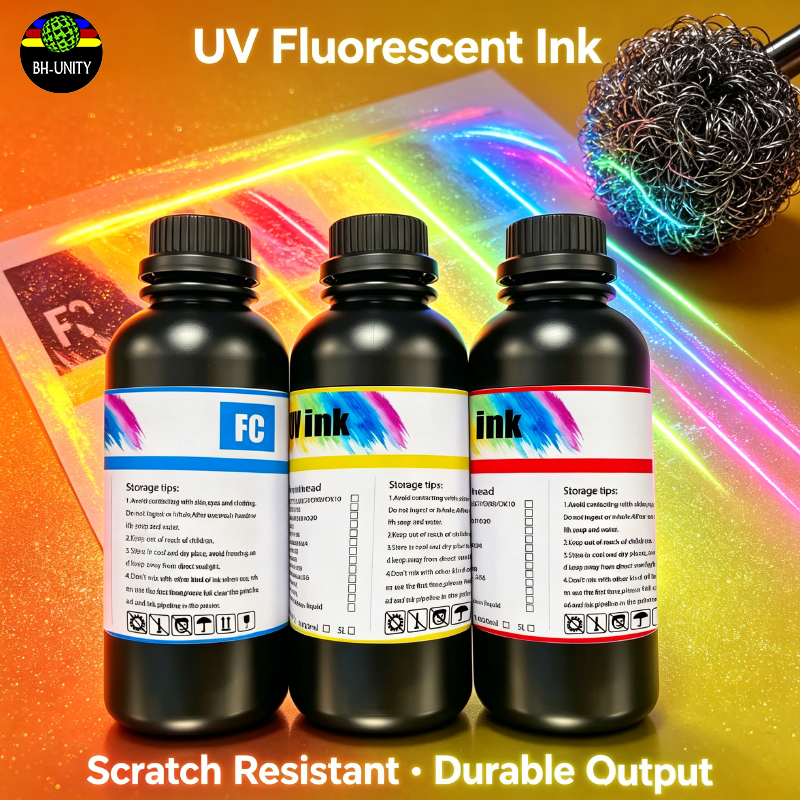
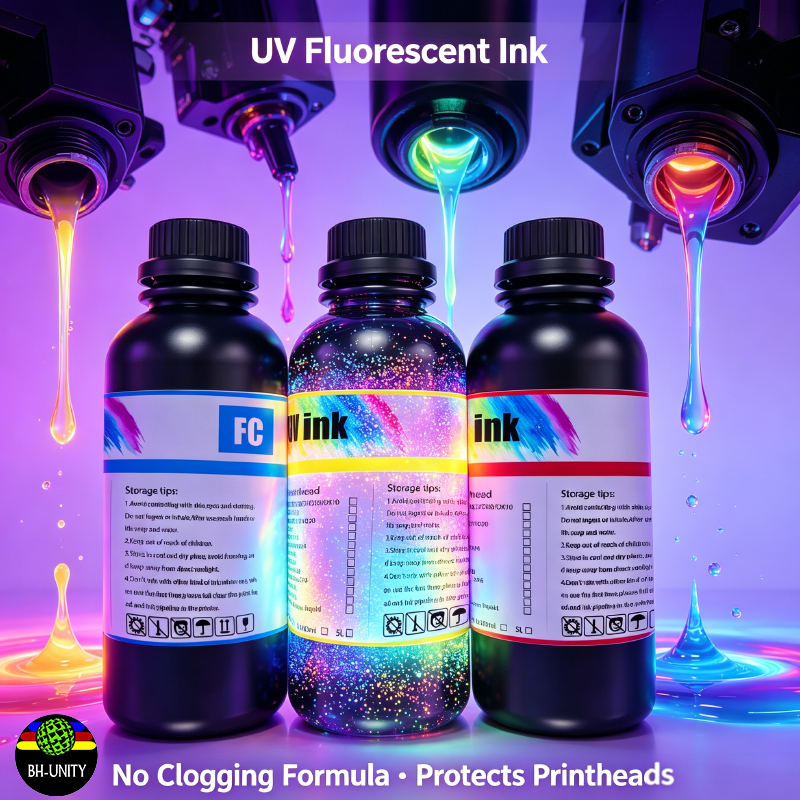
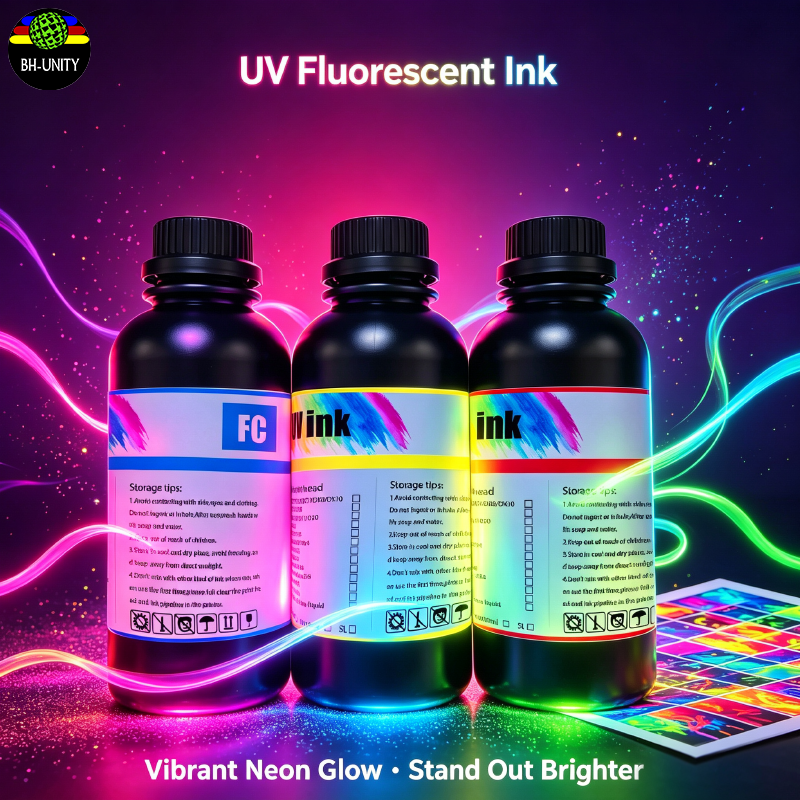
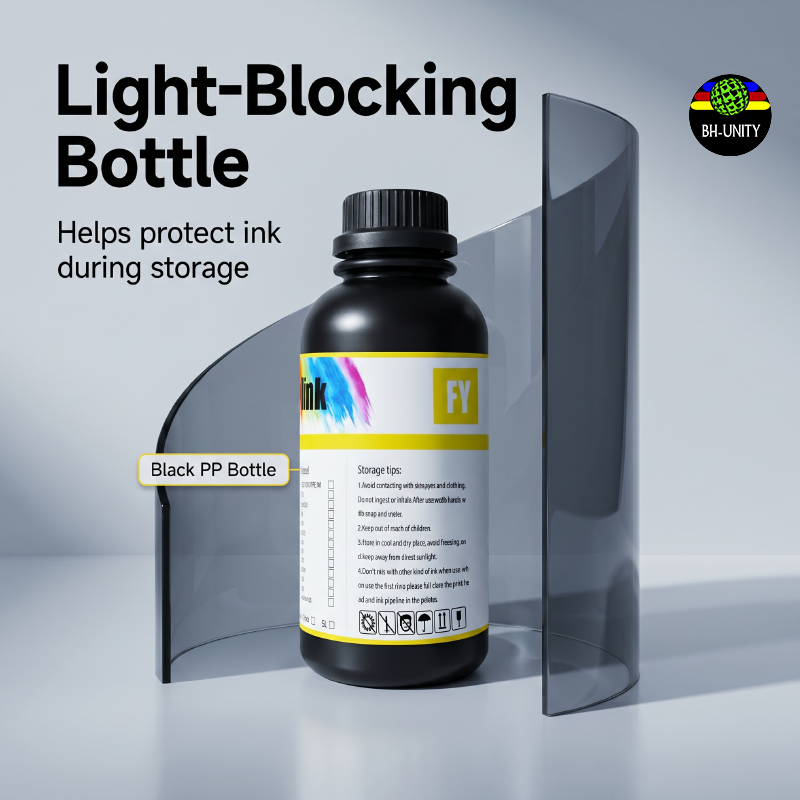
| Bottle Type | Black light-proof bottle with color-coded cap |
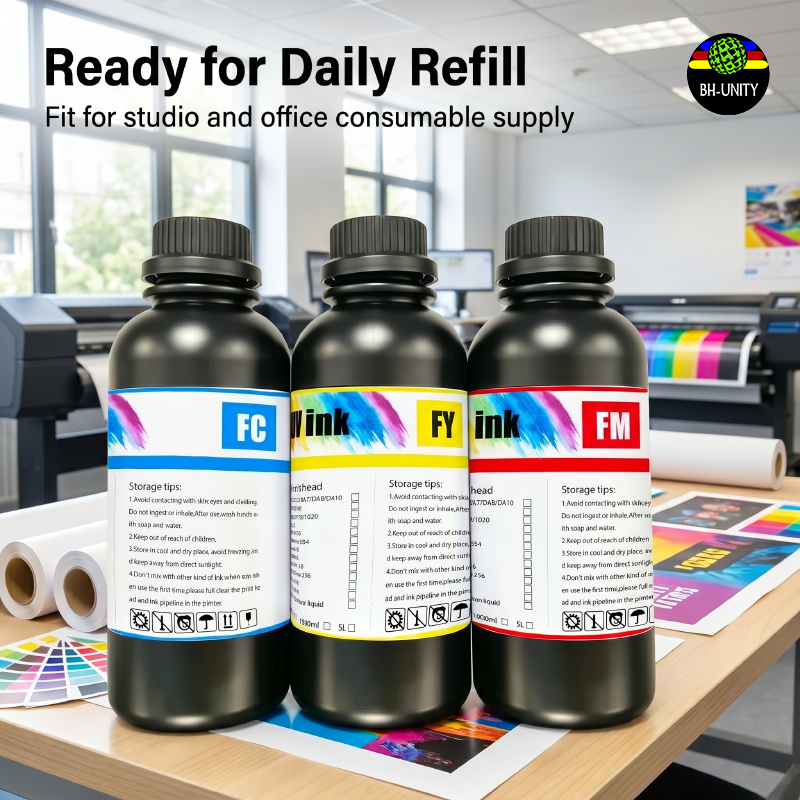
| Fluorescent Colors | FM (Fluorescent Magenta), FY (Fluorescent Yellow), FC (Fluorescent Cyan) |
| Bottle Capacity | 1000 ml / bottle |
| Key Features | Ultra-bright neon, fast UV curing, scratch-resistant, anti-clogging |
| Compatible Materials | Plastic, PVC, acrylic, metal, glass, wood, ceramic, KT board, soft film |
| Application | Signage, promotional items, phone cases, decorative prints, packaging |
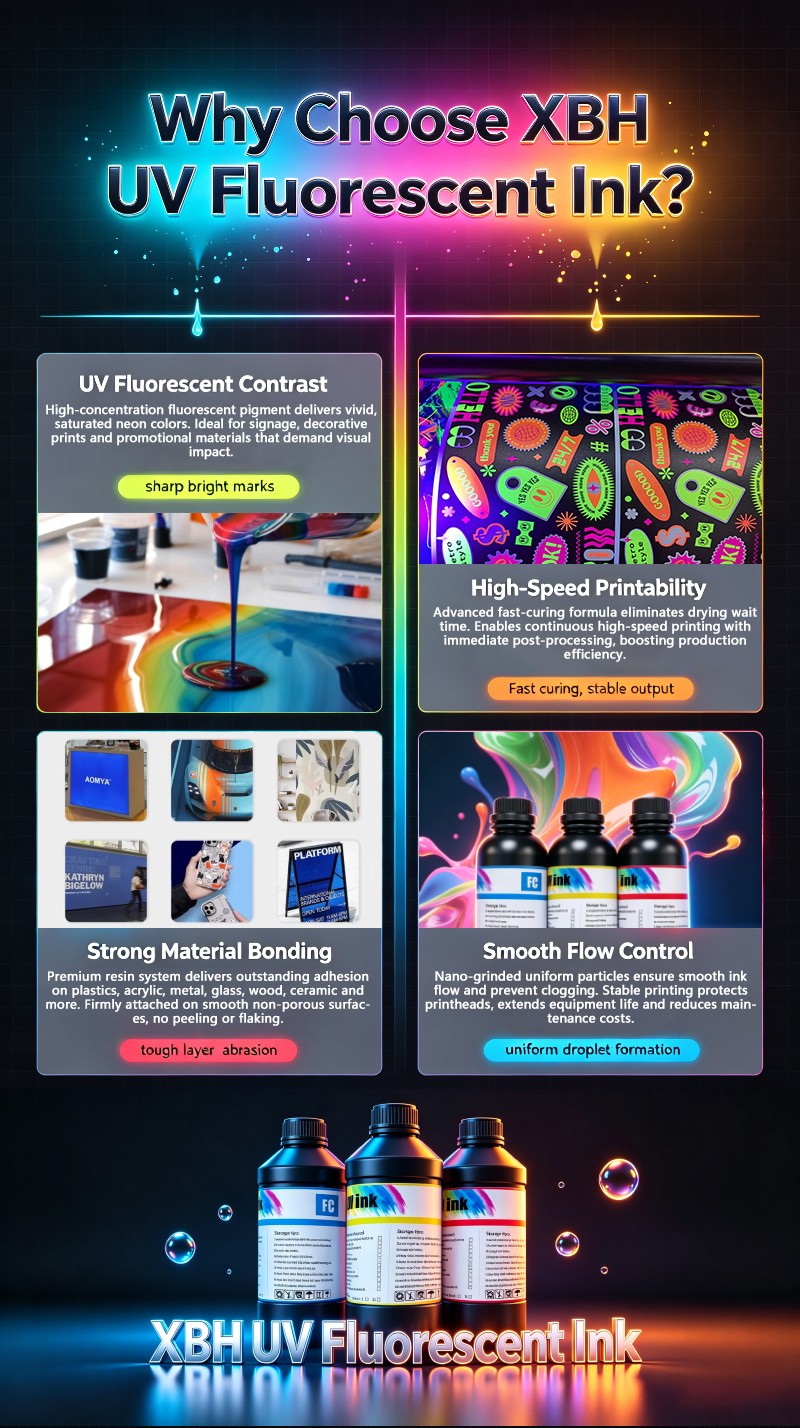





Q: What makes this ink "premium" compared with cheaper options?A: It comes down to the ingredients and the formulation. This premium UV fluorescent ink uses higher-grade fluorescent pigments with a higher concentration, so the colors are more saturated and the glow is stronger. The pigment particles are nano-sized and uniformly graded, so they flow through the printhead smoothly without clogging. And the resin system is a higher-quality formula that cures harder and bonds better to materials. Cheaper inks cut corners on all of these things.
Q: How noticeable is the quality difference in actual prints?A: Pretty noticeable when you compare side by side. Premium ink produces sharper edges, cleaner text and more uniform color density. Budget inks often have ragged edges, blurred details and uneven color coverage — some areas look darker, some lighter. The glow effect is also stronger and more even with premium ink. If you're selling printed products to customers who care about quality, the difference is obvious and it reflects on your business.
Q: Does cheaper ink really cause more clogging and maintenance?A: Yes, and that's where a lot of the hidden cost is. Budget fluorescent inks often use larger, irregular pigment particles that can build up in printhead nozzles over time. This means more frequent cleaning cycles, more missing nozzles, more wasted ink on maintenance, and eventually shorter printhead life. When you factor in the cost of extra maintenance, wasted material from bad prints, and earlier printhead replacement, cheap ink often ends up costing more in the long run.
Q: Is the glow effect actually stronger with premium ink?A: Yes, because premium ink uses a higher concentration of better-quality fluorescent pigments. Cheaper inks often use lower-grade pigments or load them at lower concentrations to save cost, which results in a weaker, washed-out glow. With premium ink, the glow is bright, saturated and even across the whole printed area. Under black light, the difference between premium and budget fluorescent ink is immediately obvious — one pops, the other looks dull.
Q: How does adhesion compare with budget inks?A: Premium ink generally adheres better to a wider range of materials. The resin system in a quality ink is formulated to bond with both porous and non-porous surfaces. Budget inks sometimes use cheaper resins that cure softer or don't bond as well, leading to scratching, peeling or flaking — especially on difficult materials like glass, metal and certain plastics. For products that need to be durable, paying a bit more for ink that actually sticks is worth every penny.
Q: Why do some shops still use cheaper ink then?A: Usually because they're looking at the upfront cost per liter and not the total cost of ownership. On paper, budget ink looks cheaper. But when you add up wasted ink from cleaning, wasted material from misprints, more frequent printhead replacements, lost production time from downtime and reprints from quality issues, the total cost can actually be higher. Plus, if your customers notice the lower quality, it can hurt your reputation and cost you repeat business.
Q: How can I justify the cost of premium ink to my customers?A: Show them. Print the same design on the same material with both inks and put them side by side. Show them the sharpness, the color saturation and the glow difference under black light. Most customers are willing to pay a small premium for noticeably better quality, especially for things like event signage, promotional products and custom gifts where the print quality reflects on their brand. Position premium fluorescent printing as an upgrade option, and you'll probably find that a lot of customers choose it.