UV Curable Ink in 1L Bottles: Storage, Curing and Colour Control
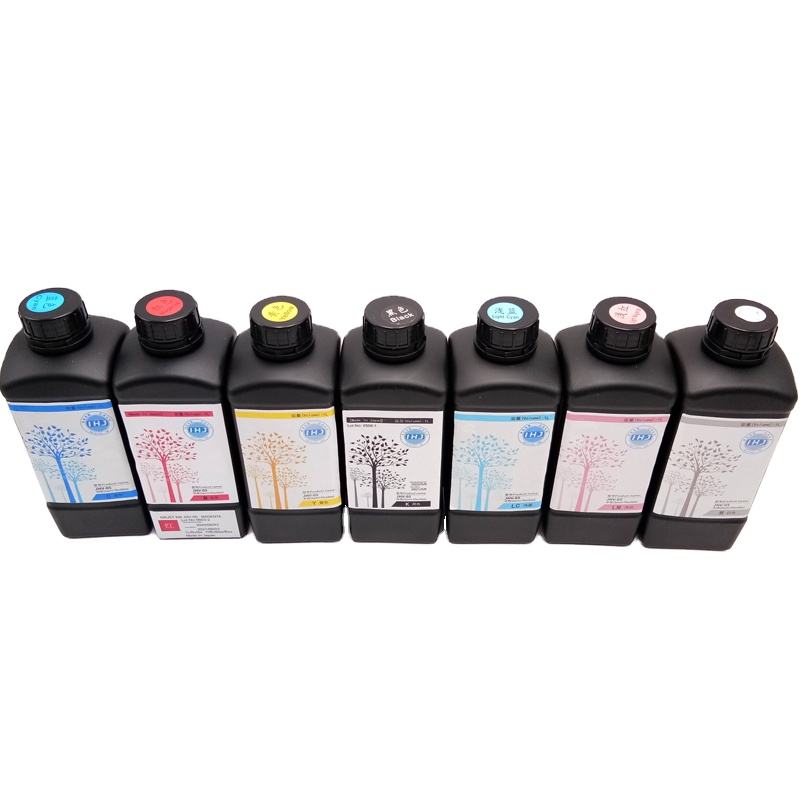
Why does a bottle of UV-curable ink that printed cleanly in March turn chalky and slow to cure in July? The ink did not change. The room did. Photoinitiators respond to heat and light, and a 1 L bottle stored beside a loading door has already begun to age before the cap ever comes off.
Storage Is a Process, Not a Shelf
Keep bottles between 18 and 25 C, in the dark, with caps tight. A closed cabinet inside the pressroom beats a windowsill, and a windowsill is what a surprising number of shops actually use. Rotate stock so the oldest bottle opens first, and write the open date on the cap with a marker. Once opened, plan to finish a bottle within about six months.
Agitation: Roll, Do Not Shake
Pigment and photoinitiator settle during standing. Rolling a bottle for thirty seconds before each shift redisperses them without whipping air into the liquid. Hard shaking creates foam, foam travels into the damper, and the first metre of the next job prints light and grainy. If a bottle has stood for a week, roll it, let it rest five minutes, then run a small strip before committing a roll of media.
A daily and weekly standard that works in practice:
• Storage - 18 to 25 C, dark cabinet, cap tight, label the open date
• Shelf life - finish within 6 months of opening, oldest bottle first
• Agitation - roll 30 seconds per shift, never shake hard
• Fill level - keep bottles above 80 percent, decant into a smaller bottle as they empty
• Cure check - thumb twist, tape pull and solvent rub on every new media
• Lamp log - record hours, replace tubes as a set rather than one at a time
Curing Is Dose, Not Lamp Percentage
The display shows lamp power. The substrate sees dose, and dose changes with belt speed, lamp age, lamp-to-surface distance and the number of passes. A coating that survives a thumbnail twist can still fail a tape pull, because the surface is set while the layer underneath is not. Test each new media three ways and slow the belt before you raise the power.
Colour Control Across Bottles
Two bottles from different production batches can differ slightly in viscosity, and viscosity changes how drops form and where they land. Tie the ICC profile to the batch, not to the printer, and re-linearise when a new lot goes on the machine. Print a small target at the start of each shift and compare it against the previous one under the same lamp. A shift you can see on paper is far cheaper than a reprint on expensive board.
When to Stop Using a Bottle
Skinning at the surface, sediment that will not redisperse after rolling, or a gel ring at the shoulder all mean the bottle is finished. Filtering it into a fresh container is a false economy, because the cured particles will find the filter or the head. A 1 L bottle sits in the $18 to $22 range, which is not worth a nozzle plate.
Cleaning routines that match this ink, and the cure-check sequence in full, are collected at https://www.xbh-printer.com/news. If you are switching a UV machine to a new ink lot and want a second opinion on cure settings, send your media list and lamp hours through https://www.xbh-printer.com/contact.