
Automatic A3 DTF Printer with Powder Shaker: One-Operator Shop Layout
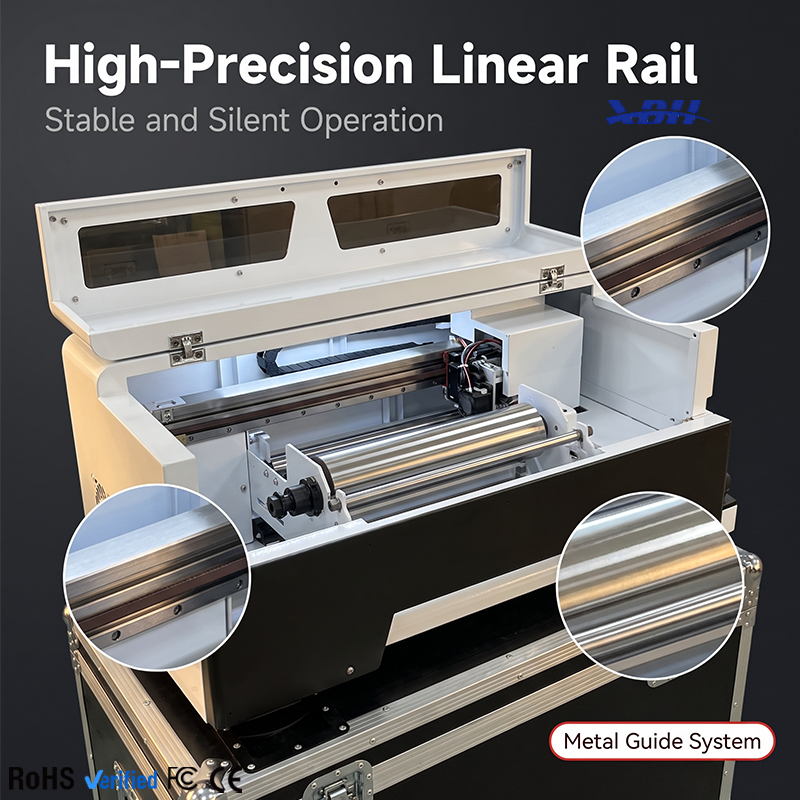
Walk into a one-room DTF shop at nine in the morning and the floor tells you whether the owner will survive the seasonal rush. When the printer, the powder shaker, the heat press and the packing table sit within four steps of each other, one person can run the whole line. When they sit in three corners, the same person spends the morning walking.
The real constraint is not speed
Most buyers compare print speeds and then discover that speed was never the bottleneck. On a 30 cm DTF line the operator's hands are the bottleneck. Film has to be printed, powdered, shaken, cured, pressed and packed, and every one of those steps needs the same pair of hands within a short window.
An automatic A3 DTF printer with a powder shaker removes the most awkward of those steps. Powdering by hand is dusty, slow and inconsistent, and it is the step most likely to ruin a film while nobody is watching. Putting it inline changes the shape of the working day.
Four zones, four steps apart
Zone one, the printer, sits against a wall with clearance behind for the roll and in front for the output tray. Zone two is the shaker, immediately to the right, at the same height so film slides across without lifting.
Zone three is the press, close enough that a printed film never waits in open air. Zone four is packing, with blank shirts stored underneath rather than across the room. The whole layout should fit inside roughly six square metres of floor.
A shift one person can hold
Start with a nozzle check and a small purge, then load the roll and print a two-centimetre test strip. Run the first production job while the shaker is still cold; it reaches temperature faster than the press.
Group jobs by shirt colour, not by customer. White shirts first, then darks, because the white ink channel behaves differently after a long run and you want the changeover at a natural break. Press in batches of ten and pack while the next batch prints.
Consumable settings worth writing down
Cotton tee, 100% – 155°C, 12 s, cold peel
Cotton/poly blend 50/50 – 150°C, 10 s, warm peel
Polyester tee – 140°C, 8 s, light pressure
Canvas tote – 160°C, 15 s, extra pressure
Film with heavy white – 2 powder passes, shake at low speed
Write the numbers on the wall. A single operator cannot afford to rediscover a setting at four in the afternoon, and a laminated card beats memory every time.
What breaks the one-operator model
Three things. A press placed behind a door, so every shirt needs a detour. A shaker loaded with too much powder, which creates clouds and blocked filters. And a habit of printing the whole order before pressing any of it, which turns one bad film into forty.
Keep the queue short. Ten printed, ten pressed, ten packed is a rhythm that survives a phone call, a delivery and a customer walking in. A short guide to film storage in humid rooms sits at https://www.xbh-printer.com/news, and it matters more than most owners expect.
The machine sits at $1,358–1,619 as a combo, a modest entry point for a line one person can operate. If you want to check whether your room can take the footprint, send the dimensions through https://www.xbh-printer.com/contact and we will sketch the zone layout with you.